
Browse Items (14 total)
Sort by:
-

Women + Cancer II
Inscribed title "Women + Cancer II". This recording is a continuation of SPW1964, inscribed title "Women + Cancer I". This broadcast, part of an ongoing special series hosted by Viv Sutherland about the myths and realities of cancer, featured a panel of Dr. Philip Strax, director of the Guttman Breast Diagnostic Institute; Mary Overton, assistant executive director of Cancer Care; Richard Klarberg,director of the Public Health Center, the American Health Foundation; Pam Booth, co-director of Women's Health Forum; and Denise Dillon Fuge, member of the Committee on Women and Health, National Organization for Women, New York (NOW-NY). Dr. Stax, an early advocate of mammography, discusses the need for routine screening. Additional topics are the impacts of cancer on the lives of women, the politics of research and development of new detection techniques, prevention, etc. -
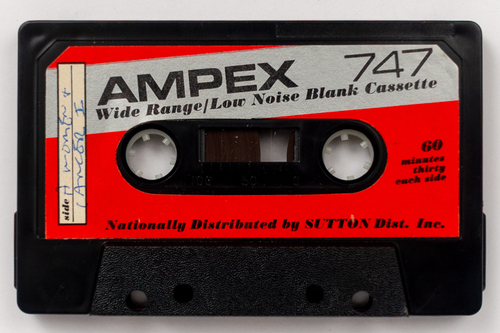
Women + Cancer I
Broadcast "Woman and Cancer," a special series hosted by Viv Sutherland about the myths and realities of cancer. Inscribed title on both sides is "Women + Cancer. Guests are Dr. Philip Strax, director of the Guttman Breast Diagnostic Institute; Mary Overton, assistant executive director of Cancer Care; Richard Klarberg,director of the Public Health Center, the American Health Foundation; Pam Booth, co-director of Women's Health Forum; and Denise Dillon Fuge, member of the Committee on Women and Health, National Organization for Women, New York (NOW-NY). Dr. Stax, an early advocate of mammography, discusses the need for routine screening. Additional topics are the impacts of cancer on the lives of women, the politics of research and development of new detection techniques, prevention, etc. Continued in SPW1965, inscribed title "Women + Cancer II". -
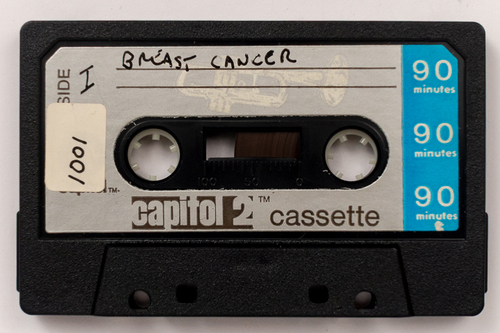
Breast Cancer
Broadcast of radio show hosted by Viv Sutherland, title not noted during broadcast, inscribed title on cassette noted as “Breast Cancer,” on both side A and side B. Sutherland interviews investigative journalist and war reporter Rose Kushner on her new book Breast Cancer: A Personal History and Investigative Report. -
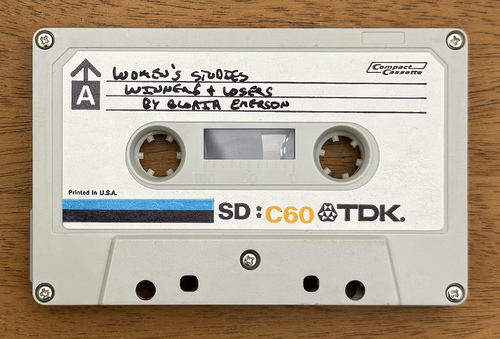
Women's Studies - Winners + Losers by Gloria Emerson
This episode of Women's Studies features journalist Gloria Emerson in conversation with Viv Sutherland on WBAI Radio, presenting an in-depth discussion of Emerson’s experiences as a New York Times correspondent during the Vietnam War and the themes explored in her book Winners and Losers. Emerson reflects on her transition from covering fashion in Paris to reporting from Vietnam, the ethical and emotional challenges of war journalism, and the gender dynamics within the press corps. The interview addresses subjects including the portrayal of Vietnamese civilians, the psychological effects of war on soldiers and reporters, and Emerson’s critical perspective on American media and class divisions. Side B continues with Emerson’s postwar reflections on patriotism, public reception of her book, her relationship with the New York Times, and her evolving views on feminism and morality. -
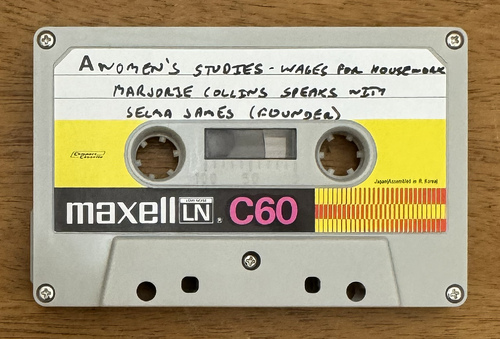
Women's Studies - Wages for Housework - Marjorie Collins Speaks with Selma James (Founder)
This episode of Women’s Studies, hosted by Viv Sutherland, features a taped interview by Marjorie Collins with Selma James, founder of the Wages for Housework movement. James discusses the economic exploitation of women’s unpaid domestic labor, the hierarchies within capitalism that devalue care work, and the need for international solidarity among women demanding wages for housework. She connects women’s financial independence to personal liberation, equality in relationships, and freedom of sexual and emotional expression, including lesbian identity. The episode concludes with live listener call-ins responding to James’s ideas about women’s labor, dependency, and social change. -
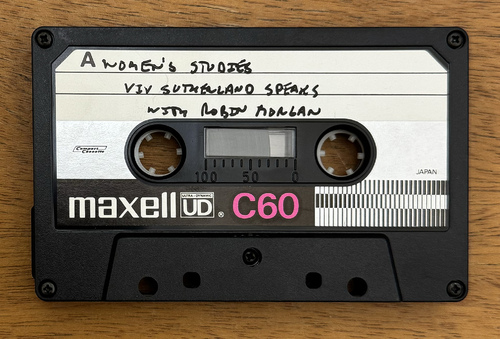
Women's Studies - Viv Sutherland Speaks with Robin Morgan
In this episode of Women's Studies, host Viv Sutherland, speaks with poet Robin Morgan. They go on to discuss feminism as it relates to Christianity, Wicca, and spiritualism and religion at large. -
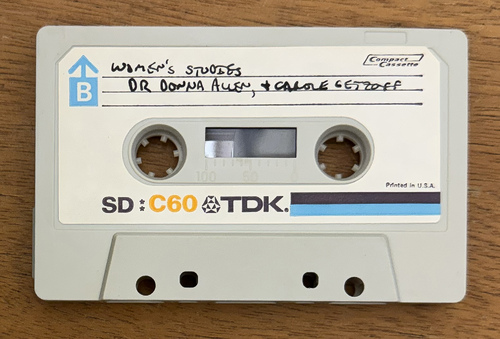
Women's Studies - Dr. Donna Allen + Carole Getzoff
This Every Woman’s Space episode, featuring host Viv Southerman with guests Dr. Donna Allen from Media Report to Women and Carol Getzoff from A Woman’s Place, explores women’s representation in the media and their struggle for equity within the broadcasting and print industries. The discussion addresses stereotypes, gender discrimination, and the need for women to portray themselves rather than be defined by others. Topics include workplace competition, collaboration among women in media, visibility, and responsibility in journalism. The episode concludes with announcements about the Women in Media course at the New School, the National Women’s Studies Association, and a musical performance emphasizing liberation and empowerment. -
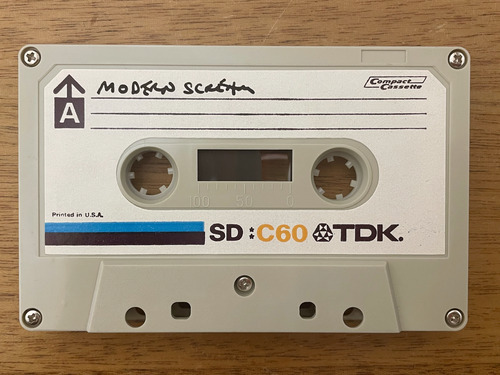
Modern Scream
Side A opens with Viv Sutherland introducing Lily Tomlin’s comedy album Modern Scream on the WBAI Women’s Studies program. The bulk of the tape features Tomlin’s satirical sketches, where she voices multiple characters. Highlights include a bizarre monologue from a woman addicted to rubber, a mock celebrity interview parodying Hollywood shallowness, a chaotic sorority speech full of performative morality, and a child’s monologue touching on emotional contradictions. The humor is absurdist, character-driven, and rooted in media and gender satire.
Side B continues with more sketches from Modern Scream, maintaining the format of comic vignettes performed by Tomlin. It features a flashback to Detroit high school life, a surreal phone company sketch, a spoof interview about playing a heterosexual woman, a parody detergent commercial that turns into a soap opera-style meltdown, and a long sermon from “Sister Boogie Woman” celebrating radical self-expression. The tape closes with Sutherland’s sign-off and a preview of upcoming feminist programming. Like Side A, it’s rich in satire but not thematically aligned with our themes. -
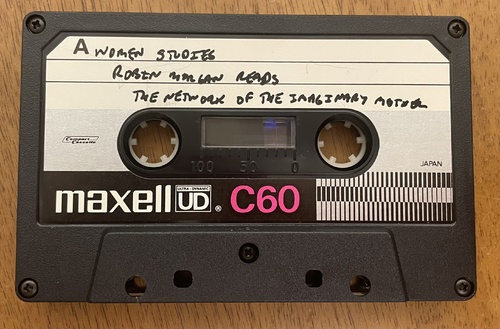
Women's Studies
Robin Morgan Reads: The Network of the Imaginary MotherRobin Morgan reads her five part poem that is " a weird love poem" to her mother, husband, friends (sisters), children, and her self. Morgan describes it as a metaphysical search for transcendence. Mentioning the goddess, the poem situates womanhood to genitalia and the body. -
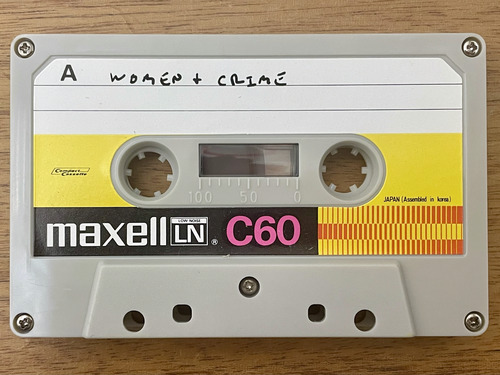
Women + Crime
Side A: In this interview, Dr. Freda Adler discusses the rise in female criminal behavior as a consequence of broader social changes, particularly women’s increased participation in public and professional life. She explains that as women gain access to new roles, they also gain opportunities to engage in crimes once dominated by men. Traditional “feminine” crimes (such as prostitution and shoplifting) are being replaced by more assertive and violent acts like armed robbery and even assassination. Adler emphasizes that this shift doesn’t stem from new motivations but from changing circumstances, and she challenges the myth of inherent female passivity by documenting the evolving cultural landscape.
Side B: This side explores how institutions—from law enforcement to the courts and prisons—have struggled to keep pace with changes in female behavior. Adler critiques the justice system’s gendered assumptions, showing how women have often received either harsher or overly lenient treatment based on outdated ideas. She also highlights discrimination in prison rehabilitation, the invisibility of women’s prison uprisings, and the psychological toll of role confusion (psychological and social uncertainty that many women face as gender roles shift rapidly) and cultural pressure. The tape closes with a call to treat women’s liberation and female criminality as separate issues, arguing for systemic reform rather than a return to traditional gender roles. -
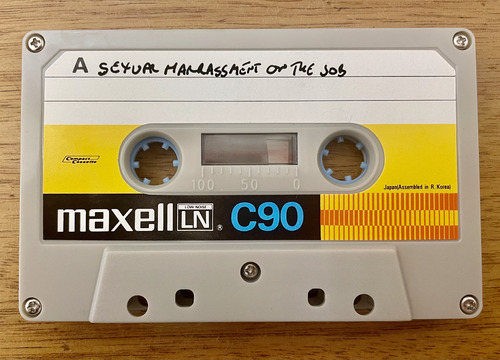
Sexual Harassment on the Job
Side A is a radio program on WBAI in New York, hosted by Viv Sutherland, and addresses the serious issue of sexual harassment in the workplace. The show consists of two central interviews: Mary Garvin, a carpenter and member of a union, and Rachel, a legal secretary, who both tell their own stories of being harassed at the workplace. Mary Garvin, a member of United Brotherhood of Carpenters and Joiners of America, Local 1204, describes her own encounters with casual and malicious forms of harassment at work on building sites, such as discriminatory treatment as a minority worker. Rachel describes a hellish experience of attempted sexual attack by her employer, a private attorney, detailing being physically restrained and assaulted in his office. The program also features phone-ins from listeners discussing different issues surrounding sexual harassment, law, and potential responses to such an event––some advocating for violent responses. The discussion touches upon the issue of complexities of building harassment cases, shortcomings in current legal protection, and the need for systemic changes to assist the victims better and prevent workplace harassment. Side B continues with call-ins. It expands on themes from the first half but brings in more emphasis on legal, economic, and cultural barriers to justice. The program ends with a call for systemic change, grassroots activism, and women reclaiming their power in courtrooms, workplaces, and daily interactions. -
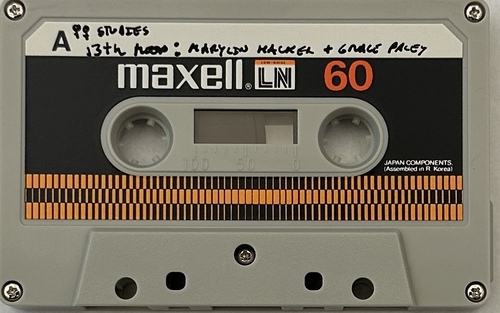
Women's Studies - 13th Moon: Marilyn Hacker and Grace Paley
Presented in the Women's Studies series, this episode contains poetry readings by Marilyn Hacker, an editor for feminist literary magazine 13th Moon, and poet Grace Paley. -
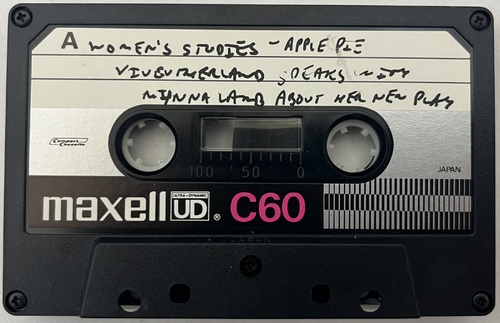
Women's Studies - Apple Pie - Viv Sutherland Speaks with Mynna Lamb About Her New Play
Myrna Lamb guest stars on Women's Studies to talk about her new play, Apple Pie. Apple Pie is a musical theater piece about a woman's life in Nuremberg. The play grapples with issues of moral truths and internal and external judgement. Myrna and Viv also discuss the difficulties and complexities of being a woman playright, and various ways that the play attempts to tackle sexism, racism, and anti-semitism in society. They also discuss Myrna's run-ins with male directors in theater and the complex feelings people have about male directors directing women's stories. -
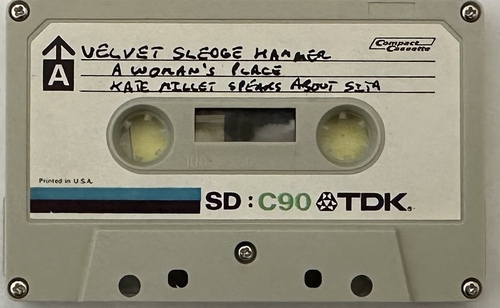
Velvet Sledge Hammer - A Woman's Place - Kate Millet Speaks about Sita
(Side A) Viv Sutherland welcomes listeners to The Velvet Sledgehammer and announces that the show's program will include "Hot Flashes," women's news from "Majority Report"; a story on "A Woman's Place" produced by Irene Yarrow; and an interview of author Kate Millett about her book Sita (1976) conducted by Judy Pasternak and Viv Sutherland.
The first segment is "Hot Flashes," a women's news report announced by Nancy Borman. Topics covered include: an "anti-wedding" event sponsored by Majority Report to discuss the sexist details of marriage contracts, Valerie Solanas reprinting Scum Manifesto after the original publisher went out of business and the copyright reverted to her, New York's announcement of plans for a large-scale Women's Rights rally, events for Lesbian Pride Week, and a bill to legalize abortion in Italy.
Irene Yarrow then introduces a tape about "A Woman's Place," a feminist collective in upstate New York that has existed for three years but is now in danger of closing due to lack of support. Irene recorded this tape at "A Woman's Place" and features women's songs, poetry and feelings about what the retreat has meant to them. The recording begins at 19:25 and continues onto side B. Irene announces that women interested in learning about "A Woman's Place" or contributing to save it can contact her. She attributes the music in the recording to Ruth Pelham, and the poetry to Erica Silver.
Kate Millet guest stars in the last segment, discussing her new autobiographical novel, Sita, with Judy Pasternak and Viv Sutherland. Kate describes the plot of Sita as "the plotline of the woman destroyed." She rebuffs "malicious" reviews that called her work either "icky" and "pukey" or "pornographic" for being queer. She considers these reviews to be motivated by bigotry. Kate recounts that a major motivation in writing Sita was to describe the loss of a lover, which she felt does not exist in any other book. She says she wanted to "write a very musical and very romantic book in praise of love: in praise, even, of its melancholy and possible futility." Kate also discusses hoping for "company" in writing "these kinds of books," but that she is alone in having to "take abuse" for them. With Judy Pasternak and Viv Sutherland, Kate Millett reflects on activism and efforts to dismantle the patriarchy. The interview closes with discussion of Kate's visual art.