
Browse Items (23 total)
Sort by:
-
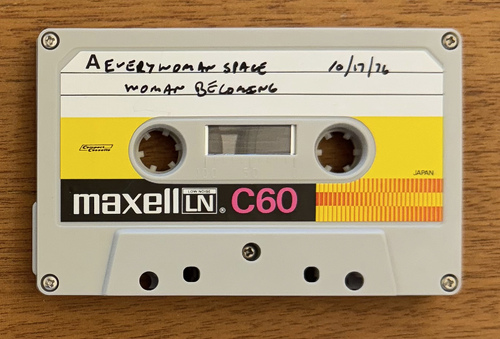
Everywomanspace - Woman Becoming
This episode of Everywomanspace, hosted by Irene Yarrow on WBAI radio, features the complete reading of Yarrow’s autobiographical story “Woman Becoming.” Yarrow explores her personal journey of self-realization and coming out as a lesbian, interwoven with experiences of motherhood, marriage, and feminist awakening. The broadcast incorporates poetry by Judy Grahn, musical selections by Alix Dobkin and Joni Mitchell, and live listener call-ins. -
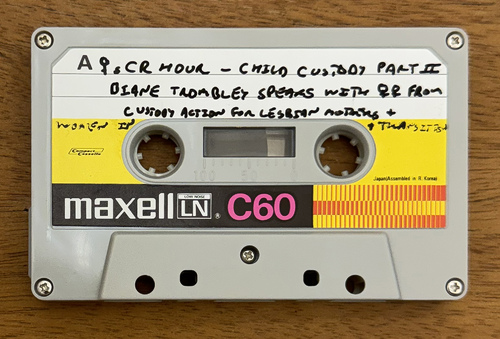
A: ♀'s (Women's) CR Hour - Child Custody Part II - Diane Trombley Speaks with ♀♀ (Women) from Custody Action for Lesbian Mothers + Transition;
B: ♀♀ (Women) CR Hour - Custody Part II - Diane Trombley Speaks with ♀♀ (Women) from CALM + ♀♀ (Women) in TransitionThis episode of The Women’s Consciousness Raising Hour, hosted by Diane Trombley, features an in-depth discussion on the struggles faced by women, particularly divorced and lesbian mothers, within the American custody and legal systems. Guests Jennifer Fleming of Women in Transition and Mickey Weinstein of Custody Action for Lesbian Mothers (CALM) explore the emotional, financial, and institutional challenges encountered by women navigating separation, abuse, and child custody disputes. The program exposes systemic sexism and judicial bias, shares strategies for legal self-advocacy, and promotes alternatives such as shared custody and community support networks. -
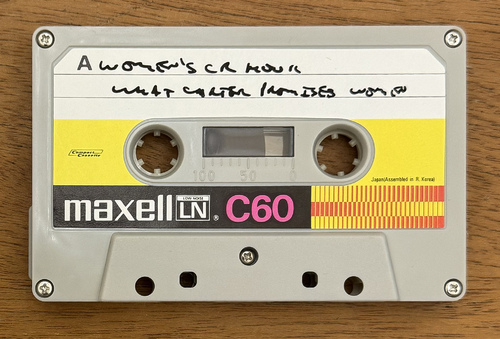
Women's Consciousness Radio Hour - What Carter Promises Women
In this episode of Women's Consciousness Radio Hour on WXPN, host Diane Trombley kicks off the program by playing a two songs by activist and musician Malvina Reynolds. One song is from the album "Virgo Rising - The Once And Future Woman," and the other is from Reynold's own album, "Held Over." Trombley then welcomes guest Joanne Wolf to the show. Joanne was convener of the Women's Health Concern Committee, a member of NOW, and also a member of the board of the Bicentennial Women's Center. They discuss women's issues in American politics with a particular emphasis on the Democratic and Republican split and the Carter-Mondale ticket / platfrom of 1976. -
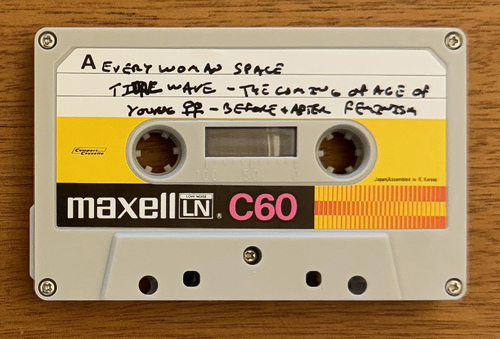
Everywomanspace - Tidal Wave - The Coming of Age of Young ♀♀ (Women) Before + After this Decade of Feminism
A conversation between Irene Yarrow and Nina Kriegel includes a discussion about what it must have been like to grow up, reach adolescence, and go through one's teens at a time when the women's movement was already gaining momentum. Examine the generational upbringings and consider how much the women's movement has truly impacted them, particularly in comparison to growing up before the second wave of feminism. -
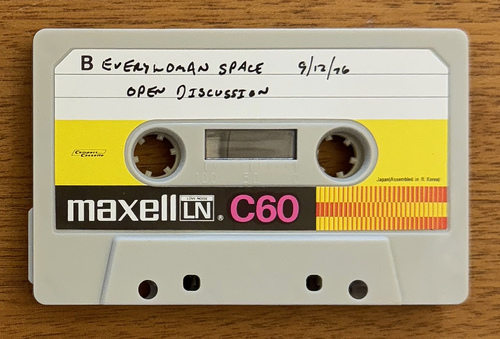
Every Woman Space 9/12/76 - Open Discussion
In this episode of "Everywomanspace," hosted by Irene Yarrow, the host emphasizes that the program is inclusive for all women, regardless of sexual orientation, race, ethnicity, social class, or gender. She introduces the show as a platform for open communication and discourse. Throughout the episode, Irene takes calls from listeners, welcoming their criticisms and suggestions regarding what they would like to see in the program in the future. -
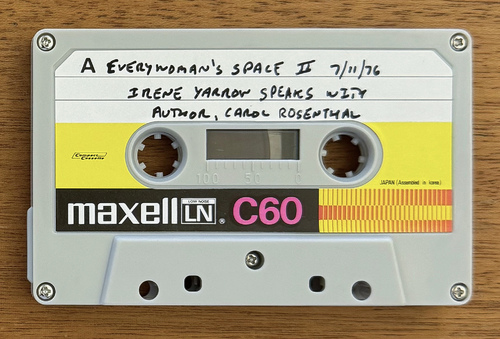
Everywoman Space II 7/11/76 - Irene Yarrow Speaks with Author, Carol Rosenthal
This is the second episode of Everywomanspace. Host, Irene Yarrow, speaks with author Carol Rosenthal. Rosenthal reads her short story Cowboys and Yarrow reads her short story, Mother. The two briefly discuss each piece and how to support women's writing amongst themselves before taking calls from listeners on the same topics. -
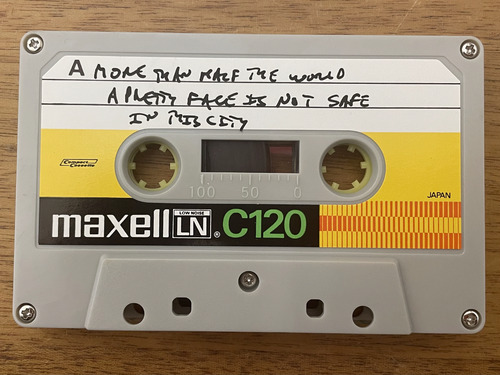
More Than Half the World - A Pretty Face is not Safe in this City
Side A: Host discusses women's rights and justice in the United States. Show features various feminist musicians. ^^Side B: Host and callers discuss women in music, societal change as well as women’s rights. -
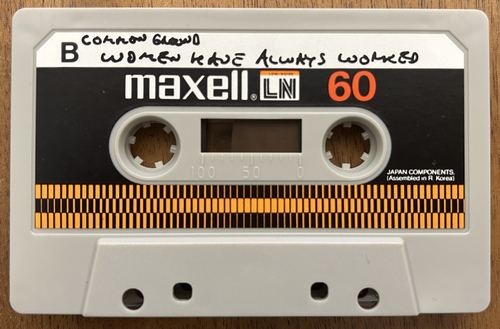
Common Ground - Women Have Always Worked
(This is side B of tape) An interview with Alice Kessler-Harris about her book, "Women Have Always Worked," published by Feminist Press. Hessler redefines "work" and also emphasizes how historically women's labor was not salaried or compenstated financially. -
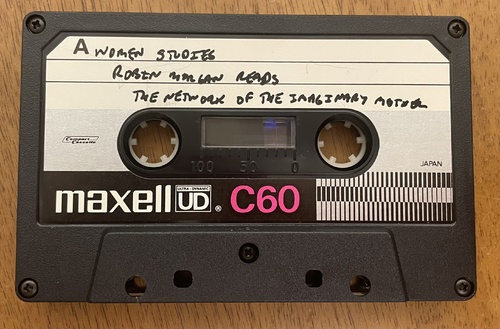
Women's Studies
Robin Morgan Reads: The Network of the Imaginary MotherRobin Morgan reads her five part poem that is " a weird love poem" to her mother, husband, friends (sisters), children, and her self. Morgan describes it as a metaphysical search for transcendence. Mentioning the goddess, the poem situates womanhood to genitalia and the body. -

More Than Half the World - Abortion
Host, Judy Pasternak, discusses abortion and the struggle for the legal right of women to have control over their bodies. In her reflection upon the legal battle surrounding this issue, Pasternak notes that the majority of the individuals making these decisions from a federal level down to its local implementation are male identifying. In her past experience and many other of the callers, the medical infrastructure and service providers were male which they felt impacted their care and the comportment of the medical team. -
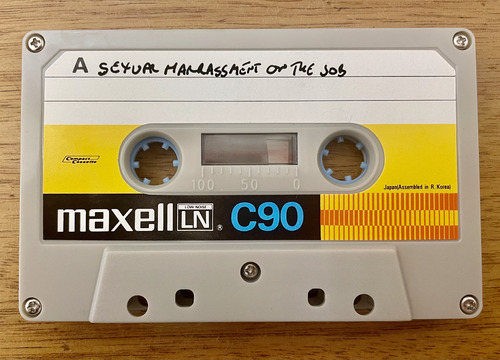
Sexual Harassment on the Job
Side A is a radio program on WBAI in New York, hosted by Viv Sutherland, and addresses the serious issue of sexual harassment in the workplace. The show consists of two central interviews: Mary Garvin, a carpenter and member of a union, and Rachel, a legal secretary, who both tell their own stories of being harassed at the workplace. Mary Garvin, a member of United Brotherhood of Carpenters and Joiners of America, Local 1204, describes her own encounters with casual and malicious forms of harassment at work on building sites, such as discriminatory treatment as a minority worker. Rachel describes a hellish experience of attempted sexual attack by her employer, a private attorney, detailing being physically restrained and assaulted in his office. The program also features phone-ins from listeners discussing different issues surrounding sexual harassment, law, and potential responses to such an event––some advocating for violent responses. The discussion touches upon the issue of complexities of building harassment cases, shortcomings in current legal protection, and the need for systemic changes to assist the victims better and prevent workplace harassment. Side B continues with call-ins. It expands on themes from the first half but brings in more emphasis on legal, economic, and cultural barriers to justice. The program ends with a call for systemic change, grassroots activism, and women reclaiming their power in courtrooms, workplaces, and daily interactions. -
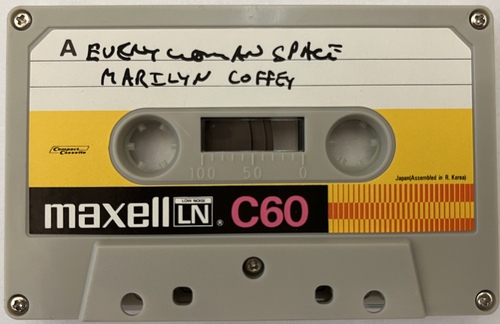
Everywomanspace - Marilyn Coffey
Irene Yarrow hosts writer and poet Marilyn Coffey on the show Everywomanspace. The program starts with Marilyn reading several of her poems: "Insight," "The Diet," "Wordlessly," and "Observation." Irene and Marilyn discuss Marilyn's brief career in journalism and development as a writer, and the writing of her novel, Marcella, a coming-of-age story. Marilyn then reads an excerpt from Marcella.
After the excerpt, Marilyn Coffey explains the projects she has been working on more recently--her second novel, books of essays, and teaching English at Pratt Institute. Irene and Marilyn discuss the difficulties of switching between various forms of writing, like poetry vs. prose vs. non-fiction. Marilyn also reflects on how joining the Women's Movement and becoming a feminist has changed her writing and the reception of her writing. They discuss how deeply ingrained the patriarchy is in their lives and consciousnesses. Marilyn reads a final poem, "Cold," to end the program. -
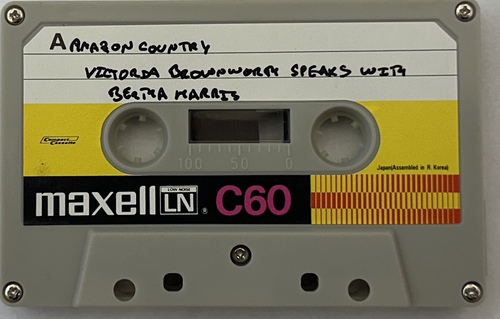
Amazon Country - Victoria Brownworth Speaks with Bertha Harris
Victoria Brownworth interviews author Bertha Harris in an episode of Amazon Country. Bertha discusses how writing has been a means of freedom and escape for her, and how she would like fiction to help define what it means to be a lesbian. They also explore whether and how the patriarchy has an impact on what women write. They ruminate on the overlap between politics and art. -
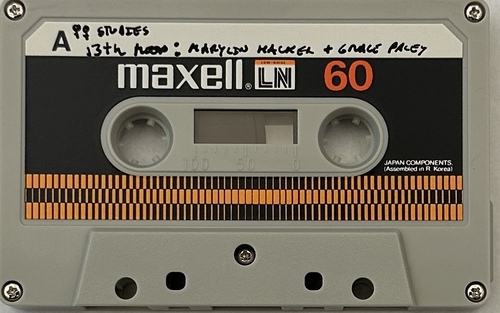
Women's Studies - 13th Moon: Marilyn Hacker and Grace Paley
Presented in the Women's Studies series, this episode contains poetry readings by Marilyn Hacker, an editor for feminist literary magazine 13th Moon, and poet Grace Paley. -
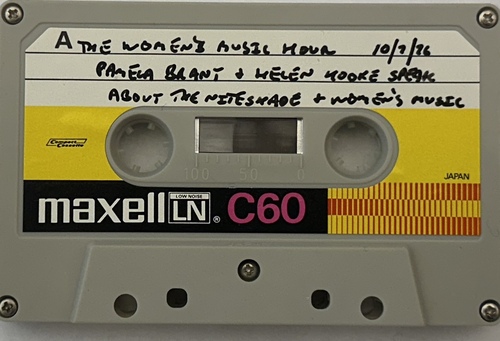
The Women's Ausie Hour 10/7/76 - Pamela Brandt + Helen Kooke Speak about the Niteshade + Women's Music
This episode of The Women's Music Hour contains an interview with Pamela Brandt and Helen Hooke, who make up one of the first American all female bands, The Deadly Nightshade. -
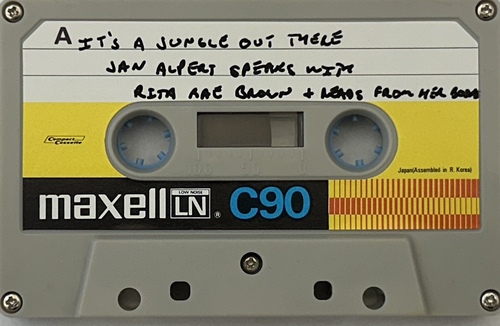
It's a Jungle Out There: Jan Alpert Speaks with Rita Mae Brown + Reads from Her Books
Jan Alpert and Rita Mae Brown discuss Rita Mae's career path and motivations outside of being a writer, as well as her involvement as a street organizer in the women's and gay rights movements. Occasionally throughout the interview, Jan will read excerpts from Rubyfruit Jungle, Rita Mae's first novel, and In Her Day, Rita Mae's second novel. While discussing In Her Day, they cover the lessons Rita Mae learned from writing it. -
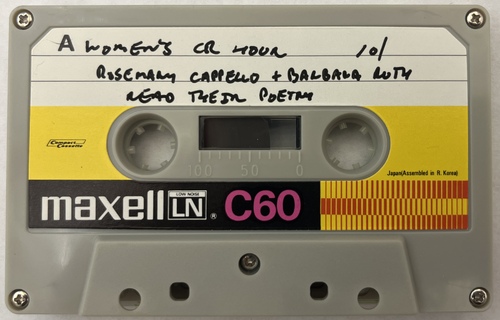
Women's CR Hour 10/ - Rosemary Cappello + Barbara Ruth Read Their Poetry
In this episode of Women's Consciousness Raising Hour, the first poet Rosemary Cappello reads a mixture of original poems and poems from friends and other notable poets, surrounding the theme of correspondence. Rosemary views correspondence as the most faithful way to show affection and grow closer with other poets. She also reads a poem that she wrote, in place of an angry letter, to respond to an anti-feminist book review.
The second poet, Barbara Ruth, opens with a poems about her awe for life: her experience knowing and being close to other women, seeing a solar eclipse. Her poems discuss women's issues, specifically, the tension between being a woman and having intense or maddening emotions, and the tensions women have with men. Her poems frequently invoke the power of women and call for a revolution. Furthermore, Barbara grapples with issues of valuing some lives over others, witnessing suffering, narcissism, and simple wanting. She also reads poems about her mother. -
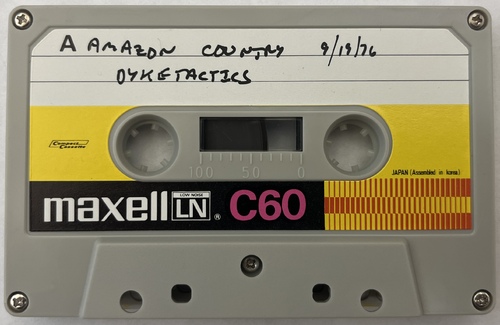
Amazon Country 9/19/76 - Dyketactics
(Side A) Victoria Brownworth opens this episode of Amazon Country by announcing that an Amazon Country employee lost her house, belongings and pets to a fire, so they're starting a collection for her through the Women's Cultural Trust. Various other announcements regard upcoming events, a lesbian support group, and the council elections at the Gay Community Center.
Roberta Hacker interviews Linda Norwood and Sherrie Cohen of 'Dyketactics!' to discuss their lawsuit against the police, the first time in history that lesbians have sued the police for brutality, excessive force, and harrassment. This lawsuit regards police action on December 4, 1975, when 'Dyketactics!' (and other groups) attended a (Philadelphia) city council meeting to help urge passing of the "Gay Rights Bill" by the committee. Philadelphia's Civil Defense Squad immediately approached and used excessive force against the women, prompting 'Dyketactics!' to file a lawsuit against the City of Philadelphia for lesbophobic police brutality. Linda and Sherrie encourage women to attend the trial in order to support them. They also ask for feedback so that they can better represent and stand up for the lesbian community. When Victoria asks what they hope to get out of the trial, 'Dyketactics!' dsecribes their hopes to raise consciousness around the need for gay rights.
(Side B) Linda and Sherrie discuss the positive reception they've had regarding the trial, and announce that there will be a community meeting hosted by 'Dyketactics!' to discuss the disbursement of the (potential) compensation from the lawsuit into the lesbian community. -
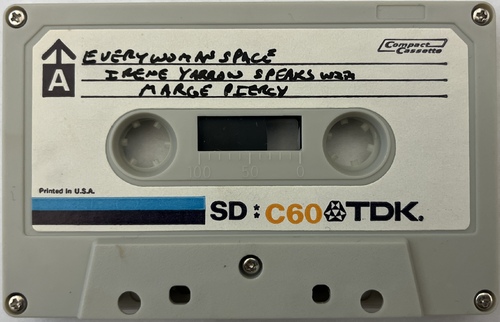
Everywomanspace - Irene Yarrow Speaks with Marge Piercy
On this episode of Everywomanspace, Irene Yarrow interviews poet and author Marge Piercy. Marge discusses her book "Woman on the Edge of Time" and (side B) reads her poems "To Be of Use" and " Living in the Open." -
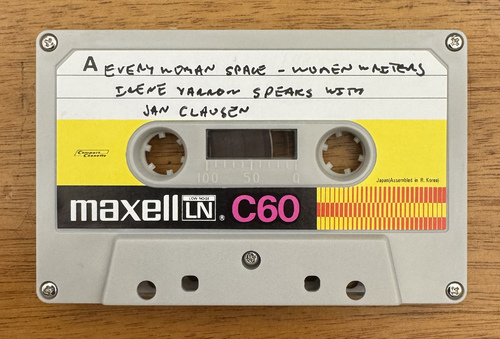
Everywoman Space - Women Writers - Irene Yarrow Speaks with Jan Clausen
Irene Yarrow opens this episode of Everywomanspace with information about Lesbian Switchboard and Identity House to help listeners who want to know how to reach the gay community. She recommends these organizations and coming-out groups, along with consciousness-raising groups, for any woman who wants to get together with other women to discuss issues relating to feminism or lesbianism.
Irene interviews Jan Clausen, a poet and writer from Oregon who reads her short story, "The Warsaw Ghetto." Irene and Jan discuss autobiographical writing, the experience of writing about friends and acquaintances, incorporating the political into personal writing, and receiving feedback as a writer. They also debate the question of whether feminist and lesbian writers should publish with women's presses or commercial presses, prompted by a questionnaire Jan sent to a number of lesbian writers, which she describes as her "writing community." Finally, Irene asks Jan if she feels that her stories with "lesbian content" limit her to a lesbian audience. Both hope that all women would be interested in women's content, regardless of sexuality. Jan also reads her poems, "The Christmas Letter" and "This is a Poem for You, Mary."
Irene also takes questions from callers (side B) including a woman asking for advice on how to find resources to respond to her younger sister coming out and a woman who wanted to share her opinion that publishing through women's presses will be the only option when the women's movement "goes out of vogue." -

Judy Chicago Speaks with Anaïs Nin
Part 4 of the Women in the Arts series, introduced by the director of Drama and Literature at KPFK, Clare Spark Loeb. Judy Chicago hosts and interviews author Anaïs Nin on the subjects of feminist literature and women's liberation. They discuss a disagreement they previously had about anger and women's liberation. Anaïs also reads from and discusses her book, Fourth Diary. -
For Toby by Shirley, Side A
This audio recording discusses the Daughters Of Bilitis New York City chapter. The main voice on the recording is a woman who was elected national president. She talks about her time as national president during the start of the Womens Rights movement. The recording discusses the success of the New York City Chapter and the new role they were playing in the Womens Rights movement. -
Workshop #4, Side B, April 20, 1971
The recording is from a workshop from April 20, 1971. The women are having an open discussion on honesty and trust within the group. The talk about how they feel about each other and how they handle being in Daughters of Bilitis.