
Browse Items (5 total)
Sort by:
-
DJ, January 6, 1980 (Tape 2)
DJ discusses her early experiences with women as a teenager, her feelings of being a tomboy, and her coming-out experience. She discusses her experiences in the bar scene in Buffalo in the 1950s, and describes ways in which women would interact with each other, but publicly and privately. DJ also discusses roles in relationships, particularly the butch and the femme. -
Dorothy, October 2, 1981 (Tape 2)
Dorothy talks generally of leisure activities, relationships, and sexual relations. She then talks at length about one long-term relationship with Harriette, mentioning their business, break up, life-long friendship, and Harriettes other relationships.
She talks first of weekend activities or leisure activities such as house parties, picnics, and going to bars. She talks in general about sexual relations, mentioning "daisy chain" sex, and attitudes towards sex and equality in love-making. She talks in general about long-term relationships and breaking up. She then answers questions and talks at length about her long-term relationship with Harriette, their break up and lasting friendship. She mentions their first car and the business they owned together. She talks of monogamy. She talks of Harriette's later marriage and other relationships. Dorothy talks of her opinion of bi-sexuality and of Harriette's marriage and relationships.
-
Dorothy, October 2, 1981 (Tape 1)
Side A: Dorothy discusses her personal life and how she came to discover that she was a lesbian. She talks about her marriage and separation. She discusses her relationships with women, all of which were long-term. Dorothy talks about her job in engineering as a tool designer and the fact that she performed a man's work for a man's salary. She discusses lesbian social life during the 1930s, 1940s, and 1950s and names several popular bars including Eddy's Tavern, Ralph Martin. She talks about her developing alcoholism and the prominence of this disease among lesbians in general, perhaps as a result of their uncertainty about life. Dorothy also talks about butch and femme roles in lesbianism, stating that she doesn't identify herself with either role despite the fact that the butches identified her as one of them.
Side B: Dorothy continues the discussion of roles in lesbianism and the division between the two groups in bars. She says that her "crowd" did not distinguish between these two groups and she ultimately stopped going to bars, partly as a result of the need for role division. She discusses in some depth her problem with alcohol and talks about her membership in Alcoholics Anonymous. She talks about how she decided that she was a lesbian and gives further details about her first relationship. She also speculates on whether or not other people knew she was a lesbian, including her mother and acquaintances such as her landlord. She says that she has never had any problems with people discriminating against her. Dorothy also continues to talk about the social dynamics of bars in Buffalo. -
Pat and DJ, November 11, 1986 (Tape 3)
Side A: Pat and DJ discuss the characteristics of femme identity. The interviewers say they are looking to interview more femmes, which leads to a discussion of the names and locations of lesbians who were a part of the community in the 1940s. The interviewers also mention the difficulties of interviewing lesbians who have not come out. The group discusses why butches are more willing to talk. Pat talks about her time at the Good Shepherd home. There is a brief discussion about the role of lesbians in World War II.
Cut off at 0:14:55
Side B: The group continues their discussion of the interview process, including who is willing to talk and who is not, as well as who will use their names and who will not. There is more discussion about beatings. Pat tells of coming out to her mother. Her mother only worries about the violence Pat is subjected to, on account of being butch. There is a long discussion about the nature of breakups and their aftermath. The group discusses the role of third parties in most breakups and the way a butch or femme reacts to a breakup. The issue of "passing" comes up, and Pat talks about working as a cab driver and passing as a man. Often, the children of femmes did not know that their mothers' partners were actually women. The interview concludes with a description of the rules for asking other butches' girlfriends to dance, and the fights that sometimes ensued. This point in the discussion highlights the difference between the generation of the interviewees and the generation of the interviewers. -
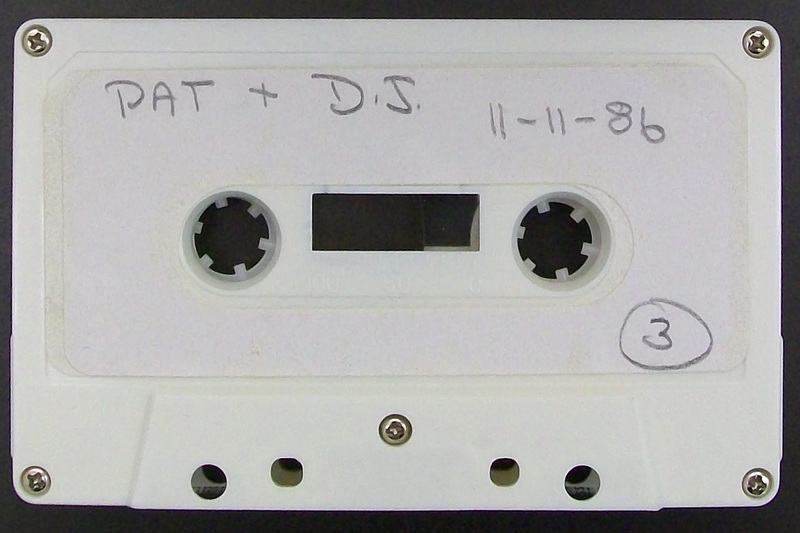
Pat and DJ, November 11, 1986 (Tape 2)
Side A: Pat and DJ continue the discussion of relationships during the 1950s from tape cassette SPW457. The two women discuss aspects of how to make relationships long-lasting and the importance or lack thereof of sexual intimacy in relationships. Both Pat and DJ discuss personal opinions related to intimacy in relationships, particularly in long-term relationships. The discussion then turns to types of attraction and intimacy.
Side B: Pat and DJ continue to discuss relationships during the 1950s and talk about reasons for breaking up. The discussion revolves around the importance of taking care of a woman and being able to satisfy her needs. The two women discuss the negative stigma of cheating. The discussion turns to take pride in a partner and the importance of her appearance and physical presence. Pat and DJ also talk about the presence of violence during relationships in the 1950s, listing insecurity between partners as the main reason. The two women speak specifically of violence in bars as a result of talking to another woman’s lady or challenging femmes in relationships to talk to other women. They discuss how much of this behavior was learned from lesbian role models of the 1940s.