
Browse Items (4 total)
Sort by:
-
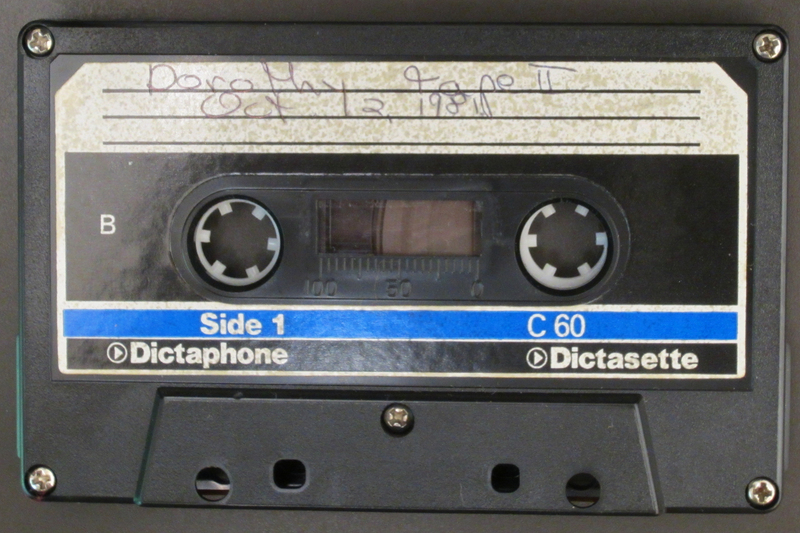
Dorothy, October 2, 1981 (Tape 2)
Dorothy talks generally of leisure activities, relationships, and sexual relations. She then talks at length about one long-term relationship with Harriette, mentioning their business, break up, life-long friendship, and Harriettes other relationships.
She talks first of weekend activities or leisure activities such as house parties, picnics, and going to bars. She talks in general about sexual relations, mentioning "daisy chain" sex, and attitudes towards sex and equality in love-making. She talks in general about long-term relationships and breaking up. She then answers questions and talks at length about her long-term relationship with Harriette, their break up and lasting friendship. She mentions their first car and the business they owned together. She talks of monogamy. She talks of Harriette's later marriage and other relationships. Dorothy talks of her opinion of bi-sexuality and of Harriette's marriage and relationships.
-
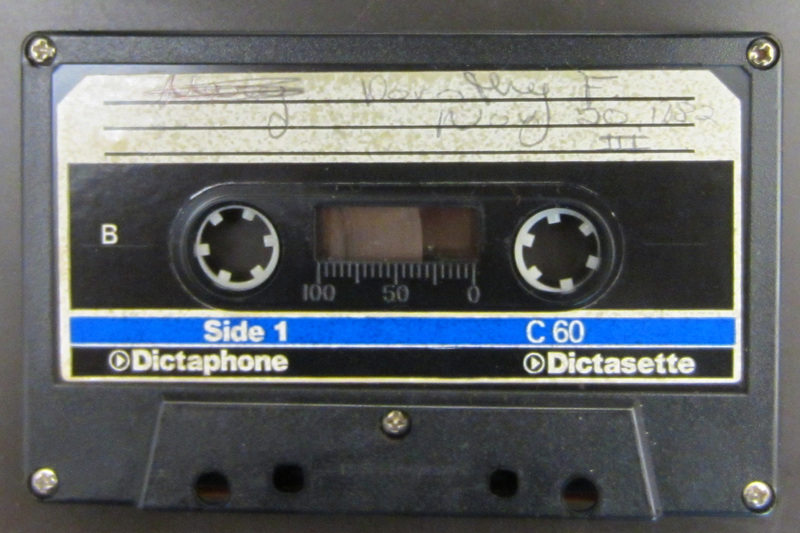
Dorothy, October 26, 1981 (Tape 3)
Dorothy discusses her lifelong identity as a lesbian and her uncharacteristic history in adopting both the butch and femme roles in prior relationships. She talks about being the child of a single mother (her father died when she was two years old) and also describes her hobbies. She says she has always been very mechanically inclined and has also always been an avid reader. She suspects that being an avid reader influenced her ability to understand and be accepting of herself. She also discusses her education and career and her treatment as a lesbian on the job. She was the first female member of the American Society of Tool Designers and later became a technical librarian and engineering researcher. She also speaks about her friendships and non-sexual relationships with both gay and straight women. She notes the differences between those relationships and how her mannerisms and level of self-consciousness also differ in those interactions. -
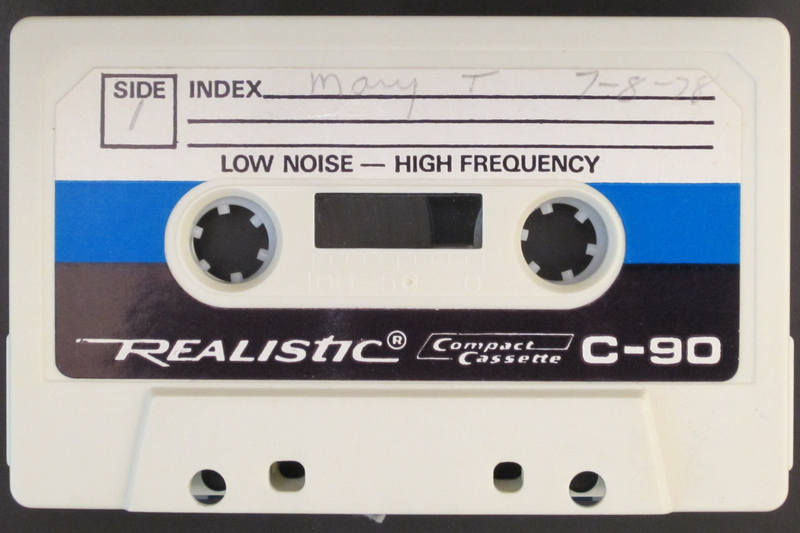
Mary T., July 7, 1978 (Tape 1)
Side A: Mary briefly describes her childhood and family dynamics. Mary and the interviewer then discuss the first time Mary recognized being different and her thoughts on desiring women at a young age, yet not knowing about lesbianism as a concept or about the lesbian community. Mary then recalls the first time she encountered the word "lesbian" when she joined the U.S. Air Force and describes her experiences with women while in the service. Mary talks about being a lesbian in the military, the investigation into her conduct, and her dishonorable discharge. After Mary got another job, she started going to a bar in Buffalo, N.Y., and she talks about the other lesbians she met there. Mary then discovered other bars and talks about the scene as well as the role-playing of butch and femme.
Constant whirring noise that stops about 10 minutes into the recording.
Side B: Mary continues the discussion on butch and femme role-playing. She elaborates on fights, holding down jobs, and being "out." She also explains the relationships lesbians had with gay men in Buffalo, N.Y., and the bar scene dynamics of mixed, gay, or lesbian bars. Mary and the interviewer discuss gay activism and the difficulties of being involved in activism at that time. Mary also describes outings where there was a risk of being visible as a group, such as going on picnics or renting cottages. She elaborates on her experience with social dynamics like cliques and having heterosexual friends within the lesbian and gay community. Mary then expands upon the nature of her relationships with women as well as with black lesbians - racial prejudice and relationships are discussed.
Constant whirring noise that stops about 5 minutes into the recording. -
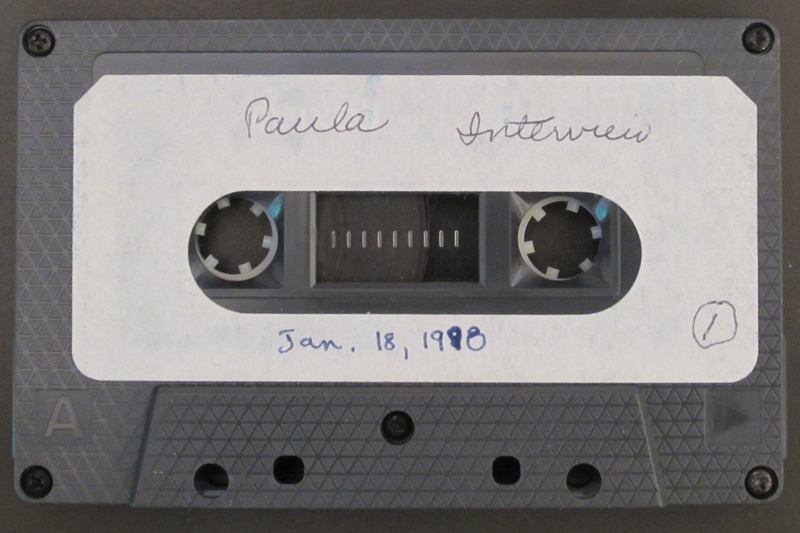
Paula, January 18, 1990 (Tape 1)
Side A: Paula describes various locations where gay men and women would meet each other, like Kleinman's Corner and bars such as Ralph Martin's. Often these locations also served as hubs for sex workers. She speaks about the rigidly defined roles of "butch" and "femme" provided for lesbians during the 1940s. Paula talks about her life as femme and being married to a man who introduced her to gay/lesbian life. She discusses her sexual life and the type of sex that women had with each other in the 1940s, specifically within the strict binary of butch and femme. Paula recalls the social life at bars, such as Ralph Martin's, which included dancing, drag shows, prostitution, and drugs.
Side B: Paula speaks about her family life in relation to her sexual identity. She talks about her husband's fast lifestyle and her changing preferences eventually causing the dissolution of their marriage. Paula mentions the types of employment she has had, including working in department stores, as a waitress, as a desk clerk at the Genesee Hotel, and on the assembly line at Bell Aircraft. She speaks more about various bars that she went to: Pat's, Dugan's, the Carousel, and the Carlton Hotel. She talks about a long-term relationship that she had, after her divorce, that lasted ten years, as well as traveling out of the Buffalo area to places like Florida, California, and Utica, N.Y.
The recording cuts off abruptly after 23 minutes.