
Browse Curated Themes
-
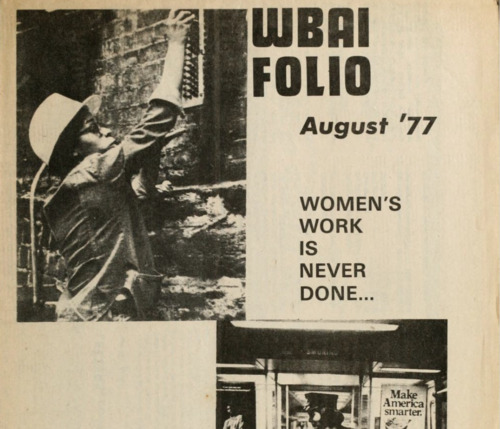
WBAI Women’s Department and Feminist Programming
Established in 1960 as a non-commercial and listener-supported station under the Pacifica Radio network, WBAI (99.5) quickly became an incubator for radical thought and experimentation on New York’s airwaves. Fiercely independent, the station was among the first in the country to open its programming to the countercultural and liberation movements of the late 1960s–including the emerging feminist movement. In fact, Pacifica’s radio stations were the first in the country to carry feminist radio programming at a time when few FM stations had women on staff and feminist voices were largely absent from mainstream media. WBAI became a vital space where women could speak publicly, organize politically, and define their own narratives.
Autobiography, Feminist Theater, Lesbian Authors, Lesbian Musician, Lesbian Writer, Literature, Performing Arts, Poetry, Publications, Theater
-
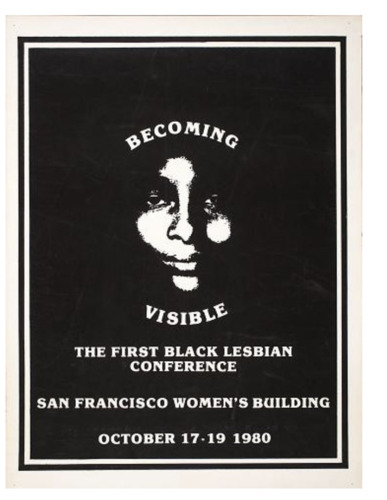
“Becoming Visible: Survival for Black Lesbians”
“Becoming Visible: The First Black Lesbian Conference” grew out our of from the First National Third World Lesbian and Gay Conference by the National Coalition of Black Lesbians and Gays which was held in 1979, in Washington, DC. Although there had been previous conferences supporting both lesbians and gays, the First Black Lesbian Conference was the first in the United States with the mission to support the unique and African-Americans lesbians.
This exhibition highlights materials that were created in the planning phase of this conference by members of The Committee for The Visibility of the Other Black Women, who organized from coast to coast.
-
Boots of Leather, Slippers of Gold
Boots of Leather, Slippers of Gold is an intimate history of a lesbian community in Buffalo, New York. Ranging from the mid-1930s through the early 1960s, this ethnography of lesbian society is narrated with the backdrop of an average American city. The accounts within capture the complexity of lesbian culture, during a time period before the gay and lesbian liberation movements. The book focuses on the growth of consciousness and identity within the bar and house party community, and then the emergence of social and behavioral norms and rules. These communities formed from common bonds, as most women tried to keep a clear separation between life in the gay community and straight society. The book details the personal struggles and triumphs of the lesbian community during an intensely oppressive time, yet there are strong themes that are relatable to anyone. The women’s stories express human experiences that we each encounter as members of a particular society; social identity, economic survival, love, sex, family, work, recreation, and participation in society as a whole. Small communities like the ones portrayed in Boots of Leather, Slippers of Gold were the building blocks of love and support for larger, more public communities that continue to fight for equality and human rights today.
-
Conversations in Radio, Art, and Music: Lesbian Dialogues
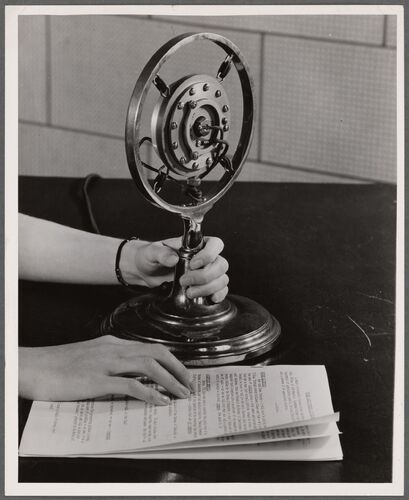
The dialogues of lesbian lives and ideologies are closely intertwined with feminist action and perspective. In this exhibition, we’ll outline some of the currents that have aligned these two conversations. We will also highlight pieces from our digital collection where these dialogues manifest in radio, art, and music, and we’ll explore the spaces where those took place.
Consciousness Raising, Lesbian Feminism, Lesbian Separatism, Music, Radio
-
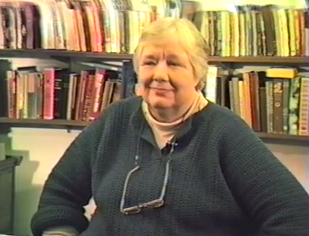
Daughters of Bilitis Video Project
This collection is composed of videos digitized from the Daughters of Bilitis Video Project collection at the Lesbian Herstory Archives. The Daughters of Bilitis was a social and activist group founded in 1955. The Video Project began in 1987 and was sponsored by the Lesbian Herstory Educational Foundation Inc. The project was originally based on a suggestion by Morgan Gwenwald, who wrote several grants to help fund the project and contributed all of the still photographs included in the collection. An additional two founding members of the DOB contributed to the project: Sara Yager, who videotaped all the interviews, and Manuela Soares, who researched and conducted all of the interviews.
-
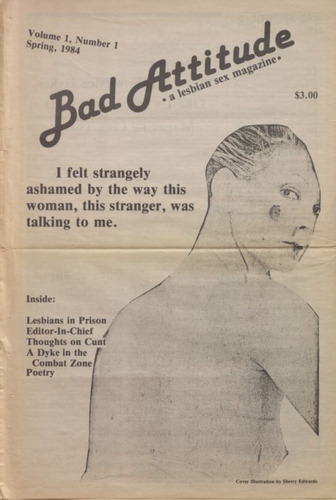
Documenting Dissent
This exhibition features a selection of feminist and lesbian programs which ran on WBAI radio in New York amidst the second wave of feminism around the 1970s. These selected programs form feminist networks that explain, document, and grapple with women’s experiences of violence under the patriarchy.
The first section examines where instances of patriarchal violence often occur and the difficulty in reporting said instances of violence. The second section underlines the way the patriarchy is structured upon violence against women, the naturalization of this violence as a fact of life, and the violent transmisogynistic and transphobic rhetoric that follows. The last section is dedicated to anger and its transformative properties in the liberation of women, specifically focusing on criminalized and incarcerated women.
-
Dyke TV
Dyke TV was a groundbreaking public access program founded in 1993 by Mary Patierno, Ana Marie Simo and Linda Chapman. An offshoot of the Lesbian Avengers, the mission of Dyke TV was to incite, provoke and organize communities to create tangible change. The program sought to increase lesbian visibility and to systemically change people's views of lesbians, gay rights and women's rights. Dyke TV comprehensively documented a critical time period in gay and lesbian history and shared stories that were important to lesbian communities when no other programs were.
-
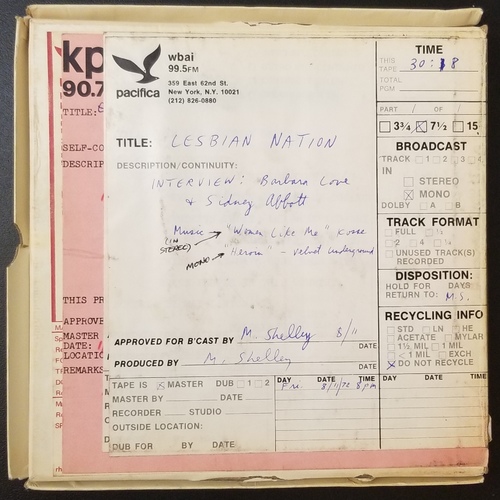
Lesbian Nation
Lesbian Nation was a groundbreaking radio show produced and hosted by Martha Shelley (1943 - Present), that specifically focused and revolved around the LGBTQ community during the rise of gay and lesbian liberation movements in the 1970s. After college, Shelley joined the Daughters of Bilitis (DOB) (1955-1995), a lesbian civil and political rights orgaanization, eventually becoming president of the NY chapter. Shelley was one of the early members of the Gay Liberation Front (GLF) which was established immediately after the Stonewall Riots and which advocated for for LGBT and minority rights. Additionally, Shelley wrote for several publications and was an avid advocate for civil rights and the pro-choice movement.
-
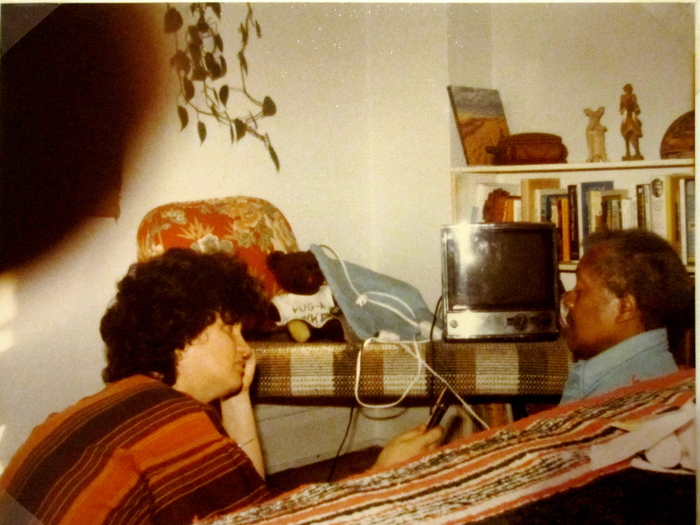
Mabel Hampton Oral History
Mabel Hampton (1902-1989) was an African-American lesbian, an activist, a domestic worker, and a dancer. Born in Winston-Salem, North Carolina, she lost her mother when she was only two years old. For the next five years, her maternal grandmother raised Mabel, but she too passed away. In 1909, she moved to Greenwich Village in New York City at age seven. Less than a year after moving in with her aunt, her uncle, a minister, raped Mabel. She ran away to New Jersey, buying a bus ticket purchased with a nickel given to her by a woman on the street. Luckily, a family that cared for her for the next several years took in Mabel.
-
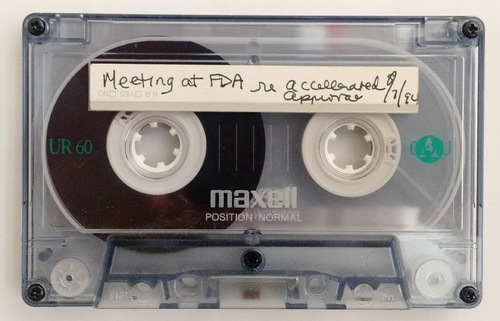
No More Invisible Women Exhibition
The Women’s Committee of ACT UP NY worked to prevent exclusion of women and minorities from clinical and experimental drug trials. From 1988-1989, the Women’s Committee conducted extensive research to support the cause. The committee dove deep into medical reviews, conducted interviews with women infected with AIDS, doctors who had treated women with AIDS and created a list of the infections specific to women. Their research was organized into three categories and became the basis of future actions.
-
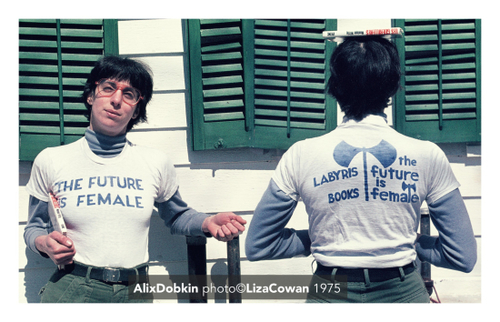
Reflections on Lesbian Fashion: Expression Through Style
The focus of this exhibition is to highlight the history and significance of lesbian style and identity. Particular clothing items, accessories, colors, and so on have long been used as signals amongst LGBTQ+ people to let each other know they are "in the family" without outting themselves to those who were not in the know. Further, lesbian style is inherently subversive and frequently political, in ways that have evolved throughout time alongside the evolution of mainstream fashion trends and norms.
-
Ruthie + Connie
Ruth Berman and Connie Kurtz, who have come to be known collectively as "Ruthie and Connie," were friends and community activists who became lovers and lesbian activists. Meeting for the first time in 1957 a married woman with young families in the Gravesend neighborhood of Brooklyn, New York, they didn't know that their personal lives would become very political during the next 50 years.
-

Straight Talk About Lesbians
An educational film strip about lesbian women in which several speak frankly about who they are, as well as their culture and history. Features women discussing their experiences, histories, and perspectives as lesbians, including coming out and living in a homophobic society. Also features discussions with children about their experiences having lesbian parents, as well as with the parents of lesbians. Notable is the discussion of lesbian music, with many songs played throughout. Running time is 1 hour and 2 minutes.
-
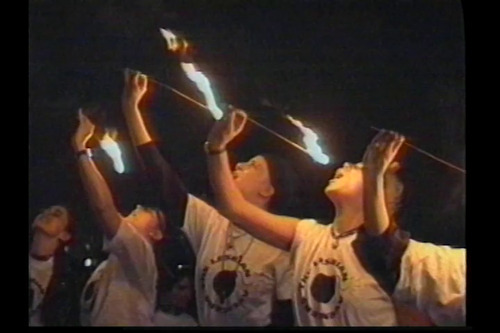
The Lesbian Avengers
Founded in 1992 in New York City, the Lesbian Avengers were a direct action group focused on lesbian visibility and survival. Unsatisfied with lobbying or letter writing, Lesbian Avengers took to high-impact street activism aimed to propel lesbians into public society anddiscourse. The founding members, Ana Simo, Sara Schulman, Maxine Wolfe, Anne-christine d'Adesky, Marie Honan, and Anne Maguire, were all active members of various LGBT groups throughout the 80s and 90s. Frustrated by a severe lack of visibility on lesbian issues these women met together to establish a mission, a name, first actions, and media production, drawing inspiration from other lesbian-centered collectives and organizations. Once formed, it wasn’t long before the group began to expand within the United States. The group’s success was due in part to a narrow focus on lesbian issues, and participants who were young, passionate, and media ambitious. Its influence spread worldwide after the Dyke March on the eve of the Lesbian and Gay March on Washington in 1993.
-
Voices of the Women's Press Collective
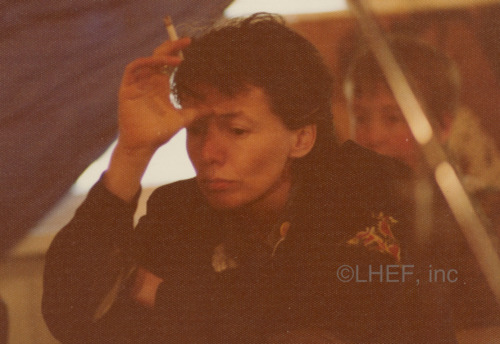
The Women’s Press Collective was established in 1969 in Oakland, CA out of the Gay Women’s Liberation Group, the first feminist-lesbian collective in the West. Two of the founding members were Judy Grahn and her partner and illustrator, Wendy Cadden. The press operated out of the basement of GWLG’s bookstore, A Woman’s Place, located at 5251 Broadway in downtown Oakland. The WPC was an all-women press devoted to printing works by women given the growing demand to share materials about lesbianism, feminism and the women's perspective. One of the first works printed by the collective was Grahn's Edward the Dyke and Other Poems.
-
Women's Power Roles: A Re-Awakening of Roe V. Wade
In 2022, Roe vs. Wade, a landmark case in which the Court struck down several Texas laws that criminalized abortion, was overturned for the first time since its 1973 induction. As a facet of women's rights was returned to the crossfire, larger discussions about women's rights have beeen reanimated. These discussions often devolve into discussions surrounding women's power roles. This exhibition is an attempt to enrich, contextualize, and highlight the discussions surrounding women's power roles.
Abortion, Childbirth, Children, Class, Economics, Families, Gender Roles, Group Identity, Heterosexual Women, Intersectionality, Marriage, Oral History, Power, Racism, Radio Free Women, Rape, Religion, Roe V. Wade, Sexism, Sexual Assault, Working-class Feminism