
Browse Items (8 total)
Sort by:
-
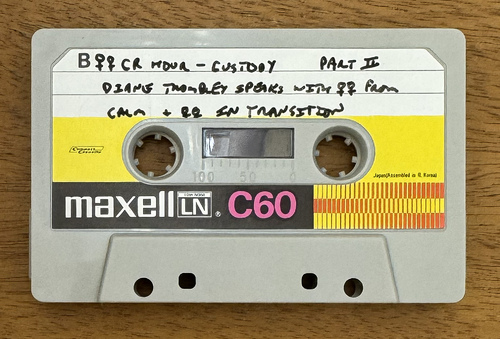
Women’s Consciousness Raising Hour - Child Custody II
This episode of The Women’s Consciousness Raising Hour, hosted by Diane Trombley, features an in-depth discussion on the struggles faced by women, particularly divorced and lesbian mothers, within the American custody and legal systems. Guests Jennifer Fleming of Women in Transition and Mickey Weinstein of Custody Action for Lesbian Mothers (CALM) explore the emotional, financial, and institutional challenges encountered by women navigating separation, abuse, and child custody disputes. The program exposes systemic sexism and judicial bias, shares strategies for legal self-advocacy, and promotes alternatives such as shared custody and community support networks. -
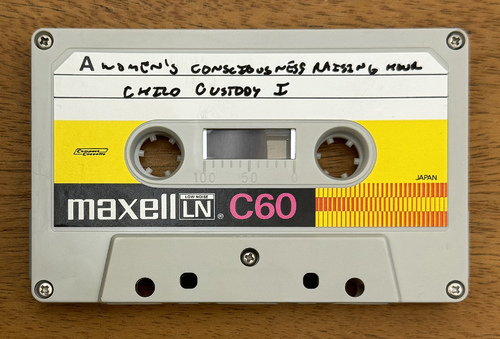
Women's Consciousness Raising Hour - Child Custody I
This episode of the Women’s Consciousness Raising Hour features a panel discussion from the Bicentennial Women's Center in Philadelphia on the topic of child custody. Cynthia Little acts as the moderator. Mike Simeone opens with a historical overview of childhood and family formation, tracing evolving social attitudes toward children and the emergence of custody as a modern legal concern. Dr. Stuart Kaplan follows with a psychological analysis of post-divorce family dynamics, emphasizing the emotional toll on children and the importance of maintaining relationships with both parents. Jennifer Baker Fleming discusses the experiences of women navigating custody and divorce, exposing systemic gender biases, economic inequities, and the emotional dimensions of motherhood within patriarchal legal systems. Rosalie Davies concludes with a discussion of custody discrimination against lesbian mothers, describing early legal challenges, case precedents, and strategies for advocacy within the emerging gay rights movement. -
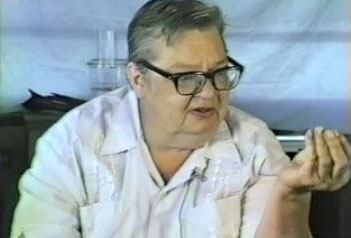
Shirley Willer Interview, July 11, 1987
Shirley Willer talks about becoming aware of her true sexuality, being a lesbian nurse, the DOB, her view on motherhood, and her experience as an activist. On tape 2, she discusses her National Presidency of DOB, the break up of DOB in 1970 and the end of the Ladder in 1972. She also touches on the 1968 convention and her relationship with Marion. -
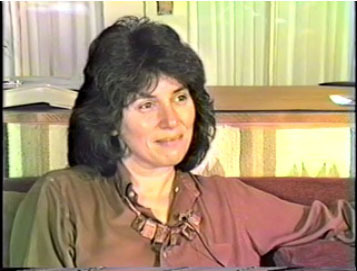
Carole Morton Interview, October 21, 1988
Carole Morton discusses her discovery of Daughters of Bilitis and her activism on behalf of lesbian mothers. -
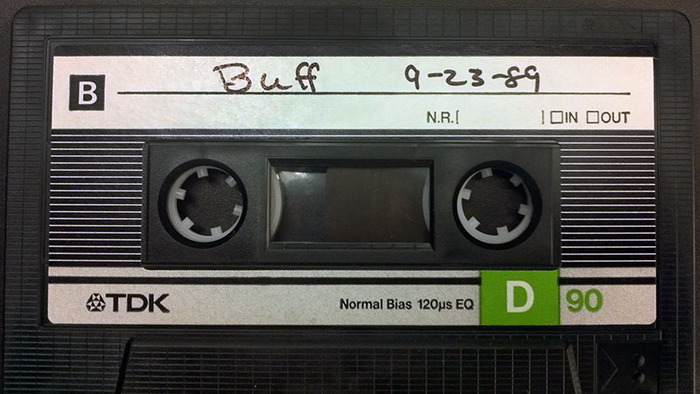
Buff, September 23, 1979
Talks about dating a prostitute, lesbian prostitutes, lesbians and butches having sex with men, lesbian pregnancy, clothing styles, -
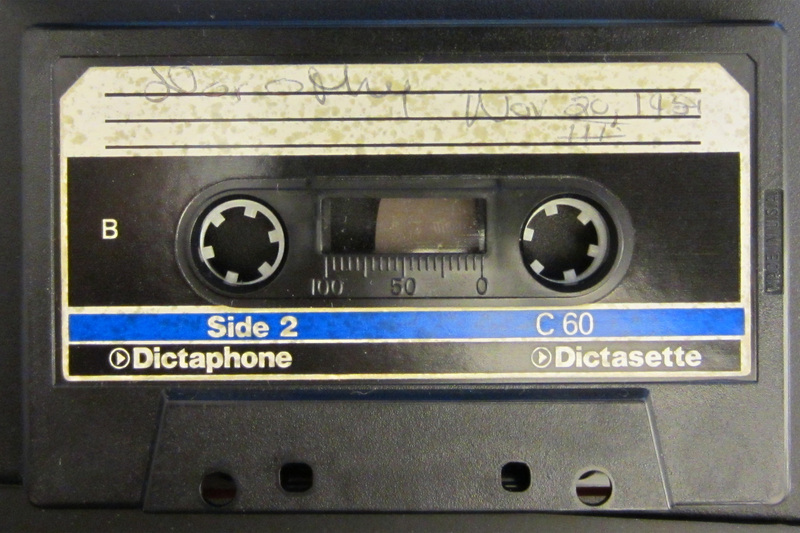
Dorothy, October 26, 1981 (Tape 2)
Side A
Dorothy discusses how women met one another, sexuality, and her various relationships. Particular focus is on her 10 year relationship with her girlfriend during the mid 1950s to mid 1960s.
Side B
Dorothy discusses how she feels about children and the fact that she never any. She gives her opinion on two women raising a child, and talks about her friends who are now married to men who raised children. In addition, she continues her thoughts on sexuality and butch-femme roles.
-
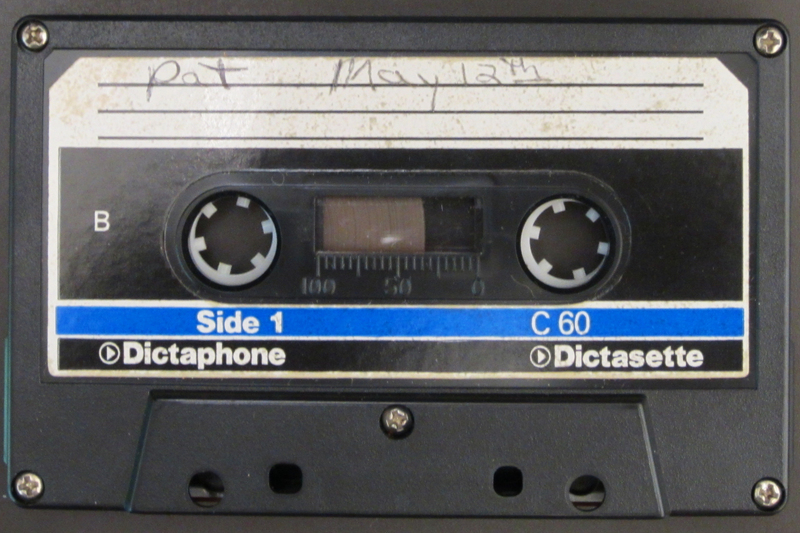
Pat G., May 21, [year unknown] (Tape 1)
Side A: Pat discusses her experiences as an African American lesbian. She developed friendships and relationships with both white and black gay women in the 1950s. She denies there were any racial tension in the Buffalo lesbian community; Pat says her experience was very inclusive. She also discusses experiencing police harassment, but says that she longer experiences discrimination from law enforcement. Pat discusses her wardrobe in the 1950s, which was composed of mens' clothing, and where she used to shop.
Side B: Pat discusses her friendship and romantic relationship with Jerry Jones, a male impersonator, who was well known in the 1950s Buffalo lesbian community. Pat discusses her move to Albany, N.Y., in the late 1950s and the birth of her daughter in 1957. She also mentions her experiences at after-hour bars which were only open to African Americans. While she used to frequent them in her early years, she no longer goes. Pat identifies as a butch lesbian and discusses the differences between butches and femmes. When she was younger she did not allow her partner to touch her during sex, but is much more open to the idea now. According to Pat, many butch lesbians did not receive sexual contact from their partners. -
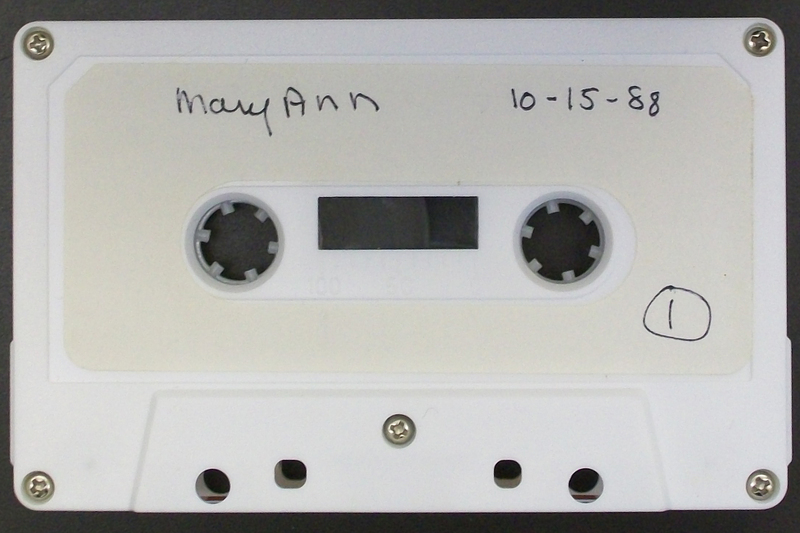
Mary Ann, October 15, 1988 (Tape 1)
Side A: Mary Ann discusses her experiences going out in public with her girlfriends, and the treatment they receive at restaurants, bars, and on the street. She mentions that their public treatment is very often instigated by the masculine way her partners are dressed; she herself has always been very femme. Mary Ann talks about her incarceration for robbery, and her time in a psychiatric hospital for depression and attempted suicide.
Side B: Mary Ann continues to discuss her time in jail. She took on a butch look, and began to receive small gifts under her cell door from femme girls in other divisions. She developed relationships with different girls that she worked with while in jail, and talks about lookouts, or "chickies," standing watch for girls who were with their partners in the showers or elsewhere. She then talks about her sex life with a long-term partner of 22 years, with whom she raised foster children. Later, she touches on her job as a dancer at Buffalo clubs, and a two-year period when she worked as a prostitute.