
Browse Items (771 total)
Sort by:
-
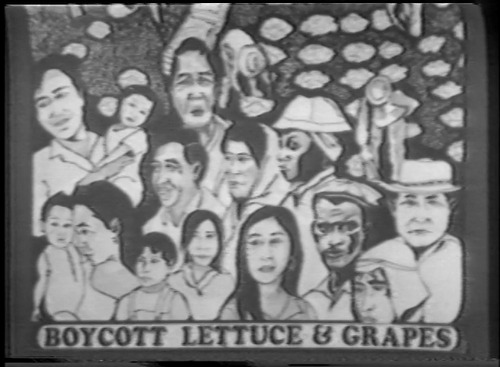
It Can Be Done: Chicago Women's Graphic Collective
A video about the relationships and bonds among members of the Women's Graphics Collective. The Collective produced posters addressing the struggles of the women's movement and other political movements, including the United Farm Workers organized a boycott on non-union lettuce and grape farmers. -

Shirley Willer, Tape 2 of 4, Side A, July 11, 1987
This is a recording of Shirley Willer talking about her life. She talks about her experience with men, her experience as being labeled a lesbian, coming out to family and friends, how she discovered the existence of homosexual organizations through ONE Magazine, discrimination, the DOB, her initial expectations when first joining the organization, becoming chapter president, duties and achievements as president, conflicts surrounding the DOB, her decision to step down as chapter president, and the dissolution of DOB.
Marion Glass is recorded as well. She talks about her relationship with women, joining the Mattachine Society, and about DOB’s activist approach.
-
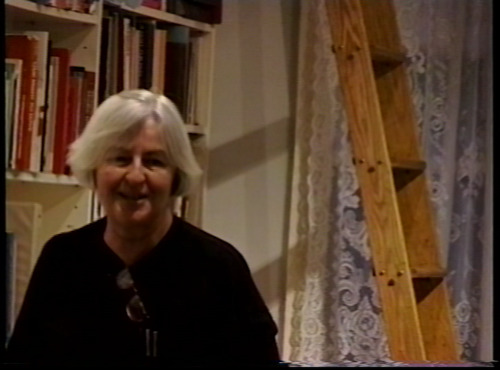
Sidney Abbott at Lesbian Herstory Archives "The Good Old/Bad Old Days: Lesbian-Feminism, Its Origins—What's Helpful to Us Now?" Part 1 of 2
Sidney Abbott reflects on earlier years of the gay and lesbian movements; audience participation turns the presentation into a discussion on turning tides in the movements. -
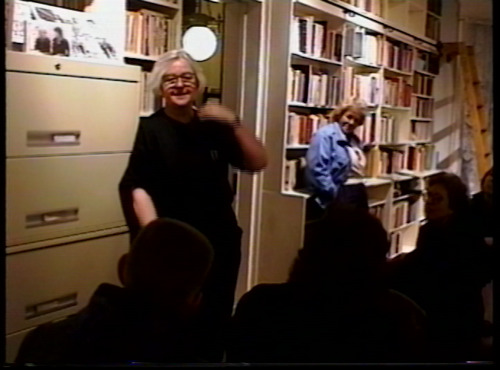
Sidney Abbott at Lesbian Herstory Archives "The Good Old/Bad Old Days: Lesbian-Feminism, Its Origins—What's Helpful to Us Now?" Part 2 of 2
Sidney Abbott reflects on earlier years of the gay and lesbian movements; audience participation turns the presentation into a discussion on turning tides in the movements. -
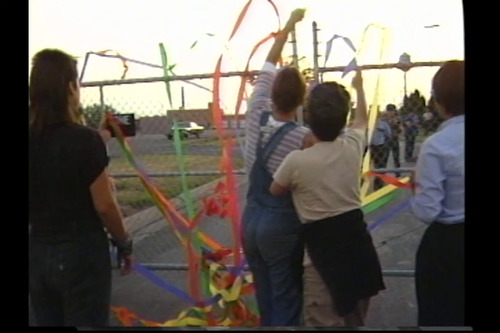
Seneca Women's Encampment for a Future of Peace and Justice - Tape 3
[00:00-15:26] Video begins with a protest/ceremony outside the Seneca Army Depot, a military-industrial complex in Seneca, New York.
[15:39-22:52] Following the demonstration, the video cuts to an interview in which two participants explain the importance and objective of their ceremony and the purpose of their "wailing," which was meant to imagine and express the agony of victims and those threatened by nuclear war. -
Seneca Women's Encampment for a Future of Peace and Justice - Tape 4
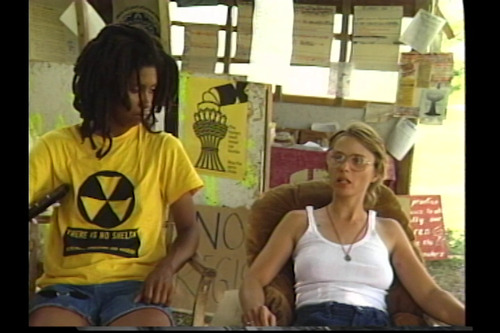
Three interviews with women who participated in the “Seneca Women's Encampment for a Future of Peace and Justice“ protest. The interviews touch on the women's experiences of being detained, their mistreatment under the hands of the Seneca Army Postmen, and their reasons for participating in civil disobedience. -
Seneca Women's Encampment for a Future of Peace and Justice - Tape 6
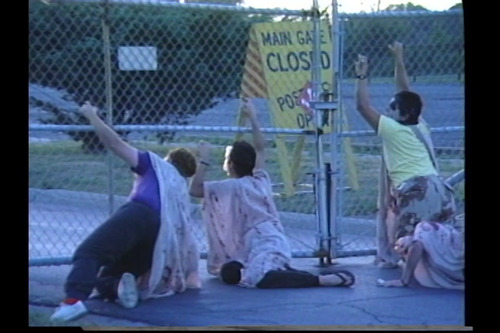
Footage of a demonstration that took place outside of the main gates of the Seneca Army Depot, in which a group of women wearing white fabric and fake blood wail and rattle the chainlink gate as guards look on. A group of women beat on small paddle drums and hum behind them.
Interviews in Tape 3 of this collection describe the experience and meaning behind the demonstration. -
Seneca Women's Encampment for a Future of Peace and Justice - Tape 5
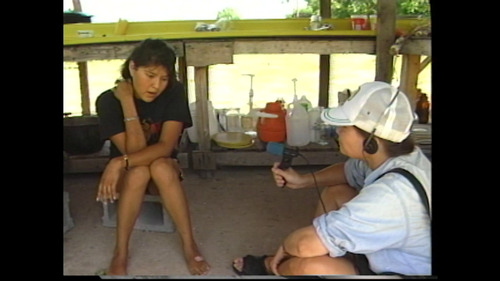
An interview with two women discussing the history of women's peace camps, ecofeminism, and issues of ethnocentricity among non-indigenous activists, particularly among white activists who believe they "know how to do things." Interviewees also discuss restorative land justice and “The Mountain,” a survival camp hosted by Native Americans that teaches indigenous traditions. The video is interrupted by static for the first 16 seconds, as well as from 2:30-6:11 due to the physical condition of the tape. -
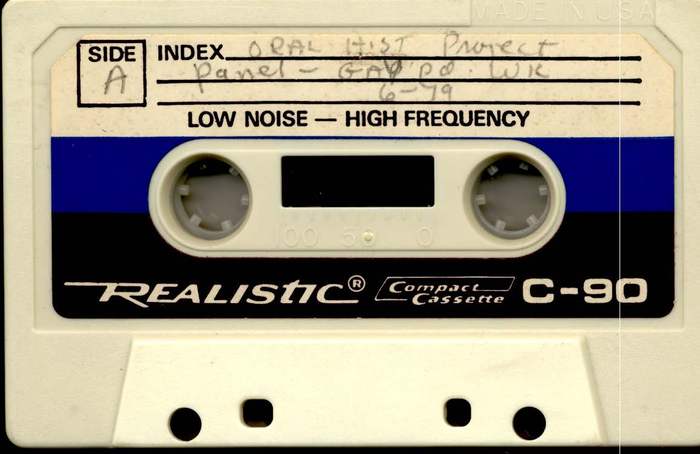
Madeline Davis and Liz Kennedy. Boots of Leather Oral History Project Panel Gay Pride, 1979
Side A:
Panel discussion on the history of the archives, including a brief introduction on how they gather information through different interview procedures within the Lesbian community in order to build the oral history project.
Side B:
Panel discussion continues with topic brought up in side A. -
To Morgan Gwenwald from Stella Rush June 4, 1987 and June 5, 1987 #2 Side A
Stella talks about reuniting with her old friends and passing the torch to new, young activists. She also discusses her struggle with addiction and how she moved past it. -
To Morgan Gwenwald from Stella Rush June 2, 1987 Side A
Stella Rush records a tape for Morgan. She discusses her life and her struggles, and how recording tapes for others helped her to express herself when she was too depressed to write. She mentions nonchalantly at beginning of tape that she won't stop at a Denny's because they once refused her service. -
To Morgan Gwenwald from Stella Rush June 2, 1987 Side B
Continuation from "To Morgan Gwenwald from Stella Rush June 2, 1987 Side A"
-
To Morgan Gwenwald from Stella Rush June 19, 1987, Side A
Stella Rush records her thoughts while on a road trip and talks about a car accident she had in the past and what it was like to travel through Central City, L.A. -
To Morgan Gwenwald from Stella Rush, November 2, Side B
Stella talks about a tape that she created on June 19th of 1987 (Side A) and is grateful for a reunion she recently had with her friends. -
To Morgan Gwenwald With Love Stella Rush November 27, 1988 Side A
A woman named Stella Rush records a tape for Morgan while she’s driving. She discusses her life, recent personal events, her hopes for the future, and her current worries. She talks about Sandy in the hospital, her personalities John and Keith, sings a song (“The Gambler”), and mentions sleeping difficulty. She continues to talk about cancer groups, AA and ALA meetings, and imaginary scenarios. The recording is suddenly cut off at the end. -
To Morgan Gwenwald With Love Stella Rush November 27, 1988 Side B
Stella Rush records a live standup performance of a western comedian. She is continuing her “letter” to Morgan at home. She talks of various things: cartoons, her cat, her grandmother Elizabeth “Lizzie” Dietrich, how she was named Stella, wonders what may happen to the recording, her personalities John and Elizabeth, her parents, Del and Phil, and offers words of advice. Throughout the recording she coughs due to asthma. The recording is suddenly cut off at the end. -
Terry, May 12, 1980
Terry talks about her experience, coming of age as a woman and specifically as a lesbian; and how she sought comfort first in alcohol and then within the lesbian community. -
Ti-Grace Atkinson, Theories of Logic (Tape 2)
In Part 2 of the recording of Ti-Grace Atkinson, she further discusses elements of logic. She connects these elements of logic to oppression and the Women’s Movement. She starts to connect the abstract elements of logic to social issues and includes a discussion of the class system based on the writings of Karl Marx. -
MAD Boston
Proceedings from the MAD Conference in Boston -
Boston, November 14, 1981
Side A:
Opens with an unnamed woman singing with guitar playing in a live venue. Continues to go through the concert with intermittent breaks to speak about songs.
Side B:
Blank -
Windsor, July 31, 1980 (Tape 2)
SIDE A Discussing Windsor’s memories of her relationship with Ruth also called “Skip” beginning in 1933, when they began to identify as lesbians. Past discrimination in town of Reedsville, Pennsylvania, childhood and background, and time attending Allegheny College and working in a factory. Skip came to Buffalo to study biochemistry, and enters the gay community in 1937; however Skip remained in the closet until 1975. Discussing lesbians in the medical profession in New York, and past relationships of Skip. These women attended bars such as Ralph Martin’s and Carousel in late 1930s and early 1940s.
SIDE B Windsor discusses suicides in the lesbian community. Skip was able to accept herself as lesbian, and Windsor explains why.
-
Windsor, July 17, 1980
Windsor talks about what it was like coming out and her relationships, the death of her partner and how that affected her. She also talks about the changes in gay community and what it was like being single or in love. -
Women's Press Collective Workshop (Clip 1)
A recording of a workshop featuring members of the Women's Press Collective, including Wendy Cadden, Judy Grahn, and Martha Shelley. The panelists describe the founding of the Collective in Oakland, California. The uploaded file has been cropped due to Fair Use restrictions. The full file is available at the Lesbian Herstory Archives. -
Women's Press Collective Workshop (Clip 2)
A recording of a workshop featuring members of the Women's Press Collective, including Wendy Cadden, Judy Grahn, and Martha Shelley. The panelists describe the founding of the Collective in Oakland, California. The uploaded file has been cropped due to Fair Use restrictions. The full file is available at the Lesbian Herstory Archives.
-
Women's Press Collective Workshop (Clip 3)
A question-and-answer session with members of the Women's Press Collective, including Wendy Cadden, Judy Grahn, and Martha Shelley. They discuss how they fund their projects. The uploaded file has been cropped due to Fair Use restrictions. The full file is available at the Lesbian Herstory Archives.
-
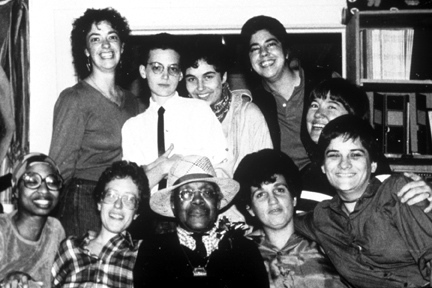
Statement of Purpose; Visitor Feedback / Lesbian Herstory Archives
Oral history recording that documents the history and legacy of the Lesbian Herstory Archives. Members of LHA recite the LHA Statement of Purpose from 1974. This is followed by the reading of quotes (with multiple, unidentified readers) from appreciative visitors to LHA. -
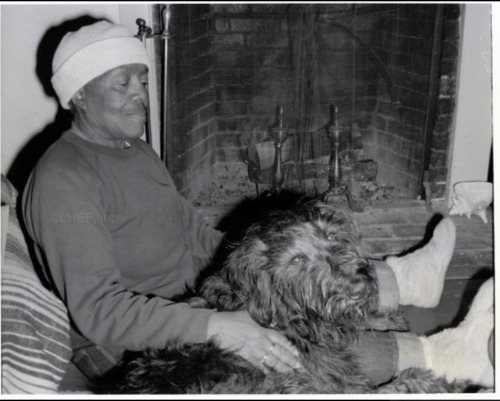
Mabel Hampton talks about Lillian and more, January, 1988 (Tape 1)
Mabel discusses meeting Lillian Foster, her wife, Lillian's childhood, and their life together in the community as well as various events they were a part of against the backdrop of World War II. -
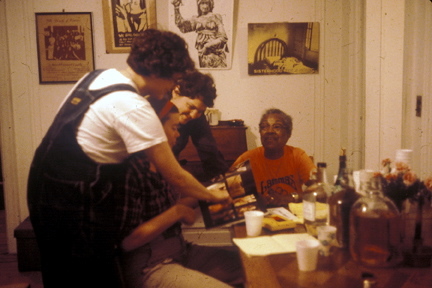
Mabel Hampton, Morgan Gwenwald, Pam Hicks: Breakfast at Pam's, April 9, 1989 (Tape 1)
Morgan Gwenwald visited Mabel Hampton at Pam Hicks' place. Over breakfast, they talked about the dreams Mabel had been having lately, how people thought about her. Morgan made plans to visit Lillian's cemetery with Mabel together and listened to a tape that Mary gave Mabel. -
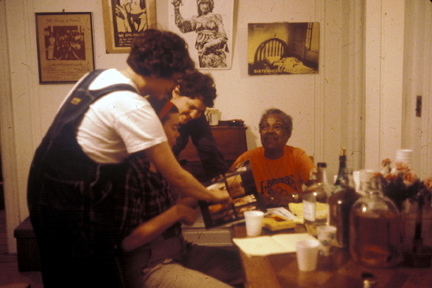
Mabel Hampton, Morgan Gwenwald, Pam Hicks: Breakfast at Pam's, April 9, 1989 (Tape 2)
Pam Hicks and Morgan Gwenwald chat with Mabel Hampton over breakfast about mundane topics, including lost keys and colors. The three get in a car and try to find the cemetery where Mabel has purchased a plot to be buried in. They locate the cemetery, but it is closed to visitors, so they proceed on to see if they can find where she purchased the tombstone. -
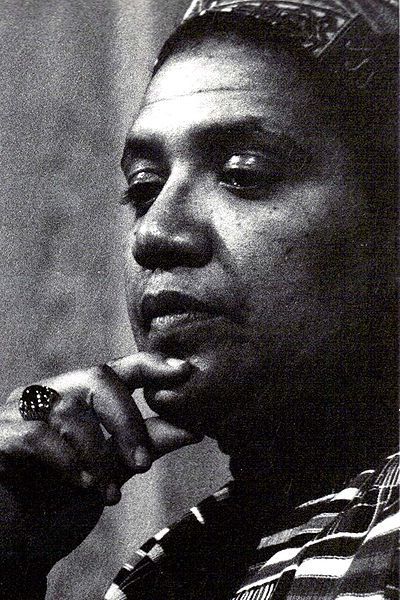
The Personal or the Political - I / Conference on Feminist Theory, September 29, 1979
In addition to Audre Lorde, Linda Gordon, Manuela Prairie, Jessica Benjamin, Bonnie Johnston, Camille Bristow, and Susan McHenry participated in the panel. The recording includes a question and answer session between panelists and audience members. The topics discussed include racism, feminism, class oppression, individualism, sexuality, community, and sisterhood. -
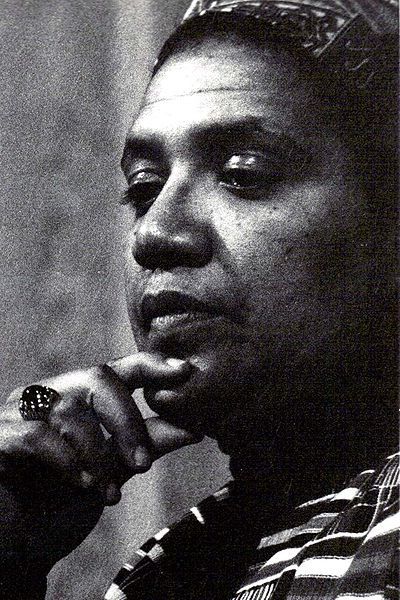
Voices of Women Writing Conference, April and May, 1982 (Tape 2)
Audre Lorde is on the panel. Lorde speaks on side A after other panelists introduce themselves an on side B. This is the recording of a Community Workshop panel, mostly discussing obstacles to women writing, specifically, black womens literature. The recordings are fairly audible aside from some inaudible speakers who are not close enough to the recording device. -
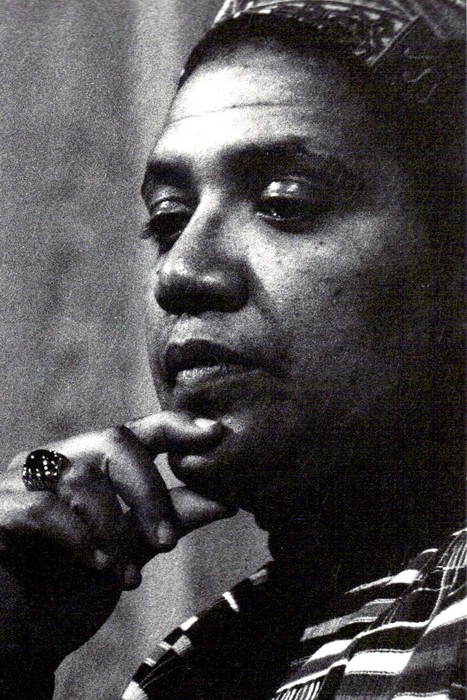
Voices of Women Writing Conference, April 30, 1982 (Tape 1)
Ms Holly makes assorted announcements then introduces Audre Lorde. She reads three poems: "For Each of You" "Poem for Women in Rage" "Sister, Morning is a Time for Miracles". Side B: Continuation of poem from Side A: "Sister, Morning is a Time for Miracles" Then reads: "After Images" Final Poem of reading: "On My Way to San Francisco I Pass Over You and the Verazano Bridge" -
March on Washington / Pacifica Program Service, 1979 (Tape 4 of 4)
Rally mediated by Audre Lorde given at the March on Washington on October 1979. Speech topics include rights of LGBT prisoners, parents, immigrants, and atheists. -
March on Washington / Pacifica Program Service, 1979 (Tape 3 of 4)
March on Washington on October 14, 1979, which dealt with the civil rights of the gay and lesbian community. Participants included Audre Lorde (who can be heard on side A about 80% through), Allen Ginsberg, Peter Orlovsky, Ted Weiss, Gotham, Tom Robinson, Howard Wallace, Kate Millet, and Flo Kennedy. Key topics included civil and human rights, the labor movement, racism, sexism, and love. Short technical glitches occur on Side A. -
-
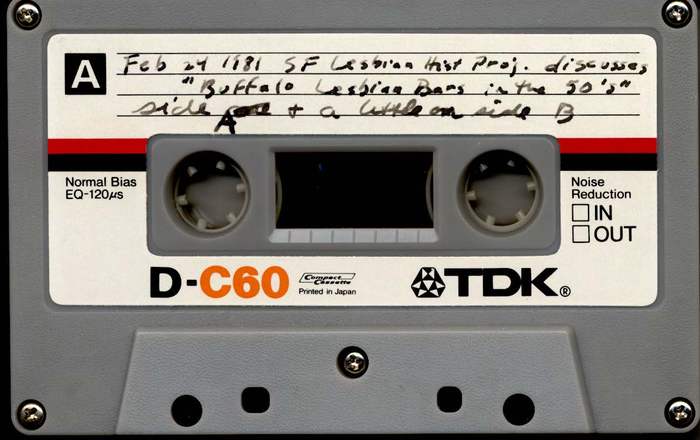
San Francisco Lesbian History Project discusses Buffalo lesbian bars in the 1950's, 1981 February 24
Side A:
Discussion on the social issues in the Lesbian communinity bar and nightlife scene in Buffalo, NY during the 1950s.
Side B:
Continuation of side A. Only 2 minutes of side B used in original recording.Tags Butch and femme -
Workshop #3, Side A, February 18, 1971
This audio recording talks about activism and oppression within the lesbian community. The workshop is a group of women discussing their feelings and experiences with being oppressed as women in society, especially as lesbians. -
Morgan G, Side A, November 13, 1988
This audio recording is discussing her issue with addiction and alcoholism. She opens up about having good people by her side in these hard times. -
Workshop #4, Side B, April 20, 1971
The recording is from a workshop from April 20, 1971. The women are having an open discussion on honesty and trust within the group. The talk about how they feel about each other and how they handle being in Daughters of Bilitis. -
Morgan G, Side B, November 2, 1988
This is a continuation of a previous audio recording. The recording is taken in a car ride and it is a letter for Morgan. She discusses her daily routine. -
-
Dear Morgan, Side A, November 14, 1988
An anonymous woman records a tape to send to her friend Morgan. She is excited about Christmas being in a few weeks and carefully tells her stories as to not reveal the identities of friends who do not want to be named. -
John and Elizabeth, Side B, November 14, 1988
This sound recording is a continuation of a previous tape, but the location of the previous tape is unknown. The woman on the tape discusses a car accident she was in and various aspects regarding this incident. She goes on to talk about her mother and her upbringing. -
Judy Regan, Side A, September 5, 1981
This tape is a mixed tape of various songs by the queer country singer Judy Regan. -
Bachelorettes, Side B, September 5, 1981
The sound recording is women singing the old hymn "Down in the River" with the words changed slightly. The rest of the recording is the women singing various songs. -
Memorial Service Helen J. Sandoz, Side A, July 19, 1987
This tape is a recording from the memorial service for Helen Sandoz on July 19, 1987. The recording is of a religious service for Sandy with various readings from the Bible as well as religious music. After the religious ceremony, friends and loved ones told humorous and moving stories about Sandy. -
Honesty Ends Helplesness Side B
This tape was recorded November 14th and is a continuation of a previous recording, although the location of this previous recording is unknown. She discusses an accident and an encounter with her sponsor. -
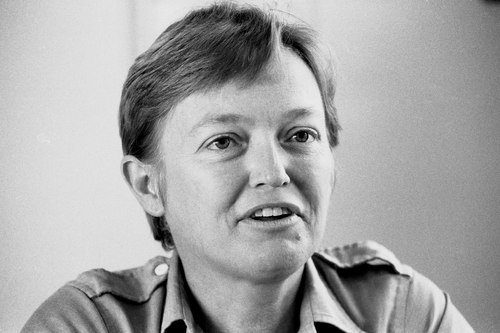
Karen Anderson Ryer Interview, 1987
Karen Anderson Ryer discusses her coming out process, and the acceptance of her parents. She talks about butch vs. fem, and changing generational attitudes. Discusses importance of feminism to lesbianism specifically, and differences from gay men’s movement. She details the split of “The Ladder” from the San Francisco chapter from DOB, and how she left to start a new magazine. Also mentions the integration of different lesbian communities – Oakland vs. San Francisco, and the impact of AIDS on the lesbian community. -
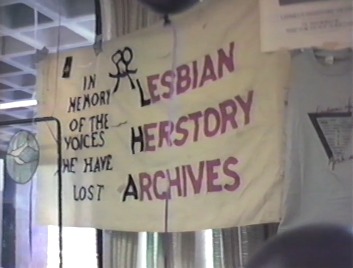
Amazon Autumn Event, 1986
Footage of an event held in 1986. Both Deborah Edel and Judith Schwarz are featured sitting at a table for the Lesbian Herstory Archives and are handing out information about lesbian herstory in general and the archives more specifically. Joan Nestle and Mabel Hampton are also featured. -
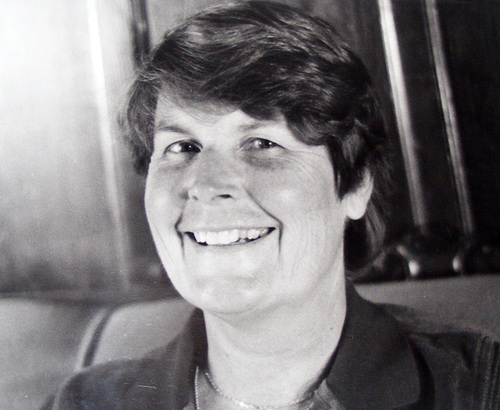
Lois Beeby Interview, May 9, 1987
Lois Beeby discusses her early experiences and confusion as to recognizing she was a lesbian. She speaks about her role as a member and officer in the Daughters of Bilitis, and the eventual unrest and split in the group, leading to her leaving DOB. She speaks of unrest between gay men and lesbians and the desire for the two to join together as a united front. -
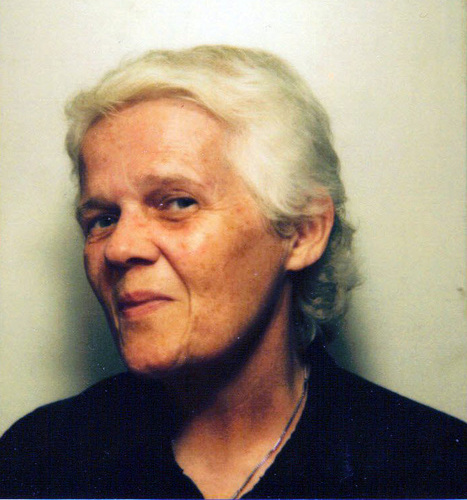
Arcus Flynn Interview, November 1, 1987
Arcus Flynn discusses her early life and her struggle with isolation and depression, her eventual discovery of the Daughters of Bilitis meetings and the community and friendships she found there. Arcus talks about the early importance of roles assumed by lesbians in the community (butch/femme), her involvement with the Women’s Rights movement, her evolution from Catholicism to born-again pagan spirituality (the Irish triad: truth, knowledge, and nature), and her discovery of herbology and natural healing. -
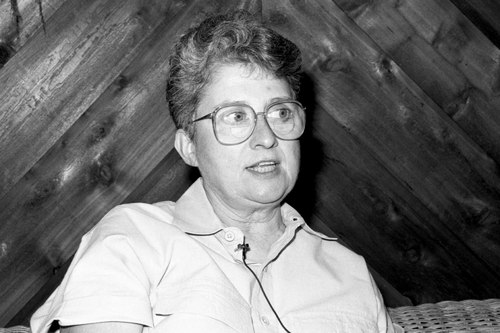
LHA Daughters of Bilitis Video Project: Barbara Grier, November 27, 1987 (Tape 7)
This video consists of a brief interview with Grier’s partner, Donna McBride, and then follows a discussion Grier leads on her book collection, favorite authors, and publishing experience. She and McBride talk about Naiad press and its successes over the years and the video shows their office workspace and the multitude of submissions they receive for publication. Donna McBride’s segment focuses on her awareness of being a lesbian, the aftermath of telling her parents, and her later involvement with women’s activist groups. -
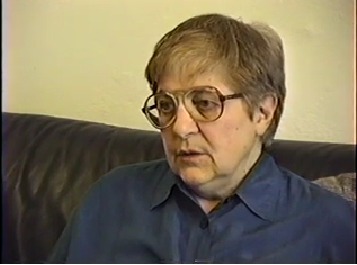
Rose Jordan Interview, May 23, 1993
Rose Jordan discusses her involvement with women’s political organizations, including the New York chapter of of the Daughters of Bilitis, and feminist groups along with the schism that existed between 2 generations of lesbian women.
Accompanied by an abridged version highlighting Rose Jordan's discussion of political organizations and feminist groups. -
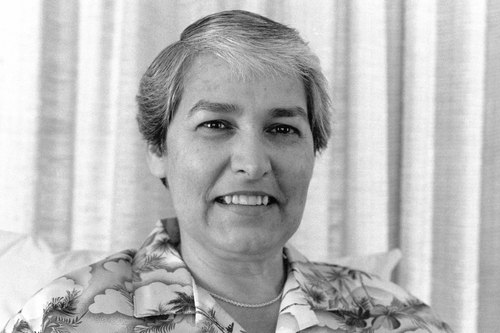
Nikki Nichols Interview, May 14, 1987
Nikki Nichols describes her coming out process, and experiences with older lesbian women as a teenager. Discusses changing views on butch/fem issue. Laments the lack of lesbian groups in Sacramento, as well as describing issues with and fears of gay bars. Talks about how the discovery of DOB saved her life – socially and otherwise. Describes first DOB convention in 1960. Discusses her research into Native American attitudes towards homosexuality, as well as Native American rights movement.
On tape 2, she talks about The Ladder and its role in lesbian history, and gives her thoughts about which leaders loomed large in the DOB. She brings up the Act or Teach “controversy” of the early 60s. She mentions problems with drug culture in San Francisco during the 60s. She also talks about her enthusiasm for active protest/picketing, and the difficulties of getting gay activists and rallies in California outside of San Francisco. -
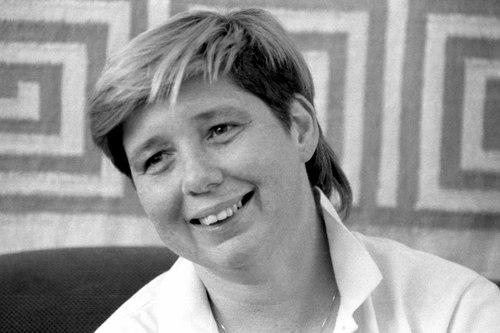
Helen Ruvelas Interview, May 10, 1987
Helen Ruvelas discusses her involvement with the Daughters of Bilitis during the 1970’s and the strong friendships she developed with some of the women in the group. She also talks about her eventual drift away from the group and its dissolution. -
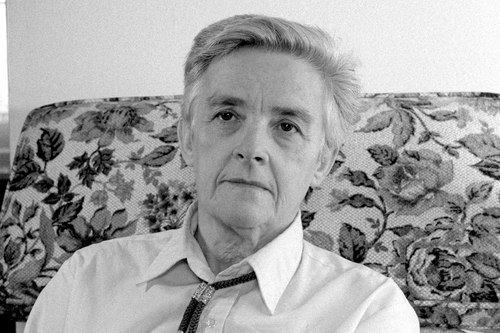
Stella Rush & Helen Sandoz, May 15, 1987 (Tape 3 of 3)
Stella Rush and Helen Sandoz are interviewed in 1987. The interview mostly concerns Stella Rush, who talks about her childhood; specifically her encounters with incest and molestation. She also talks about her experiences with police discrimination in the 1950s and 1960s in L.A. Helen and Stella both talk about being editors of the Ladder and being a part of the DOB. Stella talks about workplace harassment, and fear of loser her job. They show photographs from the 1960s, including some of their cat. The video closes with the two discussing their wedding rings.Tags Bars, Christianity, Daughters of Bilitis, Discrimination, Families, Gay liberation movement, Hate crimes, Helen Sandoz, Homosexuality, Incest, Intergenerational relationships, Interviews, Job discrimination, LGBTQ+ civil rights, Mailing lists, Mental health, Mothers, Older lesbians, Parents of lesbians and gays, Police harassment, Radical lesbians, Rape, Religion, Sexual assault, Stella Rush, The Ladder, Violence, Women -
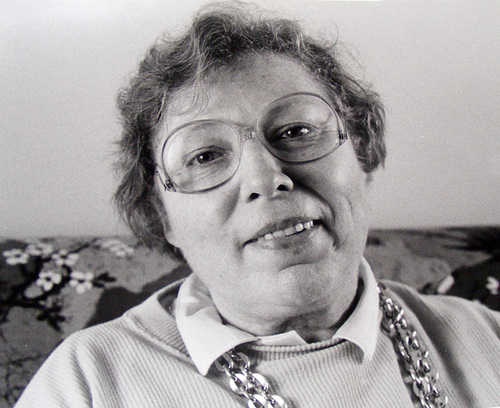
Billye Talmadge Interview, 1987
Billye Talmadge discusses her early experiences as she came to understand her own preferences and sexuality, and the support she received from her college dean, classmate, and mother. She describes her role in the Daughters of Bilitis and the responsibilities and liabilities of being an officer in the group. She elaborates on the social and political climate of the times, and how she endeavored to help people overcome their fear of harassment and discrimination through providing education and supportive counseling and resources. -
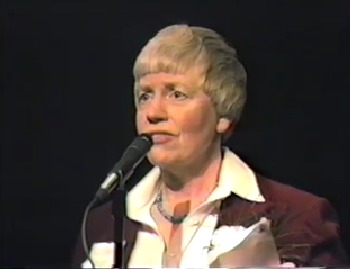
Boston DOB 20th Anniversary, April 2, 1989
The Boston chapter of the Daughters of Bilitis celebrate their 20th anniversary with opening remarks by Lois Johnson. She briefly discusses the founding of the chapter in 1969 by Jan Chase before thanking committee members and individuals for their contributions to the ceremony. The video ends with the lighting and cutting of the cake. -
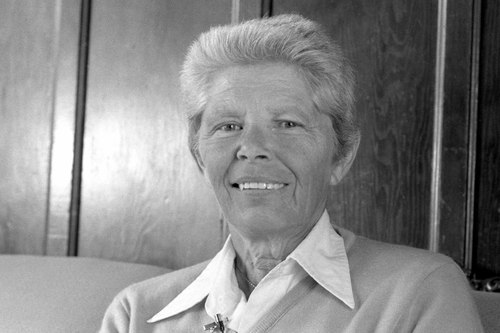
P.D. Griffin Interview, May 13, 1987
P.D. Griffin discusses her role in the Daughters of Bilitis and her relationship to the lesbian community. She also discusses her interests, which include softball and ukulele. -
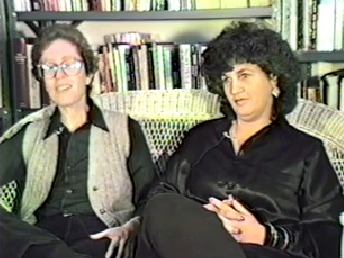
Deborah Edel, Joan Nestle & Judith Schwarz Interview
Deborah Edel, Joan Nestle, and Judith Schwarz discuss the formation of the Lesbian Herstory Archives in the 1970s. They detail how the Archives grew out of a consciousness raising group through the Gay Academic Union in 1973. They talk about the mission of the archives, to ensure that lesbian voices and culture were heard and preserved. They also talk about the growth of their collections through donations of books, papers, and photographs from the lesbian community. -
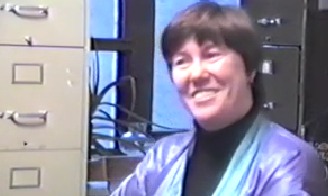
Judith Schwarz Interview, 1992
Judith Schwarz discusses how grateful she is the DOB exists, the way that societal attitudes towards lesbianism has changed since the founding of DOB, how many women were afraid to have mail mailed to them or used pseudonyms or “bar names” to hide their identity.
She discusses her first lesbian relationship, which happened shortly after she moved to San Franciso, and how this introduced her to lesbian culture, specifically survival literature. She talks about how she was at first intimidated by certain aspects of lesbian culture, like powerful butch lesbians, frequent drinking in the community, and lesbian literature.
She talks about the impact of DOB, and how there was harassment from police as well as other lesbians or women. She also talks about sharing The Ladder around her workplace in secret, and shares the story about how The Ladder was “stolen” from the DOB San Franciso offices. She says that diversity was always lacking in the DOB, and talks about some reasons why.
DOB meetings sometimes consisted of potluck dinners and Gab and Javas, sometimes taking place at Schwarz’s house. She talks about how lesbians dressed at the time.
Finally she discusses the differences between the DOB and the Lesbian Herstory Archives and how they met different needs for lesbians, and finally some of the special collections in the archive. Joan Nestle jumps in at the end to discuss radical politics and the FBI surveillance of the DOB. -
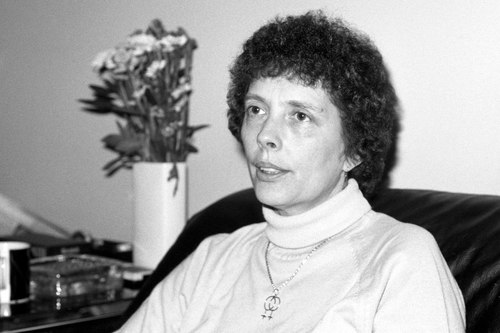
Pat Turner Interview, December 31, 1987
Pat Turner describes early experiences as a lesbian growing up in the south, conflicts with her enthusiasm for religion as a young person, and her family’s reaction to her sexual orientation. She talks about the relative lack of gay social life in Tennessee, despite the existence of certain bars in Nashville. Discusses how her first letter to The Ladder became an article, and the response from readers. Describes working on The Ladder, and later experiences after the Stonewall. -
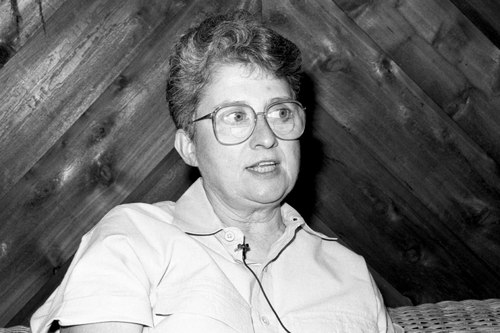
LHA Daughters of Bilitis Video Project: Barbara Grier, November 27, 1987 (Tape 5)
The majority of this video depicts Barbara and her partner, Donna McBride, going through photo albums and images of Barbara’s childhood, her family, and then her later years with Donna. Some topics that come up include Helen Bennett, Barbara’s relationship before Donna, and Naiad Press. The last 30 minutes or so of the video focus on Barbara as she discusses The Ladder and the various women who contributed to it and how publications helped shape social change for the gay and lesbian movement. -
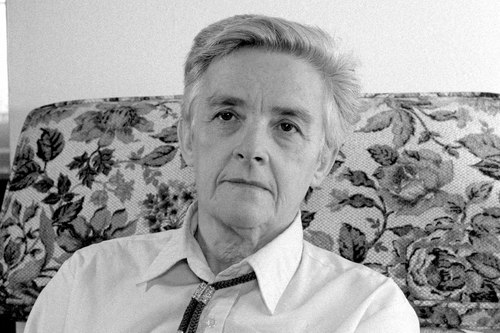
Stella Rush & Helen Sandoz, May 15, 1987 (Tape 2 of 3)
Stella Rush and Helen Sandoz discuss writing and printing the Ladder, and another lesbian publication, the One. They also touch on a range of topics including obscenity laws, pornography, spirituality, the Homosexual Bill of Rights, and DOB conferences. They discuss the politics of the 1980s and compare it to that of the 1950s. Stella goes into detail about her upbringing and subsequent mental health issues. -
Ti Grace Atkinson, Tape 1 of 10, Side A
This sound recording captures workshop discussions led by Ti Grace Atkinson at the Daughters of Bilitis office. -
Ti Grace Atkinson, Tape 1 of 10, Side B
This sound recording captures workshop discussions led by Ti Grace Atkinson at the Daughters of Bilitis office. -
Ti Grace Atkinson, Tape 2 of 10, Side A
This sound recording captures workshop discussions led by Ti Grace Atkinson at the Daughters of Bilitis office. -
Ti Grace Atkinson, Tape 2 of 10, Side B
This sound recording captures workshop discussions led by Ti Grace Atkinson at the Daughters of Bilitis office. -
Ti Grace Atkinson, Tape 3 of 10, Side A
This sound recording captures workshop discussions led by Ti Grace Atkinson at the Daughters of Bilitis office. [THIS FILE DUPLICATES FILE "SPW159_DOB ATKINSON #3 SIDE B_"] -
Ti Grace Atkinson, Tape 3 of 10, Side B
This sound recording captures workshop discussions led by Ti Grace Atkinson at the Daughters of Bilitis office. -
Ti Grace Atkinson, Tape 4 of 10, Side A
This sound recording captures workshop discussions led by Ti Grace Atkinson at the Daughters of Bilitis office. -
Ti Grace Atkinson, Tape 4 of 10, Side B
This sound recording captures workshop discussions led by Ti Grace Atkinson at the Daughters of Bilitis office. -
Ti Grace Atkinson, Tape 5 of 10, Side A
This sound recording captures workshop discussions led by Ti Grace Atkinson at the Daughters of Bilitis office. -
Ti Grace Atkinson, Tape 5 of 10, Side B
This sound recording captures workshop discussions led by Ti Grace Atkinson at the Daughters of Bilitis office. -
Ti Grace Atkinson, Tape 6 of 10, Side A
This sound recording captures workshop discussions led by Ti Grace Atkinson at the Daughters of Bilitis office.Tags Ti Grace Atkinson -
Ti Grace Atkinson, Tape 6 of 10, Side B
This sound recording captures workshop discussions led by Ti Grace Atkinson at the Daughters of Bilitis office. -
Ti Grace Atkinson, Tape 7 of 10, Side A
This sound recording captures workshop discussions led by Ti Grace Atkinson at the Daughters of Bilitis office. -
Ti Grace Atkinson, Tape 7 of 10, Side B
This sound recording captures workshop discussions led by Ti Grace Atkinson at the Daughters of Bilitis office. -
Ti Grace Atkinson, Tape 8 of 10, Side A
This sound recording captures workshop discussions led by Ti Grace Atkinson at the Daughters of Bilitis office. -
Ti Grace Atkinson, Tape 8 of 10, Side B
This sound recording captures workshop discussions led by Ti Grace Atkinson at the Daughters of Bilitis office. -
Ti Grace Atkinson, Tape 9 of 10, Side A
This sound recording captures workshop discussions led by Ti Grace Atkinson at the Daughters of Bilitis office. -
Ti Grace Atkinson, Tape 9 of 10, Side B
This sound recording captures workshop discussions led by Ti Grace Atkinson at the Daughters of Bilitis office. -
Ti Grace Atkinson, Tape 10 of 10, Side A
This sound recording captures workshop discussions led by Ti Grace Atkinson at the Daughters of Bilitis office. -
Ti Grace Atkinson, Tape 10 of 10, Side B
This sound recording captures workshop discussions led by Ti Grace Atkinson at the Daughters of Bilitis office. -
Casse Live at Sagaris, Tape 1 of 1, September 15, 1981
This sound recording captures a live music performance. The audience sings and claps along to several traditional American folk songs including "Down in the Valley to Pray". -
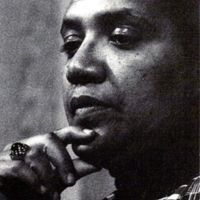
Reading from 13th Moon Series, 1982
Side A : A poetry reading from Audre Lorde
-
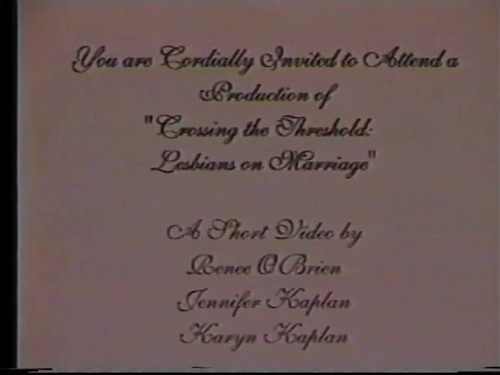
Crossing the Threshold: Lesbians on Marriage
This segment shows interviews with several members of the lesbian community, including a lesbian couple, a lesbian lawyer, and a mother of a lesbian, discussing the possibility of gay marriage. Themes discussed include the ways that legal marriage can or can not legitimize gay relationships; the presence or absence of gay people’s desire to get married; legal protections that marriage can provide; whether or not it would encourage parents to accept gay children; alternatives to gay marriage including domestic partnerships and second parent adoptions; and imaginings of what a lesbian wedding ceremony would look like. Also mentioned around 1:30 is the mass wedding of gay couples that took place as a demonstration on the lawn of the Lincoln Memorial on April 25,1993. This event was part of the March on Washington for Lesbian, Gay and Bi Equal Rights and Liberation.
Tags Marriage -
-
-
-
-
-
-
-
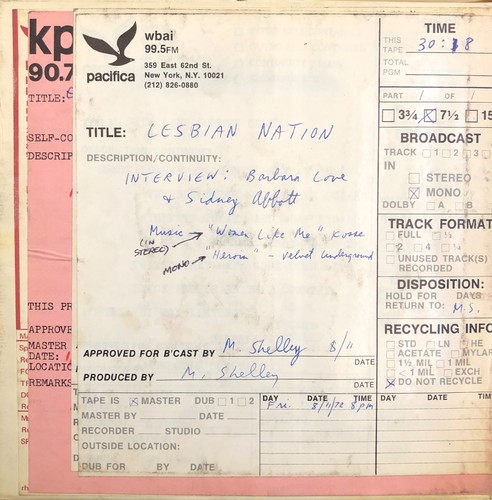
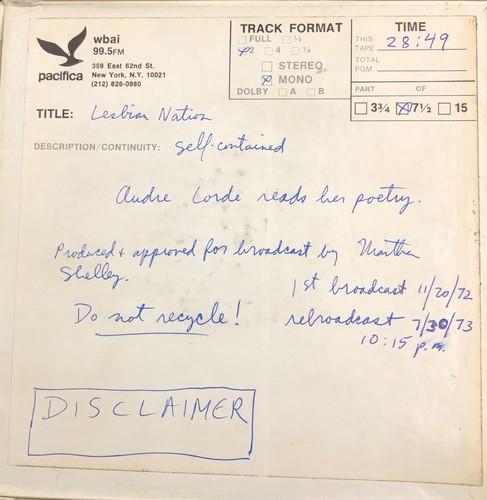
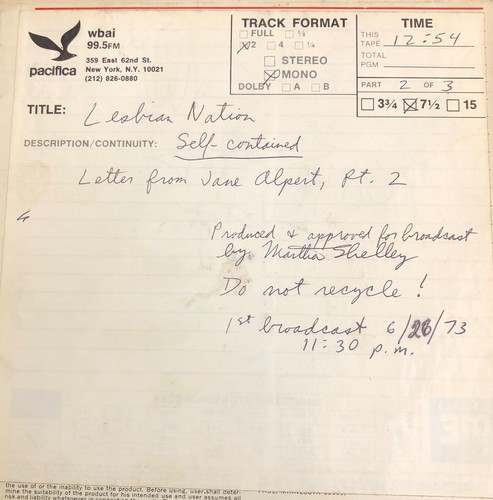
Lesbian Nation, November 20, 1972
A re-broadcast of a poetry reading with Audre Lorde on Staten Island. The poem read include "Times Change and We Change with Them or We Seem to have Lost Touch with Each Other," "Martha," and "The Maiden, and Song." -
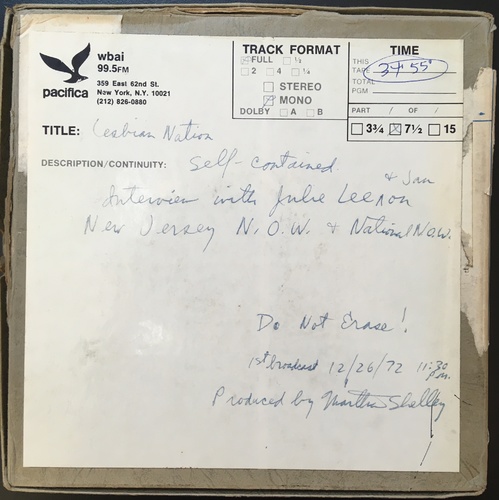
Lesbian Nation, December 26, 1972
Interview with Julie Lee, an important member of the Daughters of Bilitis, about the New Jersey National Organization for Women (N.O.W.) and her struggles to create a chapter of NOW dedicated to "doubly-oppressed" women (which included lesbians, POC women and improvished women in the community). -
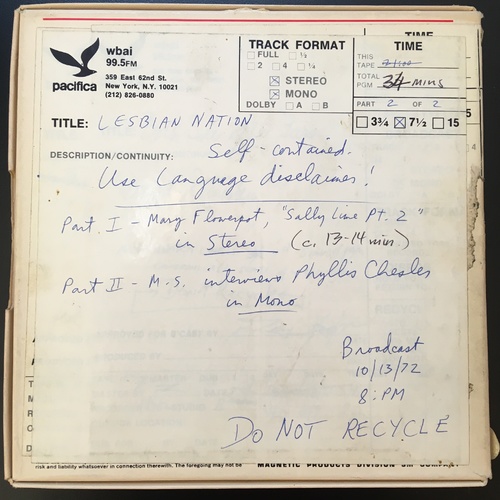
Lesbian Nation, October 13, 1972
Mary Flowerpot plays a recording of Joyce Grenfell's audio drama and a continuation of the story of "Sally Lime, the Third Woman." Later, Martha Shelley interviews Karla Jay and June Rook about the book "Out of the Closet," a gay anthology of views and articles about topics including the gay experience in Cuba and a discussion of the value of the individual perspective. [Music: Bar One by Maxine Adele Feldman] -
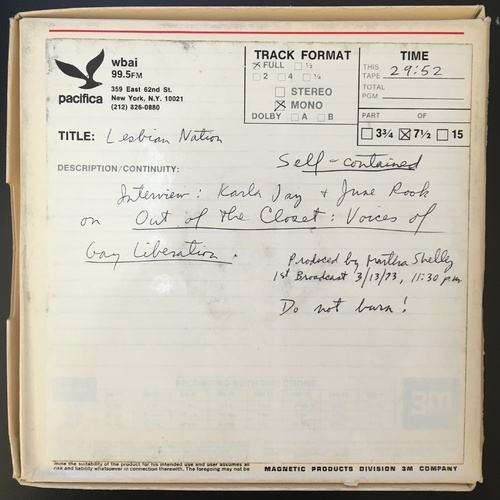
Lesbian Nation, March 13, 1973
Karla Jay and June Rook about the book "Out of the Closet," a gay anthology of views and articles about the gay experience including the gay experience in Cuba and a discussion of the value of the individual perspective. [Bar One by Maxine Adele Feldman] -
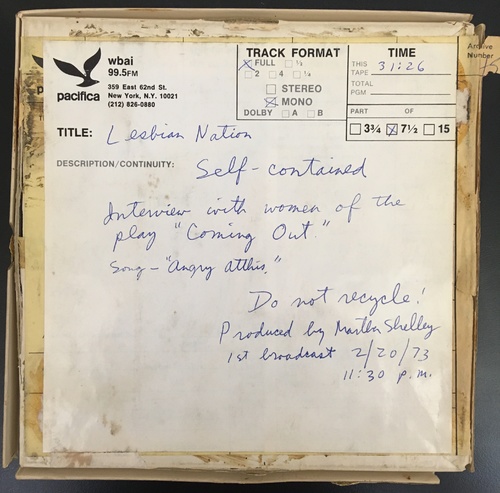
Lesbian Nation, February 20, 1973
Interview about the play "Coming Out: A Documentary Play About Gay Life & Liberation in the U.S.A". by Jonathan Ned Katz with five members of the cast. In the course of the conversation, the cast also discusses issues with relating to other social groups through the play. -
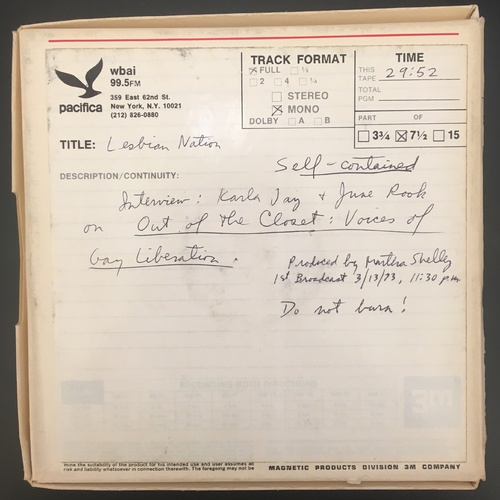
Lesbian Nation, October 20, 1972
Bertha Harris from Richmond College on writing and her life as a lesbian author.