
Browse Items (3 total)
Sort by:
-
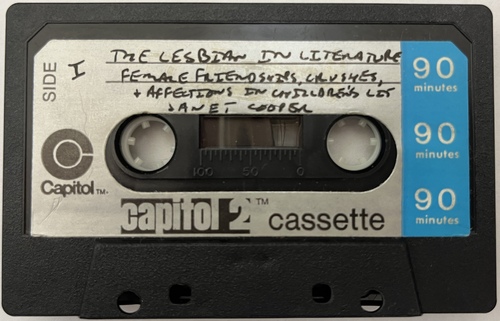
The Lesbian in Literature - Female Friendships, Crushes + Afffections in Children's Lit - Janet Cooper
This tape contains the third panel from the Gay Academic Union Conference at NYU, the "Lesbian in Literature" Panel. Panelists are Janet Cooper, speaking on female crushes and friendships in children's literature, and Cynthia Secor, speaking about Gertrude Stein and James Joyce. The moderator was Virginia Caputo.
Janet describes that the first room in a library targeted specifically for children was in the Pratt Library in Brooklyn in 1895. The librarian Anne Carole Moore worked there, and would become a very influential children's librarian. She speaks on the monopoly of children's literature in publishing and book awards, with Anne Carole Moore at the center due to her connections with other powerful librarians. Since Anne Carole Moore's appointment, child friendships and friend crushes in literature have disappeared. The removal of content in library books where children physically touched each other, Janet says, was a direct result of the fear of lesbianism.
Cynthia Secor speaks about Gertrude Stein and James Joyce. She asserts that Stein is an oft-overlooked figure in literature. Gertrude Stein was a sort of hidden figure, while James Joyce was taught everywhere. Stein was read by many lesbian women, but Cynthia did not read Stein until she joined the lesbian community. Cynthia reads a passage by Stein, "Cow come out...", discusses Stein's novella, Q.E.D., and her "Patriarchal Poetry" essay. -
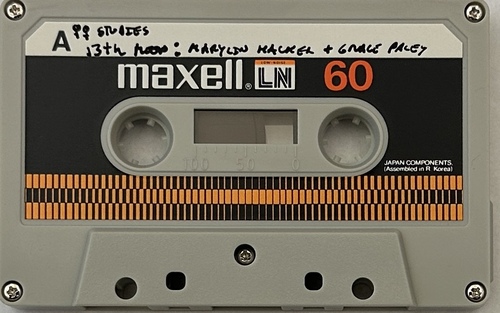
Women's Studies - 13th Moon: Marilyn Hacker and Grace Paley
Presented in the Women's Studies series, this episode contains poetry readings by Marilyn Hacker, an editor for feminist literary magazine 13th Moon, and poet Grace Paley. -
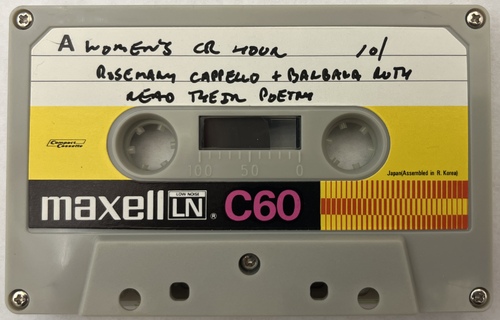
Women's CR Hour 10/ - Rosemary Cappello + Barbara Ruth Read Their Poetry
In this episode of Women's Consciousness Raising Hour, the first poet Rosemary Cappello reads a mixture of original poems and poems from friends and other notable poets, surrounding the theme of correspondence. Rosemary views correspondence as the most faithful way to show affection and grow closer with other poets. She also reads a poem that she wrote, in place of an angry letter, to respond to an anti-feminist book review.
The second poet, Barbara Ruth, opens with a poems about her awe for life: her experience knowing and being close to other women, seeing a solar eclipse. Her poems discuss women's issues, specifically, the tension between being a woman and having intense or maddening emotions, and the tensions women have with men. Her poems frequently invoke the power of women and call for a revolution. Furthermore, Barbara grapples with issues of valuing some lives over others, witnessing suffering, narcissism, and simple wanting. She also reads poems about her mother.