Browse Items (771 total)
Sort by:
-
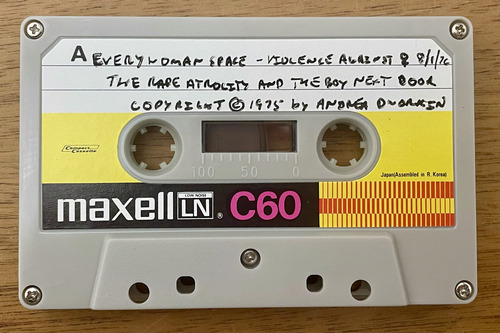
Everywomanspace - Violence Against ♀ (Women) 8/1/76 - The Rape Atrocity and The Boy Next Door - copyright © 1975 by Andrea Dworkin
Woman talking about the toxic beliefs that a woman's body belong to men. Discusses rape, and the poltics behind why people think woman were put on this earth as functional objects to be used by men. Reclamation in naming these harmful systems and acts. Woman proceeds to gives examples of common men violating the boundaries of women and young girls. Goes into discussing the statisitcs of how many rape incidents go unreported, and how many rapists go unconvicted even when reported. Woman then discusses how men bond over the violation of women. That takes precendent over racial bonding. -
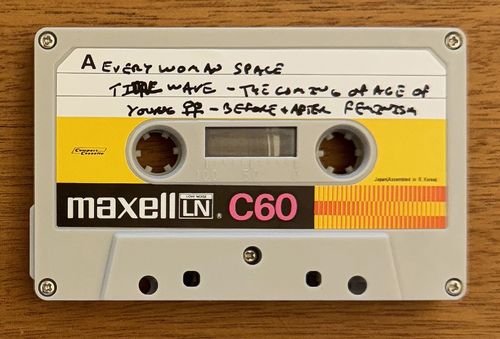
Everywomanspace - Tidal Wave - The Coming of Age of Young ♀♀ (Women) Before + After this Decade of Feminism
A conversation between Irene Yarrow and Nina Kriegel includes a discussion about what it must have been like to grow up, reach adolescence, and go through one's teens at a time when the women's movement was already gaining momentum. Examine the generational upbringings and consider how much the women's movement has truly impacted them, particularly in comparison to growing up before the second wave of feminism. -
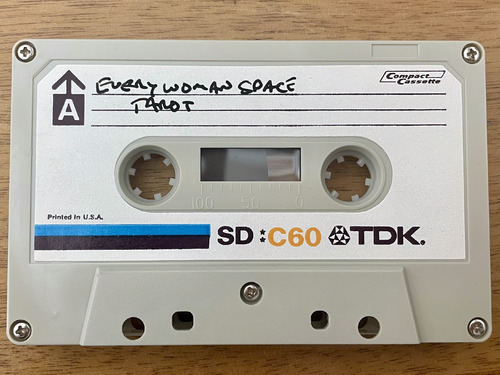
Everywomanspace - Tarot
Tarot reader explains her practice and interpretation of tarot from a “subjective level.” Spirituality/tarot is positioned as a move from patriarchy. The tarot reader credits her practice of tarot to her upbringing around women, reading of feminist texts, also her mother is a witch. -
Everywomanspace - Marilyn Coffey
Irene Yarrow hosts writer and poet Marilyn Coffey on the show Everywomanspace. The program starts with Marilyn reading several of her poems: "Insight," "The Diet," "Wordlessly," and "Observation." Irene and Marilyn discuss Marilyn's brief career in journalism and development as a writer, and the writing of her novel, Marcella, a coming-of-age story. Marilyn then reads an excerpt from Marcella.
After the excerpt, Marilyn Coffey explains the projects she has been working on more recently--her second novel, books of essays, and teaching English at Pratt Institute. Irene and Marilyn discuss the difficulties of switching between various forms of writing, like poetry vs. prose vs. non-fiction. Marilyn also reflects on how joining the Women's Movement and becoming a feminist has changed her writing and the reception of her writing. They discuss how deeply ingrained the patriarchy is in their lives and consciousnesses. Marilyn reads a final poem, "Cold," to end the program. -
Everywomanspace - Irene Yarrow Speaks with Marge Piercy
On this episode of Everywomanspace, Irene Yarrow interviews poet and author Marge Piercy. Marge discusses her book "Woman on the Edge of Time" and (side B) reads her poems "To Be of Use" and " Living in the Open." -
Everywomanspace - Assata Shakur
This episode of Everywomanspace, hosted by Irene Yarrow on WBAI radio, Yarrow and a group of women discuss the recent events surrounding Assata Shakur's arrest and imprisonment and current treatment in the media and jail system. They read Shakur's poems, "What is Left" and play a recording of Evelyn Williams reading Shakur's poem, "Rights and Responsibilities Middlesex County Jail." The women go on to discuss the current state of Shakur's trial, share information on how listener's can support her, play a recording of Shakur thanking supporters from prison, and take calls from listeners. -
Everywomanspace - Anti-abortion Legislation and the 'Family' Protection Act
This edition of Everywomanspace presents a conversation between Betty Levinson, an attorney in private practice and one of the regular producers of the Women's Legal Clinic, and Rhonda Copeland of the Center for Constitutional Rights, discussing the issue of abortion, along with the cuts that happened at the constitutional level towards Medicaid, and the consequences of the Family Protection Act. -
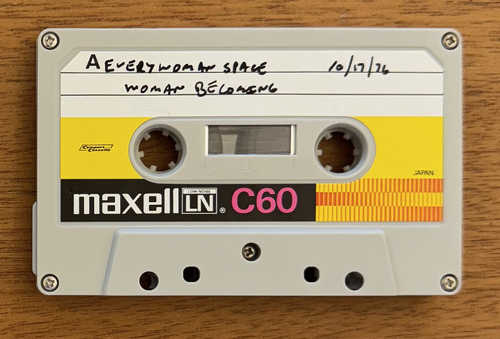
Everywomanspace - Woman Becoming
This episode of Everywomanspace, hosted by Irene Yarrow on WBAI radio, features the complete reading of Yarrow’s autobiographical story “Woman Becoming.” Yarrow explores her personal journey of self-realization and coming out as a lesbian, interwoven with experiences of motherhood, marriage, and feminist awakening. The broadcast incorporates poetry by Judy Grahn, musical selections by Alix Dobkin and Joni Mitchell, and live listener call-ins. -
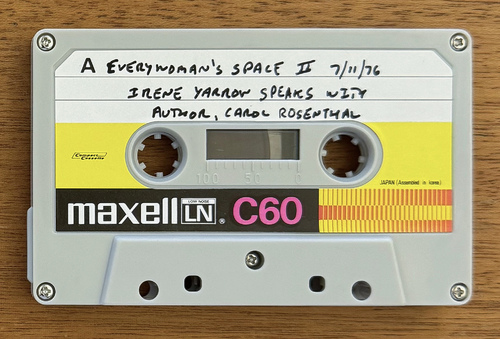
Everywoman Space II 7/11/76 - Irene Yarrow Speaks with Author, Carol Rosenthal
This is the second episode of Everywomanspace. Host, Irene Yarrow, speaks with author Carol Rosenthal. Rosenthal reads her short story Cowboys and Yarrow reads her short story, Mother. The two briefly discuss each piece and how to support women's writing amongst themselves before taking calls from listeners on the same topics. -
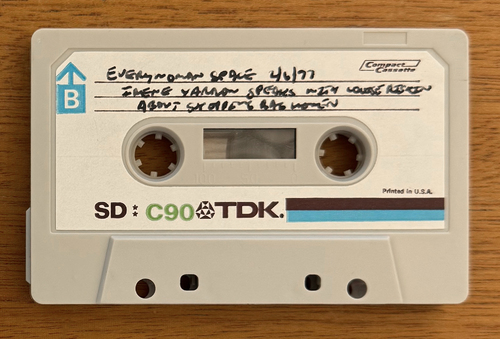
Everywoman Space 2/6/77 - Irene Yarrow Speaks with Louise Risken about Shopping Bag Women
In this episode of Everywomanspace, host, Irene Yarrow, speaks with Louise Risken about the lives of "shopping bag women" (unhoused women) in New York City. They play a short selection of recorded interviews between Risken and these women then take calls from listeners. -
Everywoman Space - Women Writers - Irene Yarrow Speaks with Jan Clausen
In this episode of Everywoman Space (the second show of the Women Writing Series) host, Irene Yarrow, speaks with author Jan Clausen. Clausen reads a selection of her work, a short story called "The Warsaw Ghetto." Yarrow and Clausen go on to discuss the story and writing process. They take calls from listeners and Clausen reads a poem titled "A Christmas Letter." -
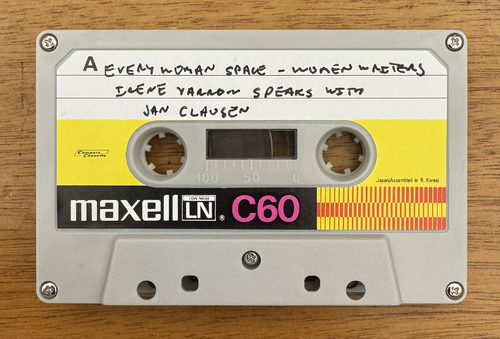
Everywoman Space - Women Writers - Irene Yarrow Speaks with Jan Clausen
Irene Yarrow opens this episode of Everywomanspace with information about Lesbian Switchboard and Identity House to help listeners who want to know how to reach the gay community. She recommends these organizations and coming-out groups, along with consciousness-raising groups, for any woman who wants to get together with other women to discuss issues relating to feminism or lesbianism.
Irene interviews Jan Clausen, a poet and writer from Oregon who reads her short story, "The Warsaw Ghetto." Irene and Jan discuss autobiographical writing, the experience of writing about friends and acquaintances, incorporating the political into personal writing, and receiving feedback as a writer. They also debate the question of whether feminist and lesbian writers should publish with women's presses or commercial presses, prompted by a questionnaire Jan sent to a number of lesbian writers, which she describes as her "writing community." Finally, Irene asks Jan if she feels that her stories with "lesbian content" limit her to a lesbian audience. Both hope that all women would be interested in women's content, regardless of sexuality. Jan also reads her poems, "The Christmas Letter" and "This is a Poem for You, Mary."
Irene also takes questions from callers (side B) including a woman asking for advice on how to find resources to respond to her younger sister coming out and a woman who wanted to share her opinion that publishing through women's presses will be the only option when the women's movement "goes out of vogue." -
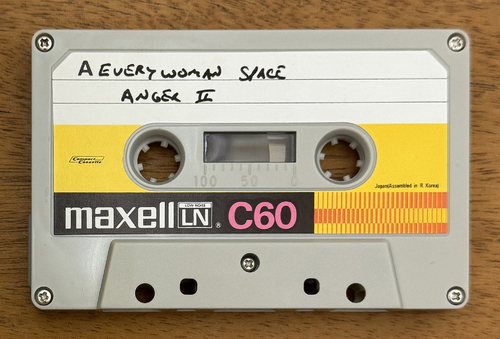
Everywoman Space - Anger II
This Every Woman’s Space episode is centered on the theme of women’s anger, how it is expressed, repressed, and how it is shaped by socialization. Side A opens with an introduction explaining that this episode continues a previous “Speak Out on Anger” program, inviting women of all identities to share their experiences. The host plays a recorded discussion with writer Isabel Miller about interpersonal anger among women and the difficulties of expressing it, followed by readings of listener letters and journal entries, including one describing sexism in a legal workplace. Side B continues with call-in discussions where women describe struggles to voice anger in friendships, workplaces, and family relationships, reflecting on how they were conditioned to “be nice” and suppress confrontation. The host comments on these dynamics, encouraging listeners to unlearn emotional repression and view anger as a constructive, transformative force. The program closes with a listener’s poem and Margie Adam’s song “I’ve Got a Fury”. -
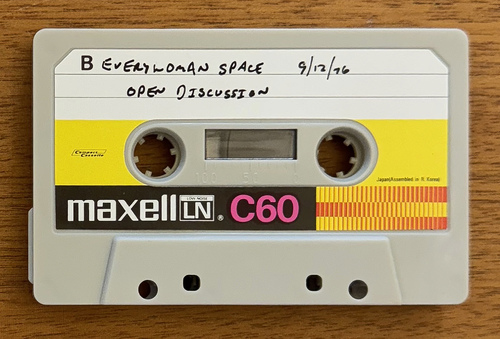
Every Woman Space 9/12/76 - Open Discussion
In this episode of "Everywomanspace," hosted by Irene Yarrow, the host emphasizes that the program is inclusive for all women, regardless of sexual orientation, race, ethnicity, social class, or gender. She introduces the show as a platform for open communication and discourse. Throughout the episode, Irene takes calls from listeners, welcoming their criticisms and suggestions regarding what they would like to see in the program in the future. -
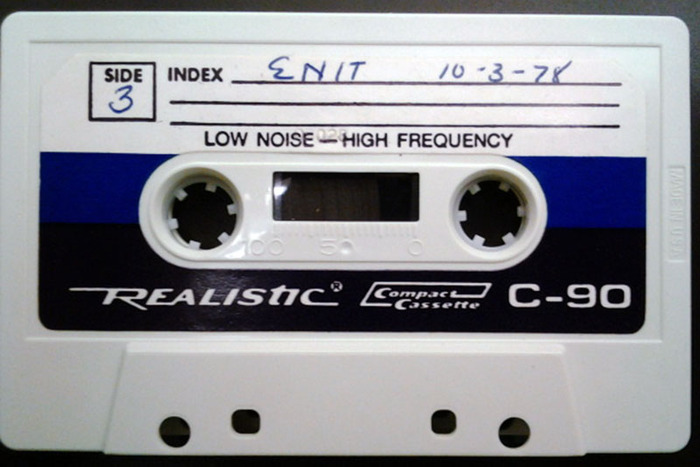
Enit, October 3, 1978 (Tape 2)
Enit discusses how her perception of Lesbian oppression has changed over time. She also talks about acceptance in the work place and how professionals view Lesbians. Enit explains that her personal interests have changed with age and that her hobby is dance. She finishes by discussing her interactions with straight women and the support she gets from her Lesbian friends. -
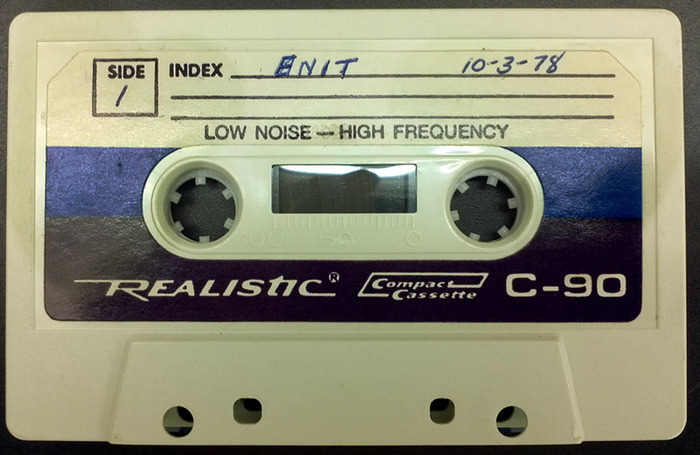
Enit, October 3, 1978 (Tape 1)
Enit discusses facing her sexuality at the age of 12 and coming out to her family despite her frustration at their lack of acceptance. She goes on to discuss her social life and dating in Buffalo, NY, noting how she used to meet women at bars but that her social activities have changed with age. She discusses her participation in the Erie Picnics held for gay men and women in Pennsylvania. She is 47 at the time of the interview. -
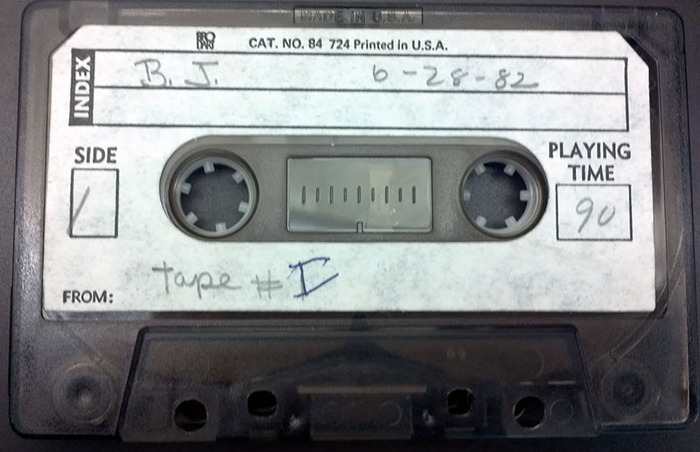
Elaine, June 28, 1982 (Tape 2)
Discussion on early childhood, being Canadian but growing up on an Indian Reservation near Syracuse. Also discusses being the head of a black gang, her relationship with her mother and abusive stepfather, and the jail time she spent for his murder, finding work (while hiding she was gay) and relationships. -
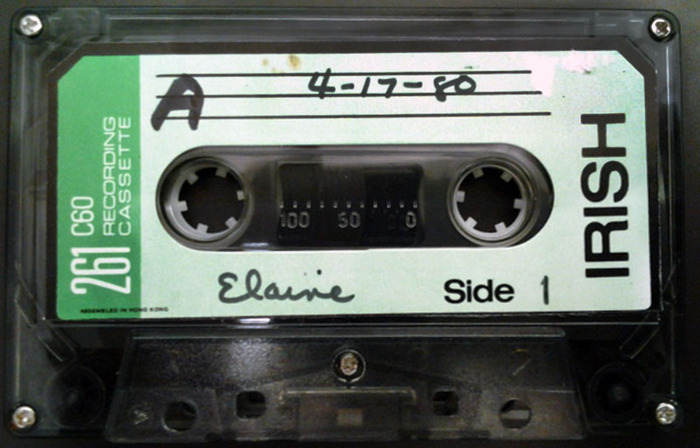
Elaine, April 17, 1980 (Tape 1)
Discussion centers on bars in Buffalo in the late 1950s and into the 1960s, in particular Bingo -
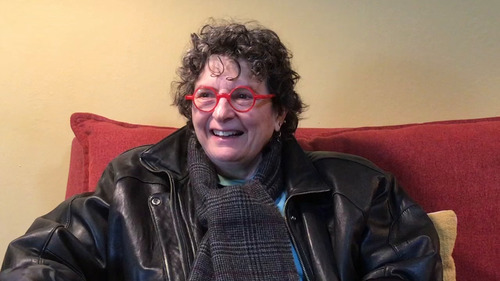
EJ Koch Interview
In this oral history conducted by the Rossmoor Lesbian Social Club, EJ Koch discusses her upbringing and family, her coming out process through her first marriage, the book she is writing with a colleague, and how she arrived at Rossmoor. -
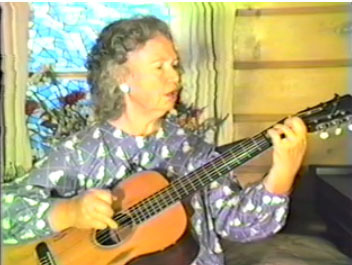
Edythe D. Eyde aka Lisa Ben Interview, October 25, 1988
Edith Eyde talks about her life growing up in rural southern California, moving to Los Angelos and discovering the lesbian culture there. She discusses publishing Vice Versa, one of the first lesbian magazines, and her music career.
On the second tape, she continues to discuss her experiences in California, interacting with others who were vested in the same interests surrounding lesbian culture, and being proactive in literature and the arts. -
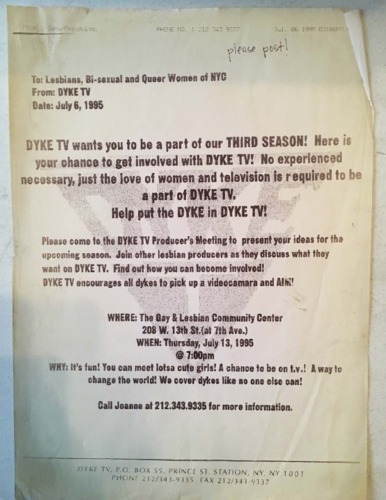
Dyke TV Third Season Recruitment Flyer
A flyer announcing the third season of Dyke TV and encouraging people to come to a producer's meeting to present ideas. -
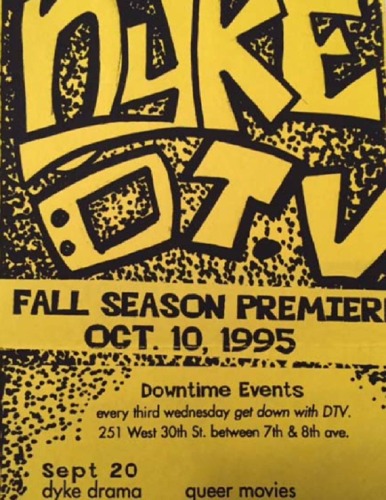
Dyke TV Season Premier Flyer
A flyer advertising the 1995 fall season premier of Dyke TV, as well as related promotional events and requests for "Lesbian Child" segment participants. -
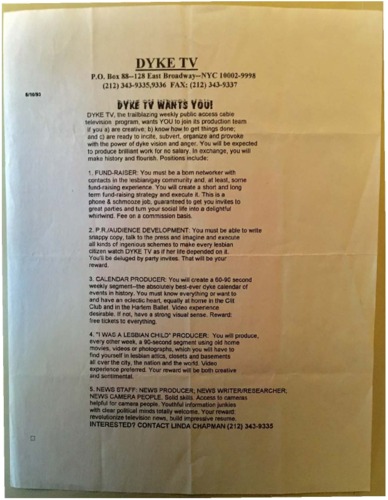
Dyke TV Recruitment Letter
A flyer advertising jobs at Dyke TV. Positions include camera operator, video editor, news writer/producer, fund-raiser, and public relations. Contains casual descriptions of positions and required skills. -
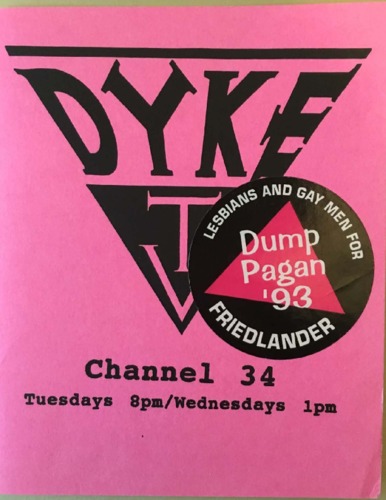
Dyke TV Recruitment Flyer
A flyer advertising jobs at Dyke TV. Positions include camera operator, video editor, news writer/producer, fund-raiser, and public relations. -
-
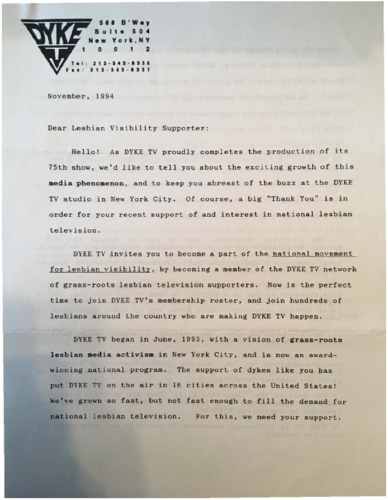
Dyke TV Membership Letter, 1994
A letter requesting support for Dyke TV. The letter asks the recipient to consider becoming a member of the Dyke TV network of grass-roots lesbian television supporters. -
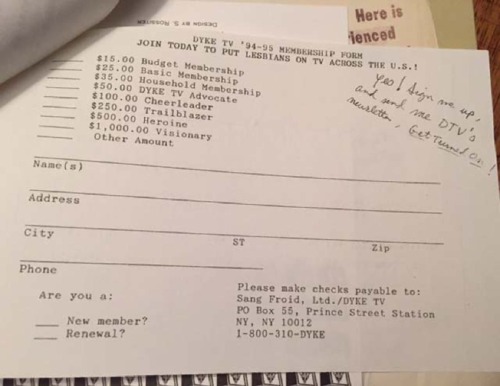
Dyke TV Membership Form
A membership form for Dyke TV detailing donation tiers. Handwritten note in upper right hand corner reads "Yes! Sign me up, and send me DTV's newsletter, Get Turned On!Tags Networks -
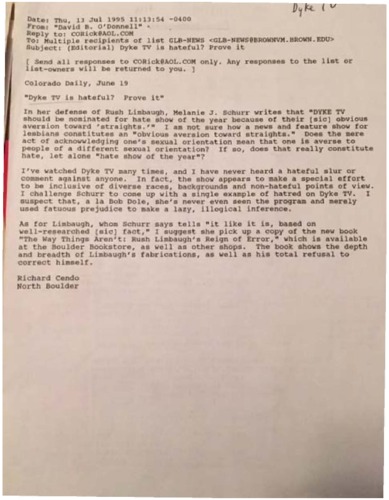
Dyke TV is hateful? [Correspondence]
An email sent by David B. O'Donnell containing text from a June 19, 1995 article in the Colorado Daily called "Dyke TV is hateful? Prove it" by Richard Cendo. According to the article, Melanie J. Schurr refers to Dyke TV as a hate show due to its aversion toward "straights." The author argues that the show may be for lesbians, but that there is no evidence that points to it being averse to different sexual orientations. -
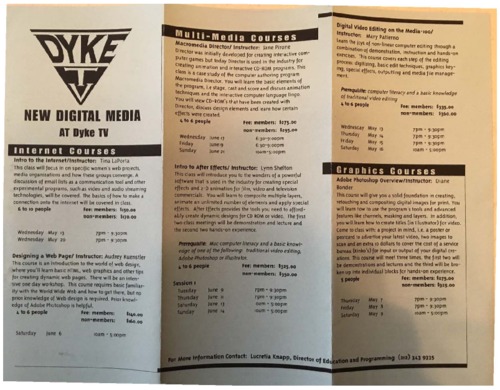
Dyke TV Internet Courses Flyer
A flyer advertising two internet courses. One teaches about the internet being used for lesbian and women's organizations and communication. The second teaches how to design a web page. -
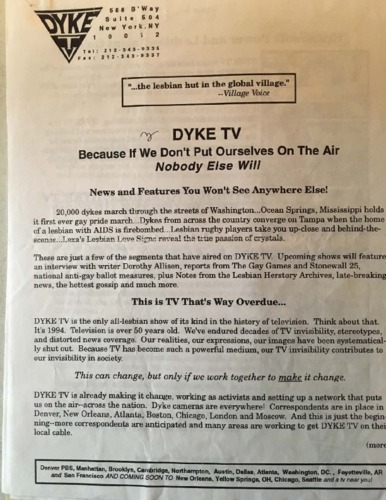
Dyke TV Fundraising Letter
A fundraising letter describing some of the past news and features presented by Dyke TV, and asking for donations to continue creating programming. The letter warns that without help, Dyke TV will soon be off the air. -
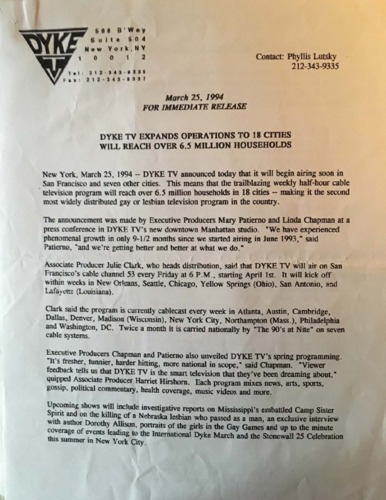
Dyke TV Expansion Press Release
A press release announcing that Dyke TV will begin airing in San Francisco and seven other cities, for a total reach to 18 cities. The announcement notes the current cities of distribution, and describes content that will be included in upcoming programming. -
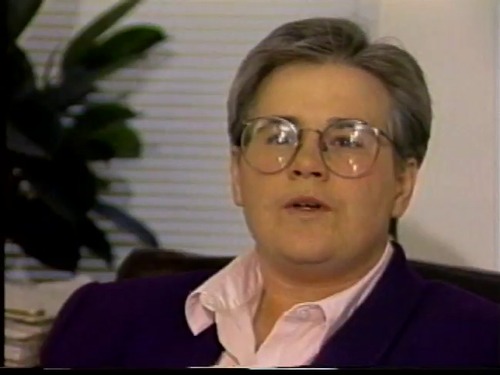
Dyke TV Episode
This video serves as a valuable resource to understand what a full episode of Dyke TV would have looked like when it aired. In addition to a segment titled, “From the Archives,” which spotlights the experience of lesbians in Harlem, and further illustrates the community presence outside of the well documented activism surrounding Stonewall. Next was an “Arts” segment, in which filmmaker Su Friedrich discusses her background and experience making films. Finally, there are two segments of “I was a Lesbian Child,” a segment which is represented in clips on this site. These segments aimed to normalize the lesbian experience; interviewees discuss their childhoods and showcase childhood photos. The video closes with credits, contact information, and a Public Service Announcement about street harassment.Tags Anna Maria Simo, Archives, Art, Children, Humor, Linda Chapman, Mary Patierno, Media, Su Friedrich -
Dyke TV Does 100! Invitation
An invitation for the Dyke TV Does 100! Cocktail Party & 100th Show Screening at Joy Tomchin and Baby Evan's home. -
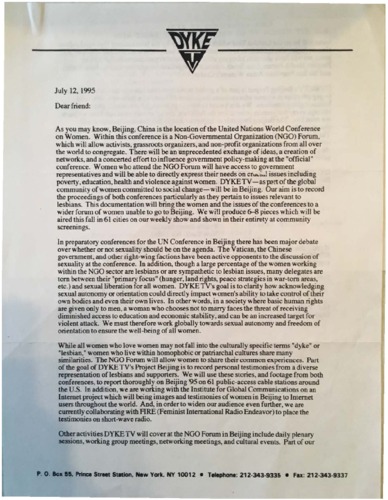
Dyke TV Beijing Project
A fundraising letter asking for support for the Dyke TV Beijing Project to attend the NGO Forum at the United Nations World Conference on Women to record testimonies from women. The letter notes a partnership between Dyke TV and FIRE (Feminist International Radio Endeavor) to also bring recorded testimonies to short wave radio. -
Dyke Marches, 1993-2001
This video is a compilation of edited footage of Dyke Marches from 1993-2001: the 1993 Dyke March in Washington D.C.; the 1993 Dyke March in New York City; the 1994 Dyke March in New York City; the 1995 Dyke March in New York City; the 1999 Dyke March in New York City; the 2000 Dyke March in New York City; and the 2001 Dyke March in New York City. The video includes interviews with lesbians and individuals who are participating in the Dyke March and studio interviews with Kelly Cogswell, Maxine Wolfe, and Marlene Colburn. Lesbians participating in the march express their need for visibility, civil rights, and liberation on all fronts. -
Drunk Tape
Radio Free Women episode about "class and culture and how it applies to the women's movement". Opens with "Good Morning Heartache" by Diana Ross. Actual audio is an interview of performing duo. A majority of the audio is consists of casual conversation amongst friends. -
Dorothy, October 26, 1981 (Tape 3)
Dorothy discusses her lifelong identity as a lesbian and her uncharacteristic history in adopting both the butch and femme roles in prior relationships. She talks about being the child of a single mother (her father died when she was two years old) and also describes her hobbies. She says she has always been very mechanically inclined and has also always been an avid reader. She suspects that being an avid reader influenced her ability to understand and be accepting of herself. She also discusses her education and career and her treatment as a lesbian on the job. She was the first female member of the American Society of Tool Designers and later became a technical librarian and engineering researcher. She also speaks about her friendships and non-sexual relationships with both gay and straight women. She notes the differences between those relationships and how her mannerisms and level of self-consciousness also differ in those interactions. -
Dorothy, October 26, 1981 (Tape 2)
Side A
Dorothy discusses how women met one another, sexuality, and her various relationships. Particular focus is on her 10 year relationship with her girlfriend during the mid 1950s to mid 1960s.
Side B
Dorothy discusses how she feels about children and the fact that she never any. She gives her opinion on two women raising a child, and talks about her friends who are now married to men who raised children. In addition, she continues her thoughts on sexuality and butch-femme roles.
-
Dorothy, October 26, 1981 (Tape 1)
Side A
Dorothy discusses lesbians in the military during World War II with regard to her friend Betty, a lesbian marine who feared her phone was tapped. She refers to it as a 'witch hunt'. Dorothy discusses lesbian bars in Buffalo in the 1940s -1950s, and talks about friendships and butch and femme roles.
Side B
Dorothy discusses her break up with her girlfriend of 13 years, Charlotte. She talks about their courtship, sexuality, home life, and their families, who were never formally told they were a couple. While talking about the break up she mentions the deed to a cottage they shared and losing personal property in the breakup. Dorothy mentions seeking help from a lawyer and a lesbian psychologist in the 1950s. Dorothy discusses that she once considered suicide after a breakup.
-
Dorothy, October 2, 1981 (Tape 2)
Dorothy talks generally of leisure activities, relationships, and sexual relations. She then talks at length about one long-term relationship with Harriette, mentioning their business, break up, life-long friendship, and Harriettes other relationships.
She talks first of weekend activities or leisure activities such as house parties, picnics, and going to bars. She talks in general about sexual relations, mentioning "daisy chain" sex, and attitudes towards sex and equality in love-making. She talks in general about long-term relationships and breaking up. She then answers questions and talks at length about her long-term relationship with Harriette, their break up and lasting friendship. She mentions their first car and the business they owned together. She talks of monogamy. She talks of Harriette's later marriage and other relationships. Dorothy talks of her opinion of bi-sexuality and of Harriette's marriage and relationships.
-
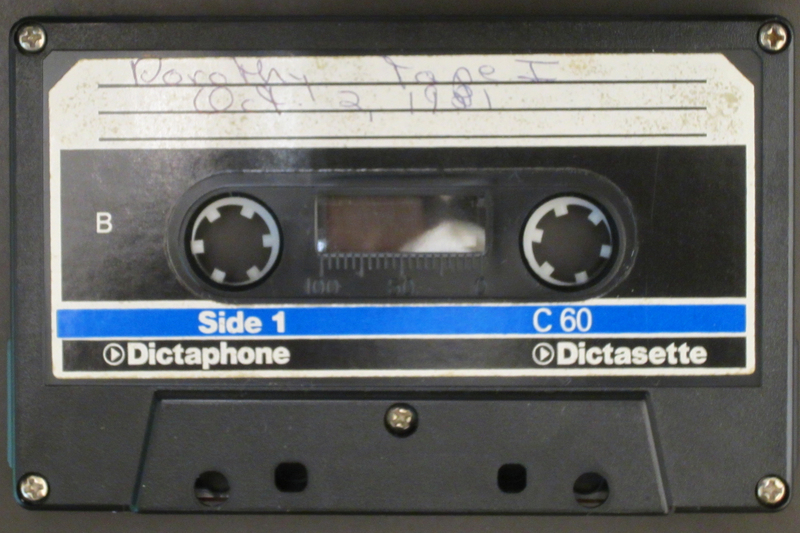
Dorothy, October 2, 1981 (Tape 1)
Side A: Dorothy discusses her personal life and how she came to discover that she was a lesbian. She talks about her marriage and separation. She discusses her relationships with women, all of which were long-term. Dorothy talks about her job in engineering as a tool designer and the fact that she performed a man's work for a man's salary. She discusses lesbian social life during the 1930s, 1940s, and 1950s and names several popular bars including Eddy's Tavern, Ralph Martin. She talks about her developing alcoholism and the prominence of this disease among lesbians in general, perhaps as a result of their uncertainty about life. Dorothy also talks about butch and femme roles in lesbianism, stating that she doesn't identify herself with either role despite the fact that the butches identified her as one of them.
Side B: Dorothy continues the discussion of roles in lesbianism and the division between the two groups in bars. She says that her "crowd" did not distinguish between these two groups and she ultimately stopped going to bars, partly as a result of the need for role division. She discusses in some depth her problem with alcohol and talks about her membership in Alcoholics Anonymous. She talks about how she decided that she was a lesbian and gives further details about her first relationship. She also speculates on whether or not other people knew she was a lesbian, including her mother and acquaintances such as her landlord. She says that she has never had any problems with people discriminating against her. Dorothy also continues to talk about the social dynamics of bars in Buffalo. -
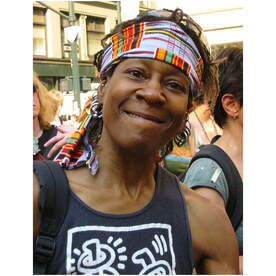
Donna Allegra, via Saskia Scheffer/Lesbian Herstory Archives
Donna Allegra, via Saskia Scheffer/Lesbian Herstory Archives -
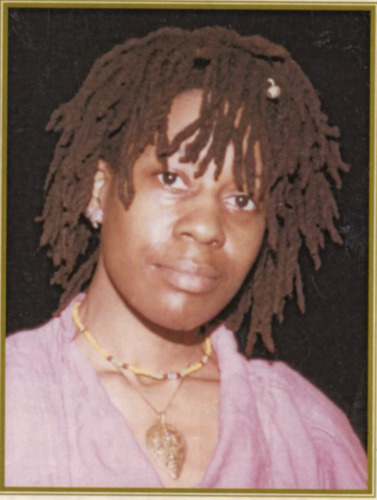
Donna Allegra, via Cassandra Grant Collection
Donna Allegra, via Cassandra Grant Collection -
Don't Ask Don't Tell Protest Footage
This video is documentation of a demonstration protesting Don’t Ask Don’t Tell. The protest occurred on September 23, 1993 outside a fundraiser for the then prospective mayor of New York David Dinkins in which Bill Clinton was speaking. This segment combines raw footage artifacts with more formal documentation of the chants, and informal interviews with the participants. The last portion of this video shows police attempting to forcibly remove demonstrators. -
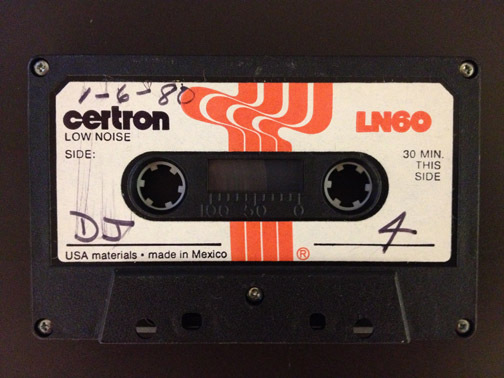
DJ, January 6, 1980 (Tape 3)
Side A: DJ continues her interview from tape SPW513. She finishes discussing her romantic relationships then moves on to discuss gay literature, specifically The Well of Loneliness. The topic of workplace discrimination is mentioned. DJ discusses relationships in the community through the venue of gay and straight bars. Relationships between straight men, lesbians, and bisexual women are discussed as well as race relations. Side B: DJ covers the topic of prostitution in the lesbian community. She speaks about the choice some lesbians make to marry men and have kids. -
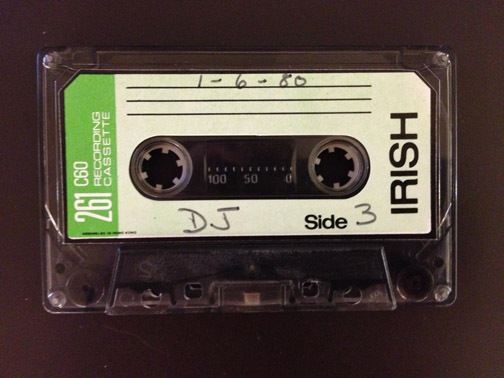
DJ, January 6, 1980 (Tape 2)
DJ discusses her early experiences with women as a teenager, her feelings of being a tomboy, and her coming-out experience. She discusses her experiences in the bar scene in Buffalo in the 1950s, and describes ways in which women would interact with each other, but publicly and privately. DJ also discusses roles in relationships, particularly the butch and the femme. -
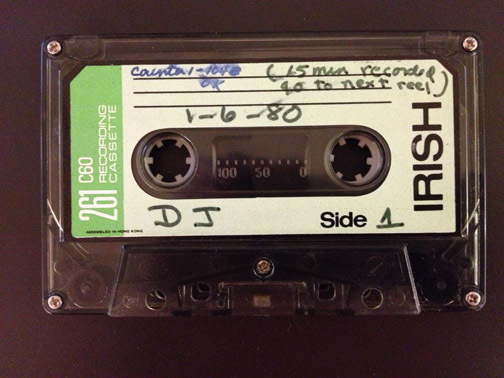
DJ, January 6, 1980 (Tape 1)
DJ discusses the time she went to the hospital and was diagnosed as a homosexual. She remembers that the doctor suggested she try going out with a man to determine the extent of her feelings toward women. She also recalls that the doctor told her she must learn to live with society and to control her emotions in public. -
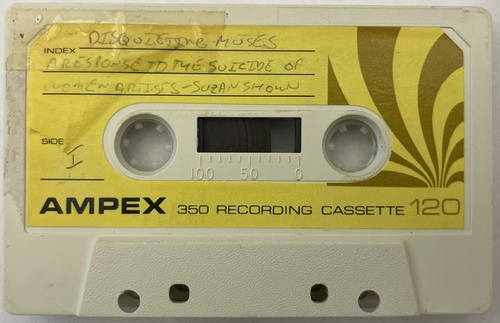
Disquieting Muses: A Response to the Suicide of Women Artists - Suzan Shown
Suzan Shown interviews the cast and creator of the theater show Disquieting Muses: A Response to the Suicides of Women Artists, which examines suicides among women artists. -
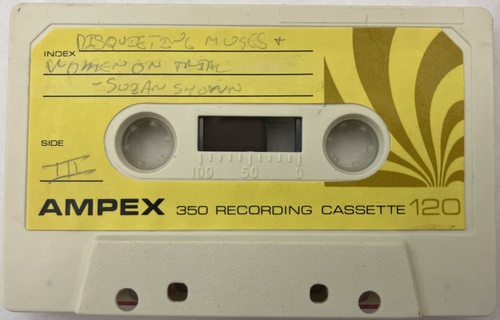
Disquieting Muses + Women on Trial - Suzan Shown
For this episode of All Night Sunday with the Radio On, Suzan Shown interviews the cast and creator of Disquieting Muses: A Response to the Suicides of Women Artists, discussing the feeling of obligation to find a man, get married, and otherwise fulfill the role of what a woman is supposed to be.
Episode includes a reading of an untitled poem by Marilyn Monroe. Features a recording of Women on Trial: The Forbidden Texts of the Three Marias, a one-night only performance about the case of three women authors who wrote against Portugal's dictatorship and were subsequently put on trial. -
Discussion on Waitressing
Recording starts with an introduction from the Feminist Radio Network, with female vocalizing, singing, and performing. The recording then begins to talk about women in the food service industry, and the statistics of how many women are waitresses. Upon interviewing a waitress, the conversation moves towards the low wages, and need for unionization in waitressing, since there is such a reliance on tips. Segueing through empowering music, the discussion shifts to women’s speeches, performances and testimonies on women’s liberation. The recording then moves on to a panel with Maxine Kumin, Grace Paley, and Alice Walker, discussing their thoughts on women’s writing. -
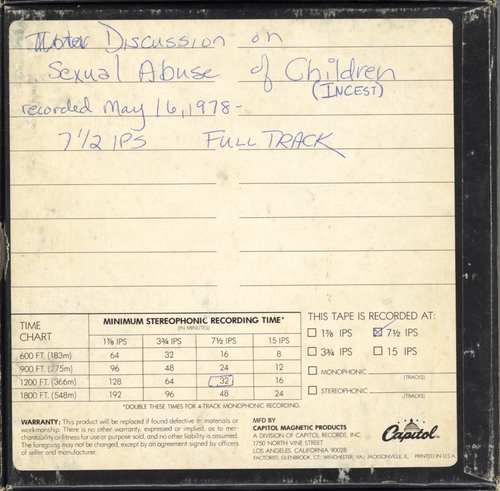
Discussion on Sexual Abuse of Children (Incest)
Interviewee discusses the statistics of child sexual assault, and how they are not reported accurately. They claim that girls face more assault than boys, but much of it goes unreported. Conversation circles around parental assault, parental protection, and social services. The host and interviewer talk about the role of the patriarchy, victim denial, abuse, and the need for child abuse education for children. They advocate for child’s rights, and children’s need for peer relationships. -
Discussion on Battered Women, Wife Abuse
Interviewee discusses helping a domestic abuse victim retrieve their personal belongings, and shares statistics on reported domestic abuses. -
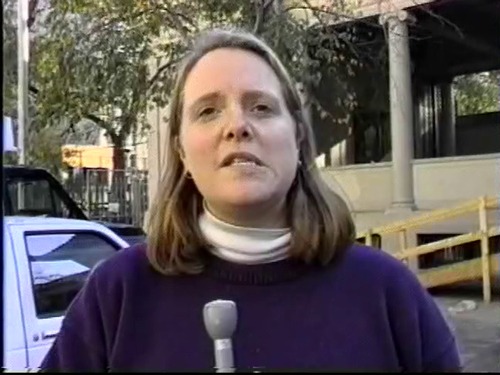
Discrimination at Clark's Corner Restaurant
A woman reports about discrimination and threats she and her girlfriend faced when they kissed at a restaurant in Brooklyn Heights. She talks about the “kiss in” she and the Lesbian Avengers were having restaurant in protest. She also talks about plans to file a police report and take legal action if possible. -
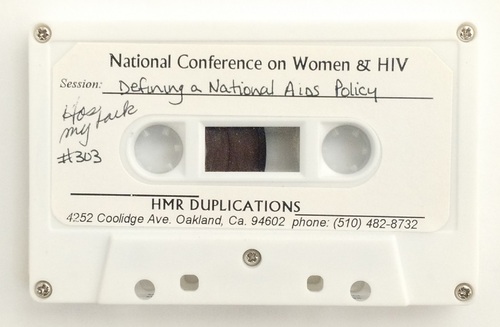
Defining a National AIDS Policy Panel
NIH-moderated panel about defining a national AIDS policy, research health services, and prevention in four talks from Maxine Wolfe (ACT UP), Dr. Wanda Jones (CDC), Corola Marta (Yale physician), and community activist Michelle Lopez. -
-
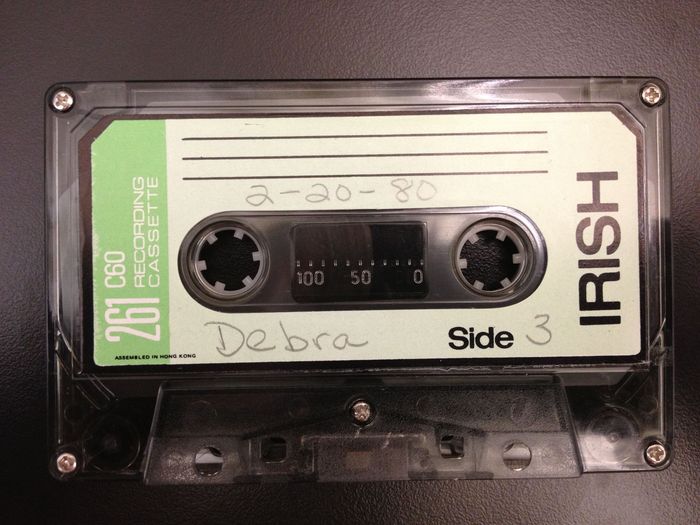
Debra, February 20, 1980 (Tape 2)
Discusses her child, a son. He was the product of her one-day marriage. She kept him for about 8 months and then her brother and his wife took him and raised him. He would spend the summers with her until he was 12 and then he lived with her and spent the summers with her brother and his wife.
Believes lesbians make better mothers because they know more. She didn’t want her son to go into gay life because she felt it would be difficult for him, she doesn’t believe that gay men relationships last. She believes you can teach someone not to be gay.
They talk about gay men and lesbian relationships and social interactions. She would call upon her gay male friends to be her date to events that she needed a date, also sometimes family events. They talk about marriages between a gay man and gay woman. Debra says that she knew quite a few couples who had done that to put up a front, but that those relationships always worked out well. Debra also talks about marriage between two women. She never wanted to get married but knew women who did.
They also discuss alcoholism and drugs among the gay community.
On the second tape, Debra further discusses fights in the lesbian community. Madeline asks if she knew any lesbians who played sports in the 1940s and 1950s. Debra believes lesbians played sports but cannot definitely say so. -
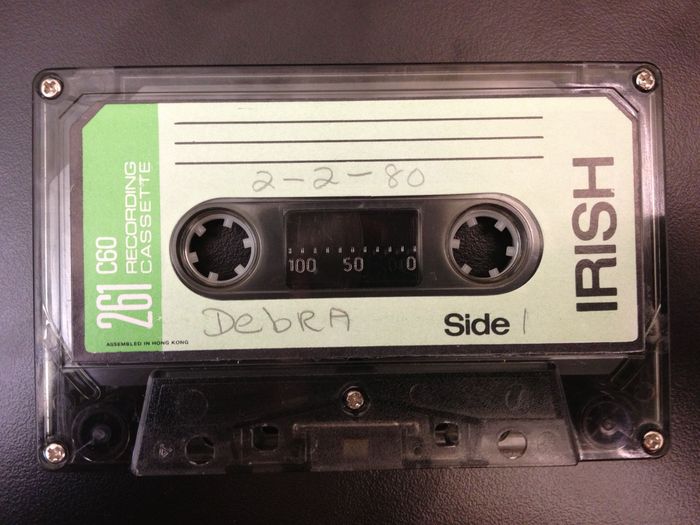
Debra, February 20, 1980 (Tape 1)
Debra discusses her experiences as a lesbian. She talks about her first lesbian relationship when she was 12, how she was married for one day, how her mother knew something was different about her, and how her sister figured out she was a lesbian because she was only married for one day.
She talks about her relationships with women, how she never openly acknowledged that she was gay but if she was asked she wouldn’t deny it.
They discuss monogamy, she was mostly faithful, but she also talks about jealous partners and how when one is accused of things, one might as well and go ahead and do it.
She doesn’t believe that a lesbian relationship is any different than a straight relationship.
They discuss bars and areas in Buffalo that she would frequent: Moon Glow bar, Pearls bar, Ralph Martins, Ryan’s Hotel, Little Harlem. They also discuss dating rituals, fashion, and relationship/ courting roles. -
-
-