
Browse Items (771 total)
Sort by:
-
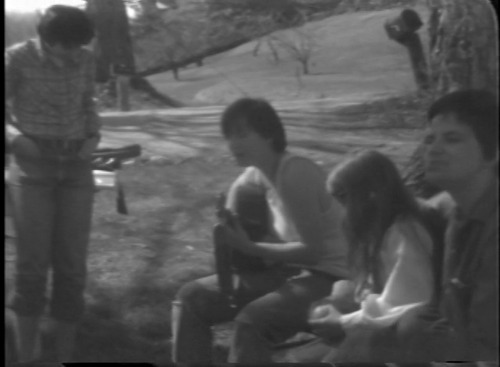
Performance Theatre Troupe / Gathering (Tape 2)
The tape is divided into two sections.
The first section of the tape contains Act 3 of "The Performance" (6 min), a one-woman play by the Performance Theatre Troupe from Iowa City. The play centers around Effy, a 17-year-old lesbian and musician who must make a decision about her life.
Following "The Performance," the tape cuts to a gathering of lesbians sitting outside, playing guitar, singing, and reading. -
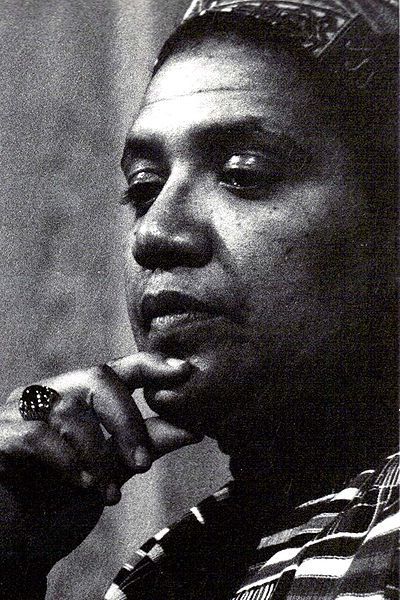
Astraea Benefit, "Conversation with Poems," 1981 (Tape 1 of 2)
Benefit for the Astraea Foundation, "Conversation with Poems." Introduced by unnamed speaker. Poetry reading and conversation with Audre Lorde and Adrienne Rich; includes speech, poetry, and remarks. -
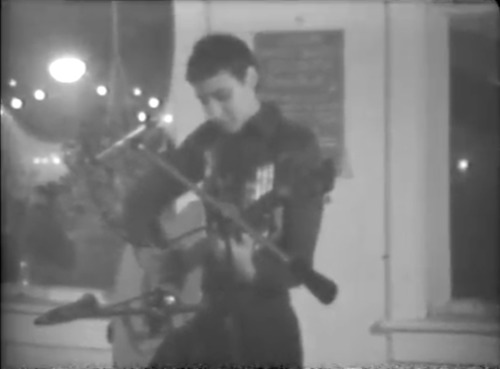
Alix Dobkin Performance [Fair Use Excerpt]
Alix Dobkin sings a collection of her songs at an unknown location. The uploaded file has been cropped due to Fair Use restrictions. Full file available to view at Lesbian Herstory Archives. -

Mary Patierno Interview [Eyewitness excerpt]
Edited excerpt from an interview with Mary Patierno, cofounder of Dyke TV with Linda Chapman and Anna Maria Simo. In this excerpt, Mary describes the Eyewitness segment that was sometimes included in Dyke TV programs. -
Mary Patierno Interview [I Was a Lesbian Child excerpt]
Edited excerpt from an interview with Mary Patierno, cofounder of Dyke TV with Linda Chapman and Anna Maria Simo. In this excerpt, Mary describes the I was a Lesbian Child segment that was sometimes included in Dyke TV programs. -
Mary Patierno Interview
In this interview Mary Patierno, co-founder and executive producer of Dyke TV discusses Dyke TV, a groundbreaking public access program produced in New York City by and for lesbians. Pateirno talks about the program’s history and its goals. She mentions some of Dyke TV’s important news stories and recollects some of the interviews the show conducted with women artists, activists and public figures. Patierno stresses the importance of preserving other Dyke TV footage that currently remains in storage. In addition to providing more detail about the structure of the episodes, Patierno discusses her experience creating the show, the circumstances surrounding the show’s founding, and the show’s legacy as the first lesbian content on television.
*Note: The interview was recorded using an online call service. -
Mary Patierno Interview [From the Archives excerpt]
Edited excerpt from an interview with Mary Patierno, cofounder of Dyke TV with Linda Chapman and Anna Maria Simo. In this excerpt, Mary describes the From the Archives segment that was sometimes included in Dyke TV programs. -
Mary Patierno Interview [Arts segment excerpt]
Edited excerpt from an interview with Mary Patierno, cofounder of Dyke TV with Linda Chapman and Anna Maria Simo. In this excerpt, Mary describes the "The Arts" segment that was sometimes included in Dyke TV programs. -
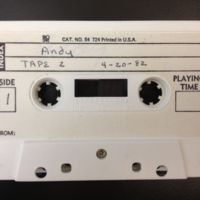
Andy, April 20, 1982 (Tape 2)
Andy further discusses how she came to construct her butch image. She recalls getting into fights with men and having to give up good jobs because she refused to give up her queer image and identity. She discusses her clash with a teacher when she was in school in the 1950s. She describes her relationship with a prostitute and other close relationships. On side B she talks about breaking into the butch scene and coming out. Andy talks about gay bars and places queer women were welcome or not. She discusses fashion and explains why they wore their t-shirts backward. -
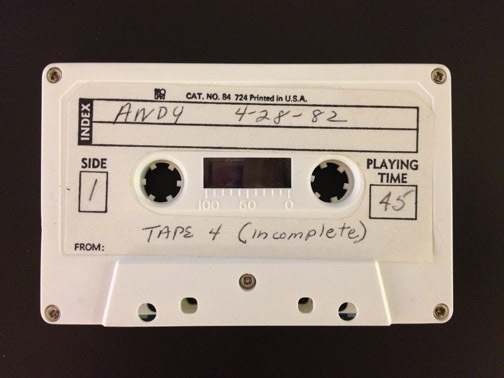
Andy, April 28, 1982 (Tape 4)
At the start of the interview, Andy talks about the first time someone asked her about sex. She talks about her experience going with hookers. She discusses butches and femmes and argues that femmes aren't "true" lesbians. -
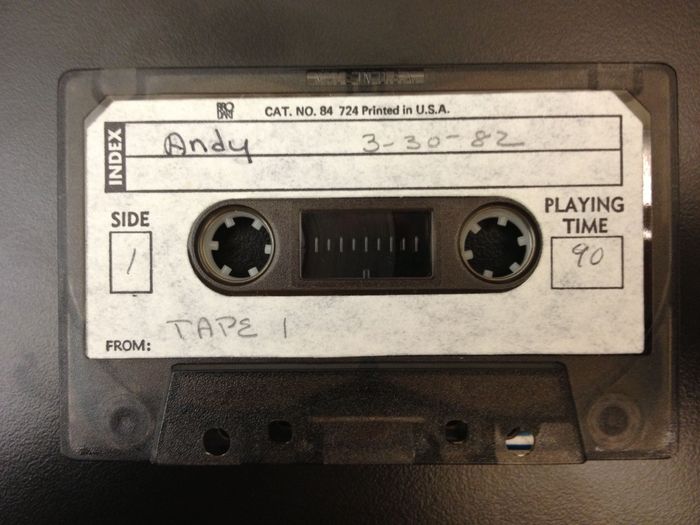
Andy, March 30, 1982 (Tape 1)
Andy discusses the history of gay rights in Buffalo, New York, and describes how it feels like to be open about her sexual identity. She shares some of her childhood and early adulthood experiences in the 1950s and 60s –her first relationships and confronting the risk of losing her job. Other topics discussed include the gay and lesbian bar scene, raids, prostitution, butch and femme roles, and Andy’s experience within the African American gay community. -
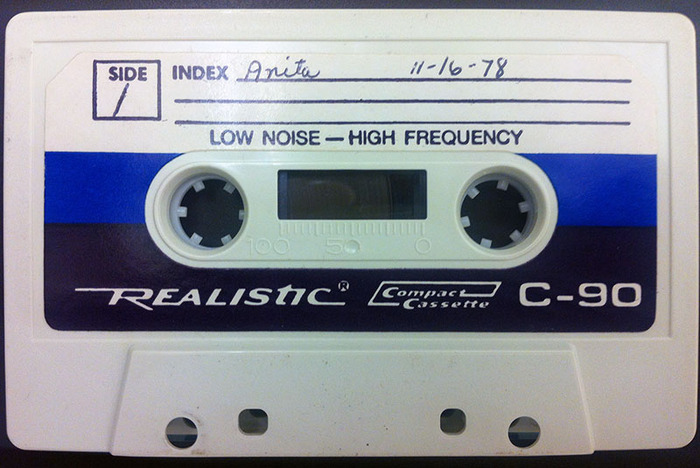
Anita, November 16, 1978 (Tape 1)
Anita talks about her first encounters with a relationship with a woman. She then speaks about the difficulties of raising her child. She also talks about the roles of Butch and Femme. -
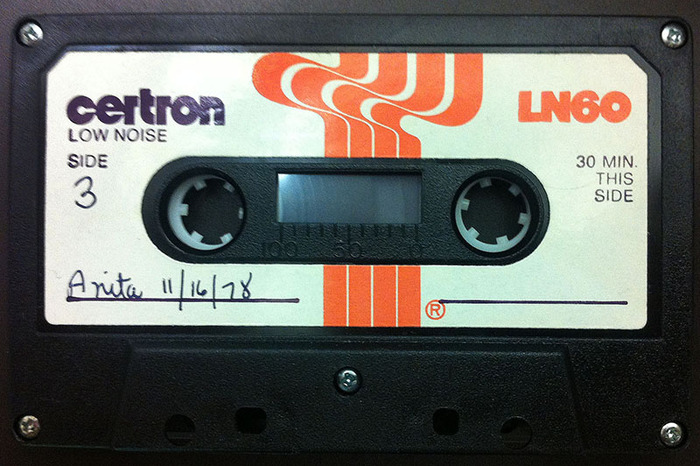
Anita, undated (Tape 2)
Anita talks about being in an interracial relationship with a white woman, and the roles of butch and femme. -
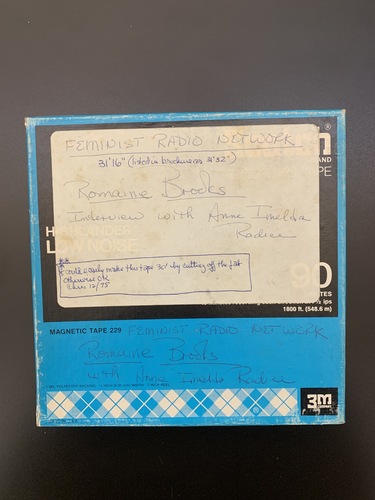
Romaine Brooks with Anne Imelda Radice
Anne Imelda Radice, an art museum director and arts administrator, discusses the life and art of Romaine Brooks. Romaine Brooks was a lesbian portrait artist born in Rome, Italy in the late 19th century. She was known as the "thief of souls" for her ability to capture emotion in her art. The host and Radice have a conversation on how lesbianism was perceived during Brooks' time period, as well as her relationship with her lifelong partner, Natalie Barney. -
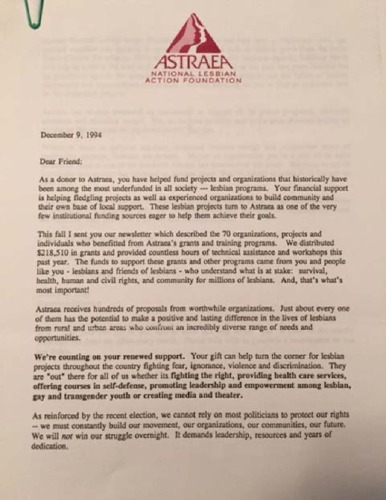
Astraea Foundation Letter to Donors
A letter sent to individuals who have previously donated to Astraea, requesting renewed support. -
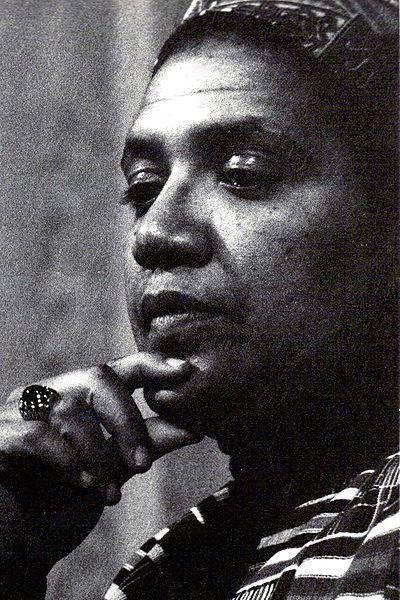
Lesbian & Gay Community Services Center (2nd Tuesday Series), 1986
Audre Lorde reading her poems for the "2nd Tuesday Series" at the Lesbian and Gay Community Services Center, New York City. Side A: Recorded at the Lesbian and Gay Community Services Center, New York City. Sponsored by the Lesbian and Gay Community Services Center, Women's Poetry Center at Hunter College, New York. Poet Audre Lorde reads thirteen poems many from her new book. [Poems: Notes from a Trip to Russia, Sisters in Arms, Holographs, Political Relations, A Question of Climate, There are No Honest Poems about Dead Women, A Question of Essence, For the Record: (In memory of Eleanor Bumpurs), Making Love to Concrete, Women on Trains. Never to Dream of Spiders and Call.] Side B: Question and answer session with a collection for the Sisters in Support of South Africa. -
Power, Oppression and the Politics of Culture: A Lesbian/Feminist Perspective; Fourth Berkshire Conference on the History of Women, August 25, 1978, (Tape 2 of 3)
Audio recording of a panel presentation at the Fourth Berkshire Conference on the History of Women. "Power, Oppression and the Politics of Culture: A Lesbian/Feminist Perspective" included Audre Lorde -
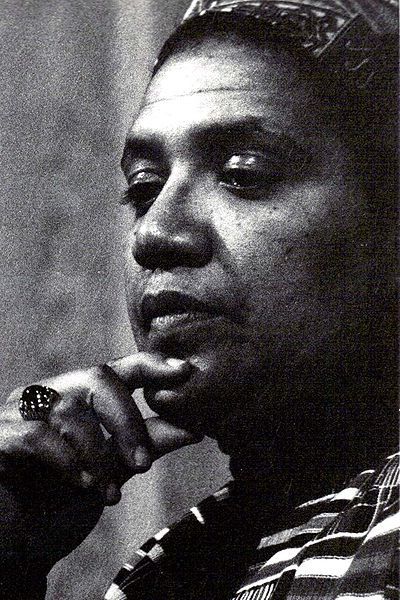
"Poetry" radio program on WBAI hosted by Susan Howe, undated
Audre Lorde appears on Susan Howe's WBAI radio program "Poetry." She reads "Black Studies," "To My Daughter The Junkie On The Train," "To The Girl Who Lives In A Tree," "Song For A Thin Sister," "Oya," and "The Brown Menace" from her book New York Head Shop and Museum. On Side B, she reads newer poems including, "Solstice," "Dahomey," "Nobody Wants To Die On The Way," "School Note," and "Power." -
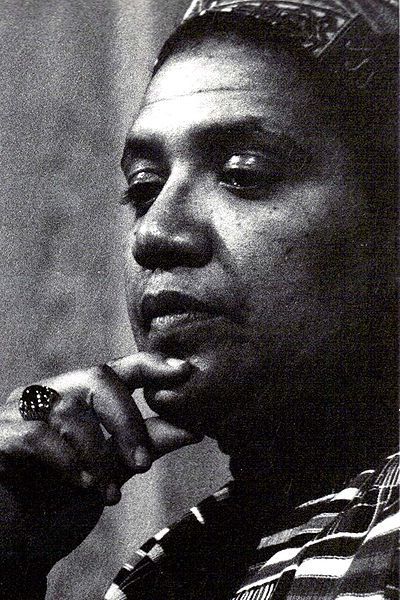
Astraea Benefit, "Conversation with Poems," 1981 (Tape 2 of 2)
Benefit for the Astraea Foundation, "Conversation with Poems." Poetry reading and conversation with Audre Lorde and Adrienne Rich; includes speech, poetry, and remarks. -
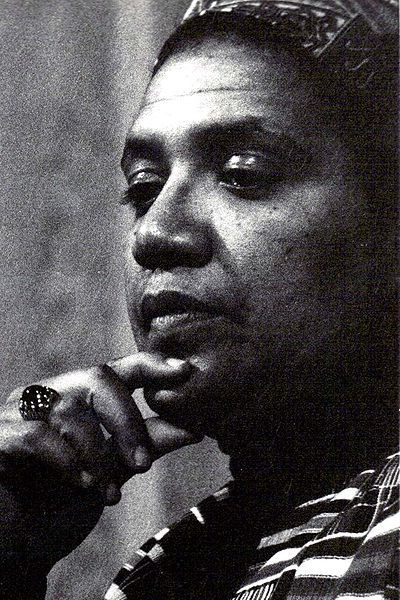
The Personal or the Political - II / Conference on Feminist Theory, 1979
Audre Lorde continues her presentation as part of “The Personal and the Political” panel held at the Second Sex Conference on September 29, 1979. Audience members pose questions and make comments regarding the intersections between race, class, sexual orientation, and gender and feminism in response to Audre Lorde’s speech, “The Master’s Tools Will Never Dismantle the Master’s House”, from SPW1155. -
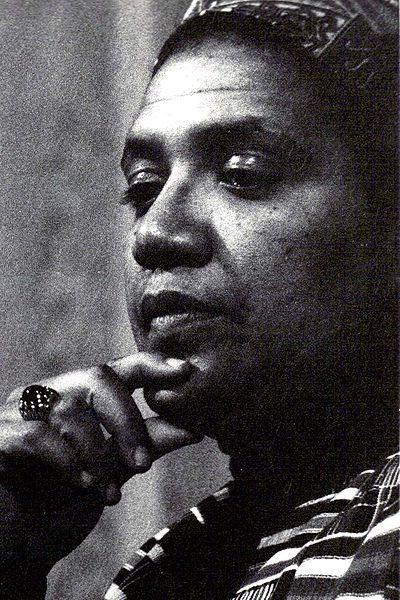
Conflicts in the Black Lesbian Community, Brooklyn NY, organized by the Committee on the Visibility of the Other Black Woman (Tape 1 of 3)
Event organized by the Committee for the Visibility of the Other Black Woman. Audre Lorde moderates community discussion and dialogue including issues of identity, cross cultural conflicts, classism, and ageism. She also introduces panelists' presentations. Her most sustained comments are on Tape 2 as she introduces the panel on identity. -
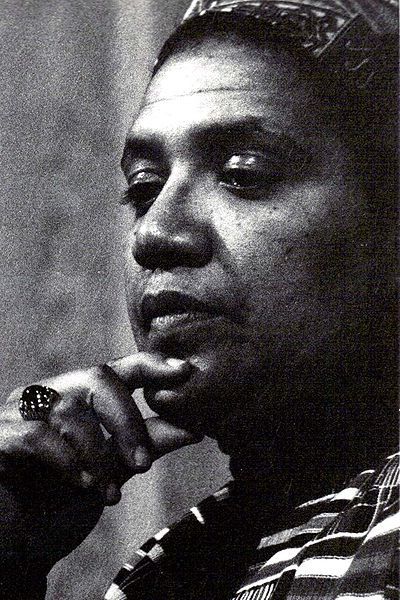
"Lesbians and Literature" panel discussion at MLA conference, 1977
Preceded by short presentation from representative of the recently vandalized Diana Press. Speakers, in order of appearance: moderator Julia Stanley (unnamed on tape); Mary Daly; Audre Lorde (11:38 into Side B); Judith McDaniel; Adrienne Rich. Lorde's speech is the original draft of her essay "The Transformation of Silence into Language and Action." -
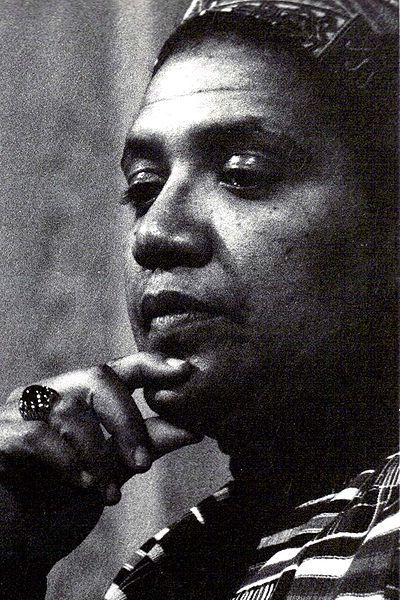
Third World Lesbian Writers Conference featuring Audre Lorde, Yvonne Flowers, and Robin Christian, 1979
Audio recording of the Third World Lesbian Writers Conference that took place on March 24, 1979. This is one of two tapes from the workshop, the second tape is missing. This is a workshop with Audre Lorde, Yvonne Flowers, and Robin Christian. Audre Lorde is on Side 1. Joan Nestle, Deb Edel, and Candice Wood are mentioned. -
Conflicts in the Black Lesbian Community, Brooklyn NY, organized by the Committee on the Visibility of the Other Black Woman (Tape 3 of 3)
Audre Lorde moderates community discussion and dialogue including issues of identity, cross cultural conflicts, classism, & ageism. She also introduces panelists. -
Conflicts in the Black Lesbian Community, Brooklyn NY, organized by the Committee on the Visibility of the Other Black Woman (Tape 2 of 3)
Event organized by the Committee for the Visibility of the Other Black Woman. Audre Lorde moderates community discussion and dialogue including issues of identity, cross cultural conflicts, classism, and ageism. She also introduces panelists' presentations. Her most sustained comments are on Tape 2, as she introduces the panel on identity. -
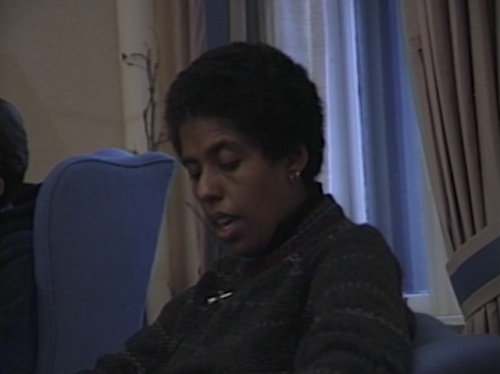
Barbara Smith Classroom Discussion (Tape 5)
Recorded classroom discussion focusing on a fictional story about lesbians and the erotic. Location uncertain. -
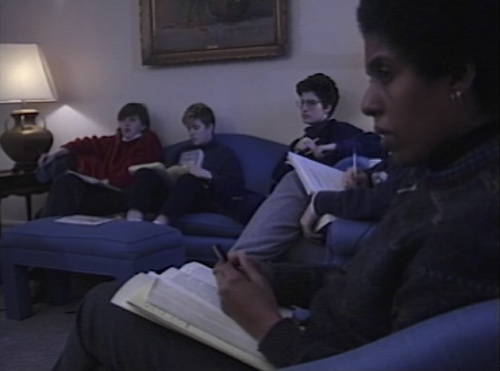
Barbara Smith Classroom Discussion (Tape 6)
Recorded classroom discussion focusing on a fictional story about lesbians and the erotic. Continuation of #5. Location uncertain. -
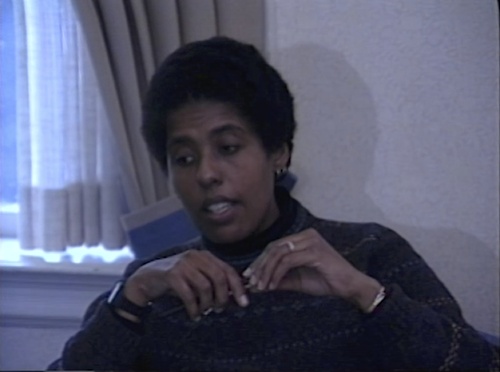
Barbara Smith Classroom Discussion (Tape 7)
Recorded classroom discussion focusing on a fictional story about lesbians and the erotic. Continuation of #6. Location uncertain. -
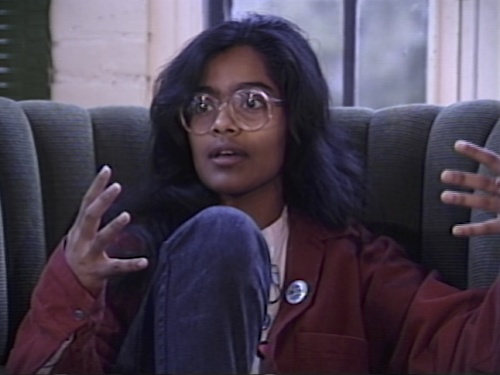
Meeka Interview (Tape 1)
Interview with 19 year-old Mount Holyoke student Meeka on the structure of and experiences in Barbara Smith's class. She highlights a presentation on “Homegirls”and talks about discussions in the class surrounding culture and experiences of women of color. -
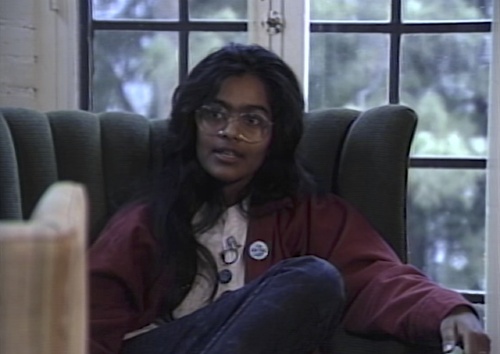
Meeka Interview (Tape 2)
Interview with 19 year-old Mount Holyoke student Meeka on her experiences with taking Barbara Smith's class. She talks about Black Feminist analysis, colorism, and intersectional feminism. -
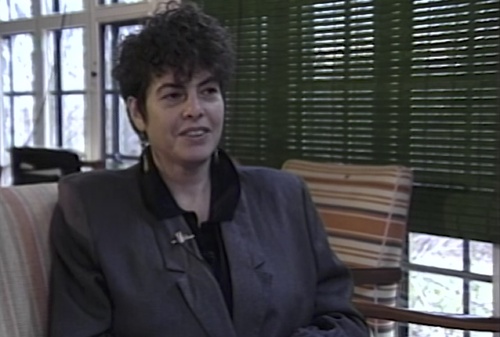
Reeves Interview (Tape 3)
Interview with Mount Holyoke student Reeves on her experiences taking Barbara Smith's class. -
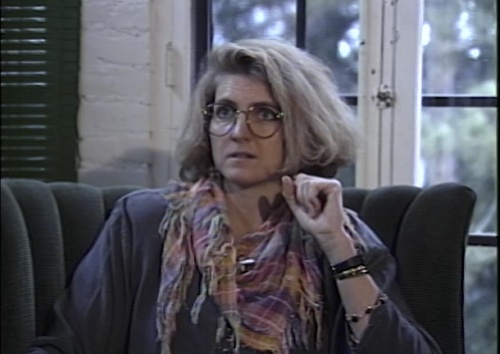
Reeves Interview (Tape 4)
Interview with Mount Holyoke student Reeves on her experiences taking Barbara Smith's class. -

Stephanie Singer Interview
Recording of a Zoom event "Life Passages" where Stephanie Singer speaks on her experience as a transwoman and a Lesbian and discussed her early life, her coming out, and her family dynamics. After Stephanie speaks, there is a Q&A with other people on the Zoom meeting who are part of the Rossmoor Lesbian Social Club. -
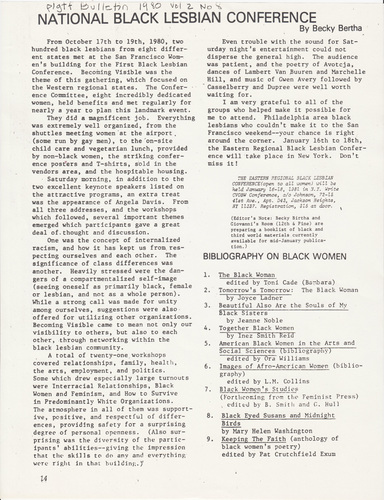
National Black Lesbian Conference
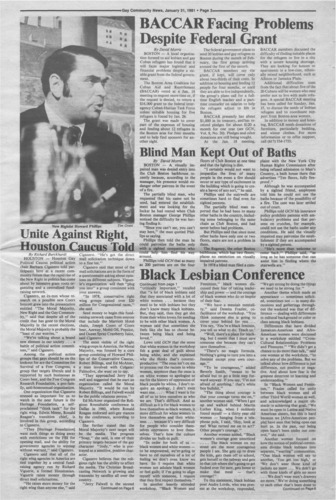
Scan of "National Black Lesbian Conference" written by Becky Bertha originally published in PLGTF Bulletin, Volume 2, Number 8, 1980. Includes Bibliography on Black Women. -
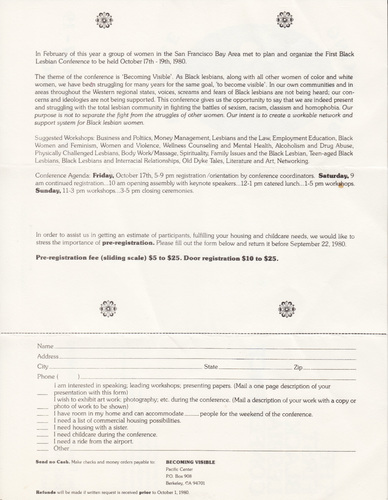
Becoming Visible: First Black Lesbian Conference
Front and Back View of Brochure -
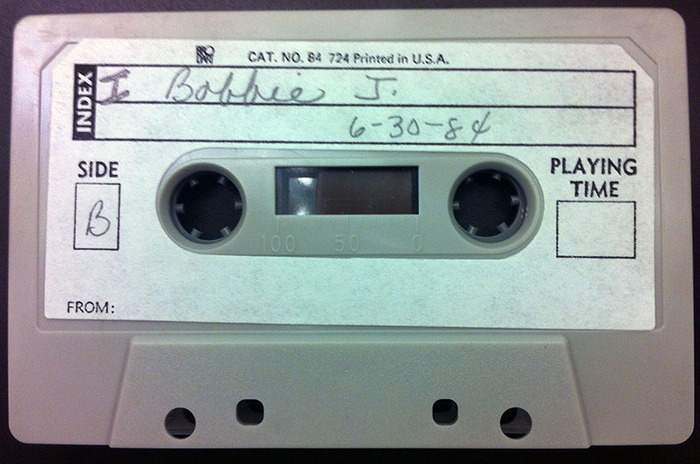
Bobbie, June 30, 1984 (Tape 1)
She thinks people have the wrong opinion of lesbians, she says she feels alone in the bars, role playing was important that someone should be the more aggressive person in a relationship, talks about how she needs a butch in a relationship, thought of herself as a femme although she didn't dress feminine, describes a "dyke person", bar atmosphere and how she went to a bar every night to hit on the bartender, how much she enjoyed the bar scenes, prostitution, story about how she was abducted and raped by 3 men, about how she was in an abusive relationship, spending time in a correctional facility, sexual relationships while in jail -
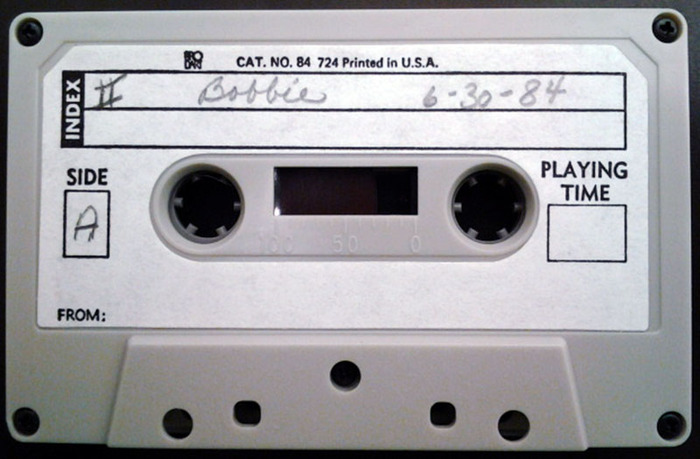
Bobbie, June 30, 1984 (Tape 2)
Bobbie speaks on the nature of her various relationships, including patterns of sex and cohabitation, being confused about her significant other identifying as a man in public, she addresses the existence of her children, using men after prison to live and make money, attending gay reorientation church, her sexual practices, and the subject of the "Untouchable". -
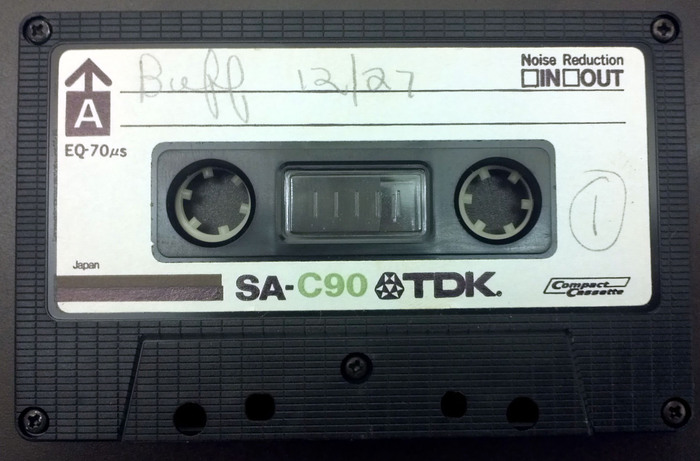
Buff, December 27, 1979
Buff discusses the impact of the Metropolitan Community church on her life and the gay-rights movement. Mentions activities in Tucson, AZ. She stresses that current lesbians should know that there is more to life than the bars, but that in her time in Buffalo she didn't feel there were places for community outside of them. Mentions her time in the army, realizing she was homosexual, and coming out. Discusses her time in the army, lesbians in the military, being in Seattle and Germany with the military just after the Korean war. She talks about the differences in gay identity and self identity in the past compared to now. -
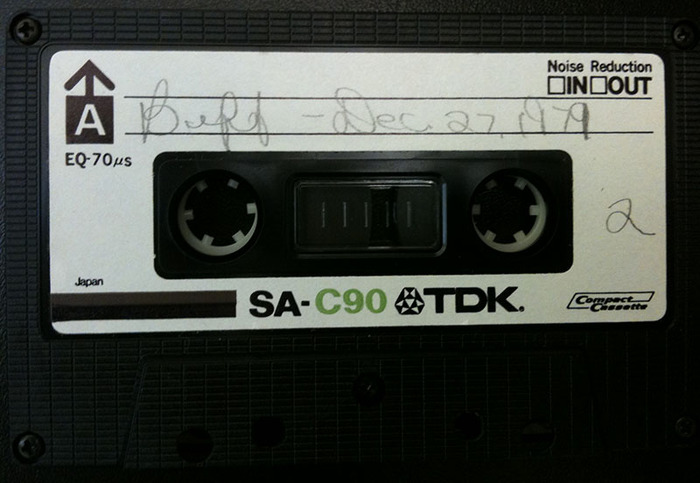
Buff, October, 1978
Talks about community tattoos, race, being butch, the challanges of identity and expectations. Touches on past sexual abuse by her father, gender roles, identity, learning about gay life and her discovery process, friendship, clothing and identity, her marriage to a gay man, her suicide attempt. -
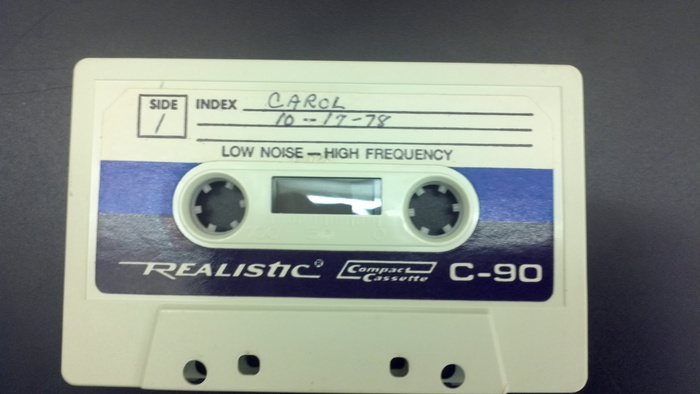
Carol, October 17, 1978
Bad sound quality. Discusses that she doesn't think of her community of a lesbian community, though she can contribute to the lesbian community. Says she now stays away from gay bar communities because she is a teacher. Discusses running into students at bars, relationships, family. -
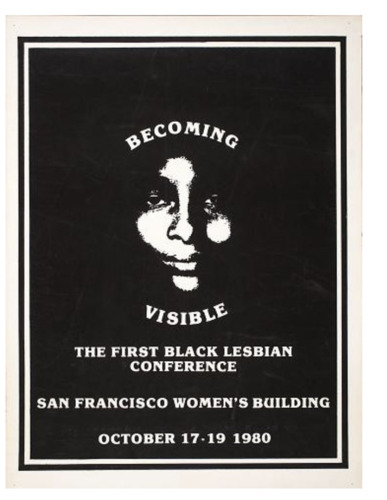
Becoming Visible: The First Black Lesbian Conference
poster on paper -
Keep Your Laws Off My Body
Black and white recorded documentary video exploring themes of Lesbian relationships, the AIDS pandemic and the criminalization of LGBTQ+ media. -
Seneca Falls Radiodrama
The Seneca Falls radiodrama is a brief overview of what led to the first Women's Rights Convention in Seneca Falls, New York, 1848. The convention, now called the Seneca Falls Convention, was held in order to converse about the liberties that women do and do not have, be they civil, social, political, or religious. The recording introduces listeners to Lucretia Mott and Elizabeth Cady Stanton, two prominent members of the women’s rights movement at the time. A reading of the Declaration of Sentiments, which outlines the civil, social, political, and religious rights of women, as well as various quotes, are included in this recording. -
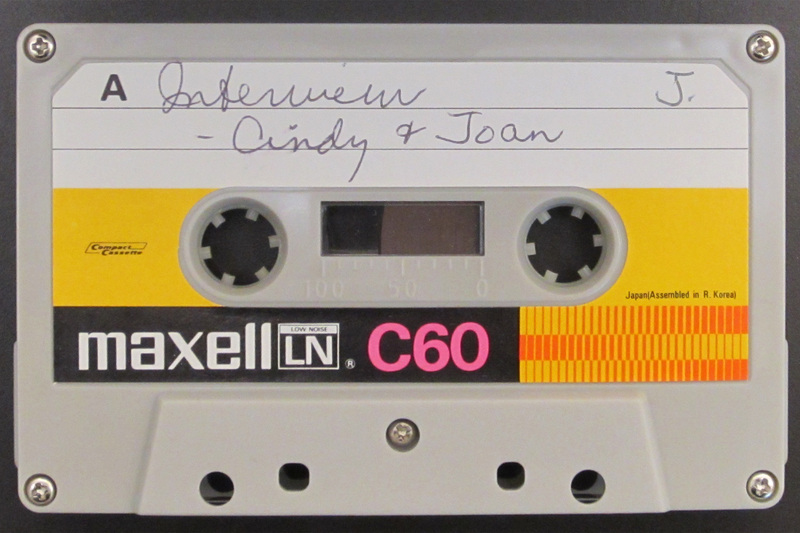
Cindy and Joan
Cindy or Joan (speaker unclear) discusses her experience of growing up in a working class family. She also discusses going to bars as she got older, and her relationships with women. She describes lesbians being harassed by police officers in the past. She also describes how her car was vandalized once, which she thinks was because she is a lesbian.
Speakers' identities are unclear throughout. Recording label identifies Cindy and Joan but it is hard to tell if there are actually two separate speakers.
Sound quality is poor. Tape cuts off abruptly at the end. -
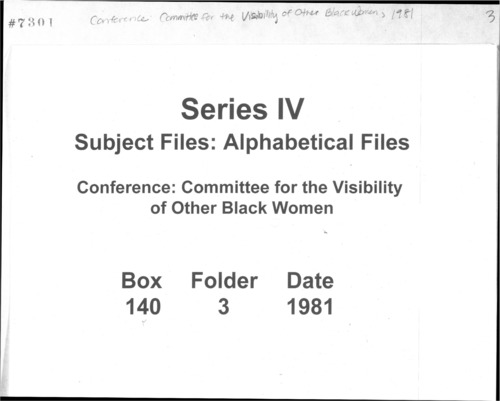
“Becoming Visible: Survival for Black Lesbians”
1981 – The first conference in the eastern U.S. for Black Lesbians opens in Brooklyn, New York. It was called “Becoming Visible: Survival for Black Lesbians." -
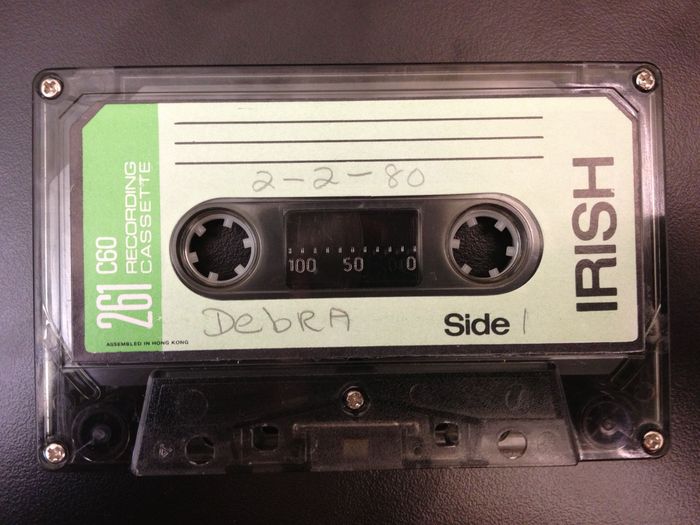
Debra, February 20, 1980 (Tape 1)
Debra discusses her experiences as a lesbian. She talks about her first lesbian relationship when she was 12, how she was married for one day, how her mother knew something was different about her, and how her sister figured out she was a lesbian because she was only married for one day.
She talks about her relationships with women, how she never openly acknowledged that she was gay but if she was asked she wouldn’t deny it.
They discuss monogamy, she was mostly faithful, but she also talks about jealous partners and how when one is accused of things, one might as well and go ahead and do it.
She doesn’t believe that a lesbian relationship is any different than a straight relationship.
They discuss bars and areas in Buffalo that she would frequent: Moon Glow bar, Pearls bar, Ralph Martins, Ryan’s Hotel, Little Harlem. They also discuss dating rituals, fashion, and relationship/ courting roles. -
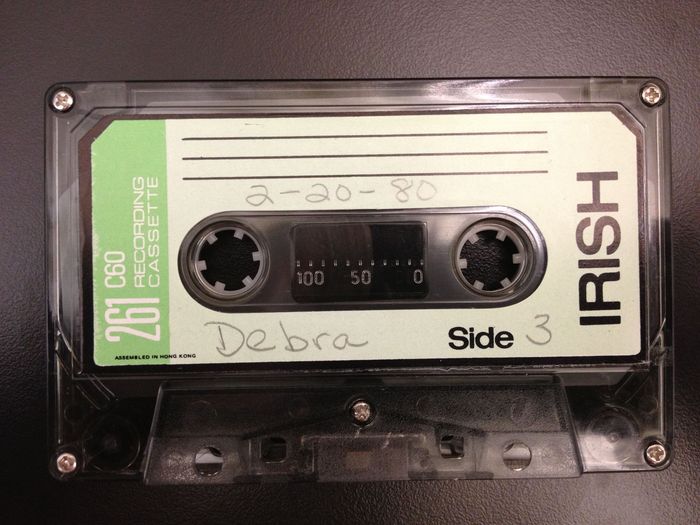
Debra, February 20, 1980 (Tape 2)
Discusses her child, a son. He was the product of her one-day marriage. She kept him for about 8 months and then her brother and his wife took him and raised him. He would spend the summers with her until he was 12 and then he lived with her and spent the summers with her brother and his wife.
Believes lesbians make better mothers because they know more. She didn’t want her son to go into gay life because she felt it would be difficult for him, she doesn’t believe that gay men relationships last. She believes you can teach someone not to be gay.
They talk about gay men and lesbian relationships and social interactions. She would call upon her gay male friends to be her date to events that she needed a date, also sometimes family events. They talk about marriages between a gay man and gay woman. Debra says that she knew quite a few couples who had done that to put up a front, but that those relationships always worked out well. Debra also talks about marriage between two women. She never wanted to get married but knew women who did.
They also discuss alcoholism and drugs among the gay community.
On the second tape, Debra further discusses fights in the lesbian community. Madeline asks if she knew any lesbians who played sports in the 1940s and 1950s. Debra believes lesbians played sports but cannot definitely say so. -
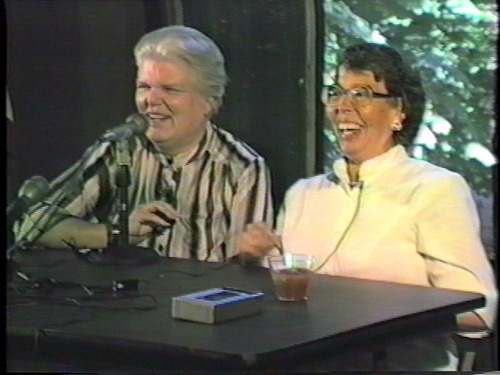
An Evening with Del Martin and Phyllis Lyon
Del Martin and Phyllis Lyon speak at a program for a lesbian movement exhibit. They give an overview of the beginning of the lesbian movement and the DOB's history, including public protests and conventions. They speak about a need for lesbians to be recognized more and to be more visible in the media. Unrelated video clips start after 01:30:42. -
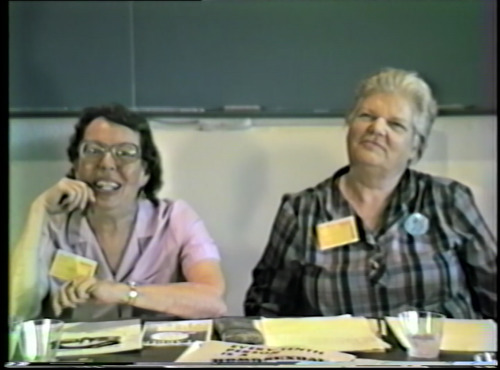
Berkshire Conference Panel Discussion and Cleo Glenn
Del Martin, Phyllis Lyon, Barbara Gittings, and Lois Johnson discuss their experiences in Daughters of Bilitis on a panel for the 1987 Berkshire Conference on the History of Women; Cleo Glenn discusses some of her younger life as well as her involvement with Daughters of Bilitis -
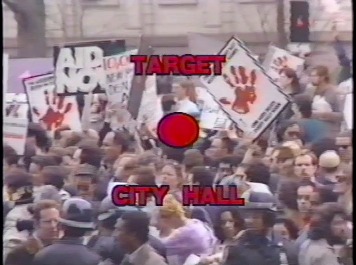
Target City Hall, 1989
Produced by DIVA TV, this video focuses on the ACT UP action known as Target City Hall when activists demonstrated against access to AIDS drugs and Mayor Ed Koch's response to the crisis at the New York City Hall. -
Pat and DJ, November 11, 1986 (Tape 1)
Side A: Liz and Madeline ask Pat and DJ for feedback on a draft of "Boots of Leather, Slippers of Gold." Pat claims the book paints too rosy a picture of lesbian life, underplaying the prejudice most lesbians encountered in the 1940s and '50s. Both talk about the Buffalo bar scene in the 1940s and '50s: mentioned are Carousel, Bingo's, the Chesterfield, Ralph Martin's, the Mardi Gras, and the Midtown. The discussion shifts to relationships, faithfulness, and prostitutes.
Recording has loud feedback sounds and squeaks at the beginning.
Side B: Pat and DJ discuss bar denizens vs. lesbians who did not frequent bars and the "class" distinction there, and also the way non-butch lesbians looked down on butches. DJ describes how her long-term relationships were analogous to marriage, where she was the breadwinner and her partners were housewives who perhaps worked but did not "provide." Both discuss the fact that in the 1940s and '50s butches had the freedom to have affairs whereas femmes were expected to be faithful. This created an atmosphere of mistrust in which monogamous long-term relationships became very difficult.
Recording has loud squeaks at the beginning, hisses throughout, and cuts off abruptly at the end. -
Pat and DJ, November 11, 1986 (Tape 2)
Side A: Pat and DJ continue the discussion of relationships during the 1950s from tape cassette SPW457. The two women discuss aspects of how to make relationships long-lasting and the importance or lack thereof of sexual intimacy in relationships. Both Pat and DJ discuss personal opinions related to intimacy in relationships, particularly in long-term relationships. The discussion then turns to types of attraction and intimacy.
Side B: Pat and DJ continue to discuss relationships during the 1950s and talk about reasons for breaking up. The discussion revolves around the importance of taking care of a woman and being able to satisfy her needs. The two women discuss the negative stigma of cheating. The discussion turns to take pride in a partner and the importance of her appearance and physical presence. Pat and DJ also talk about the presence of violence during relationships in the 1950s, listing insecurity between partners as the main reason. The two women speak specifically of violence in bars as a result of talking to another woman’s lady or challenging femmes in relationships to talk to other women. They discuss how much of this behavior was learned from lesbian role models of the 1940s. -
Pat and DJ, November 11, 1986 (Tape 3)
Side A: Pat and DJ discuss the characteristics of femme identity. The interviewers say they are looking to interview more femmes, which leads to a discussion of the names and locations of lesbians who were a part of the community in the 1940s. The interviewers also mention the difficulties of interviewing lesbians who have not come out. The group discusses why butches are more willing to talk. Pat talks about her time at the Good Shepherd home. There is a brief discussion about the role of lesbians in World War II.
Cut off at 0:14:55
Side B: The group continues their discussion of the interview process, including who is willing to talk and who is not, as well as who will use their names and who will not. There is more discussion about beatings. Pat tells of coming out to her mother. Her mother only worries about the violence Pat is subjected to, on account of being butch. There is a long discussion about the nature of breakups and their aftermath. The group discusses the role of third parties in most breakups and the way a butch or femme reacts to a breakup. The issue of "passing" comes up, and Pat talks about working as a cab driver and passing as a man. Often, the children of femmes did not know that their mothers' partners were actually women. The interview concludes with a description of the rules for asking other butches' girlfriends to dance, and the fights that sometimes ensued. This point in the discussion highlights the difference between the generation of the interviewees and the generation of the interviewers. -
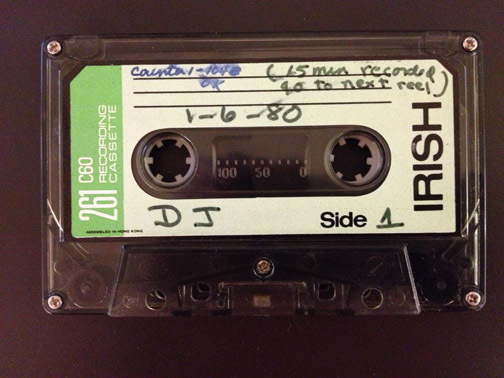
DJ, January 6, 1980 (Tape 1)
DJ discusses the time she went to the hospital and was diagnosed as a homosexual. She remembers that the doctor suggested she try going out with a man to determine the extent of her feelings toward women. She also recalls that the doctor told her she must learn to live with society and to control her emotions in public. -
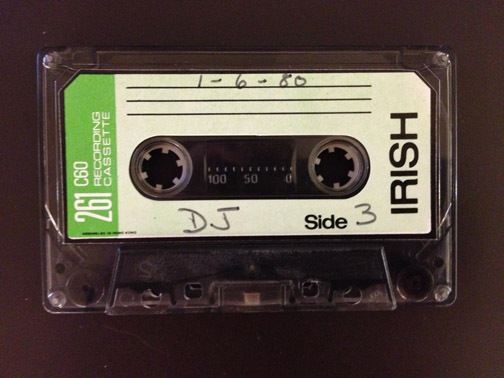
DJ, January 6, 1980 (Tape 2)
DJ discusses her early experiences with women as a teenager, her feelings of being a tomboy, and her coming-out experience. She discusses her experiences in the bar scene in Buffalo in the 1950s, and describes ways in which women would interact with each other, but publicly and privately. DJ also discusses roles in relationships, particularly the butch and the femme. -
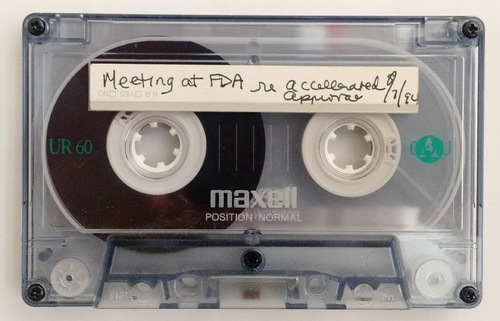
FDA Accelerated Approval Meeting
Meeting between ACT UP and other HIV/AIDS activists and employees of the Federal Drug Administration regarding recent FDA activities in accelerated approval and expanded access to drugs. -
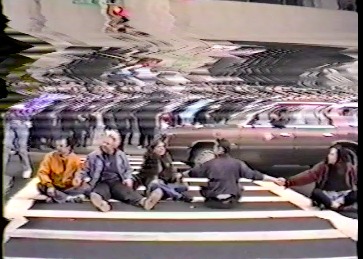
Target City Hall [D.I.V.A. Footage], 1989
Handheld video recording of the ACT UP action "Target City Hall" on March 28, 1989. -
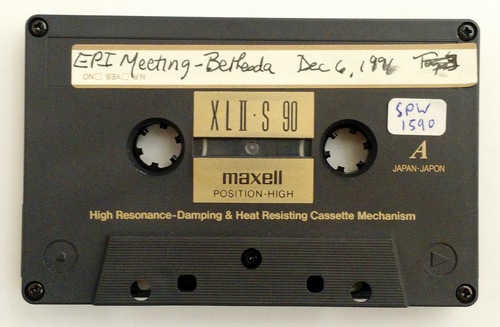
ACT UP and NIAI Meeting About Natural History Study of Women with HIV (Tape 1)
Meeting between NIAID employee Diane Hartnell and ACT UP, Women with HIV/AIDS, and AIDS activists in Bethesda, Maryland regarding the inclusion and diversity of women in AIDS studies, sexual health, ACTG, and pediatric care.Tags AIDS, AIDS Clinical Trials Group (ACTG), Clinical trials, Communities, Consciousness raising, Diane Hartnell, Drugs, Education, Epidemiology, Health care, Illness, Mary Lucy, Maxine Wolfe, Meetings, National Institute of Allergy and Infectious Diseases (NIAID), Seh Welch, Social work, Women's health -
ACT UP and NIAID Meeting About Natural History Study of Women With HIV (Tape 3)
Meeting between NIAID employee Diane Hartnell and ACT UP, Women with HIV/AIDS, and AIDS activists in Bethesda, Maryland about AIDS research. Side B includes discussions about first women's natural history study with other NIAID employees.Tags AIDS, AIDS Clinical Trials Group (ACTG), Clinical trials, Communities, Consciousness raising, Diane Hartnell, Drugs, Education, Epidemiology, Health care, Illness, Marina Alvarez, Mary Lucy, Maxine Wolfe, Meetings, National Institute of Allergy and Infectious Diseases (NIAID), Seh Welch, Social work, Women's health -
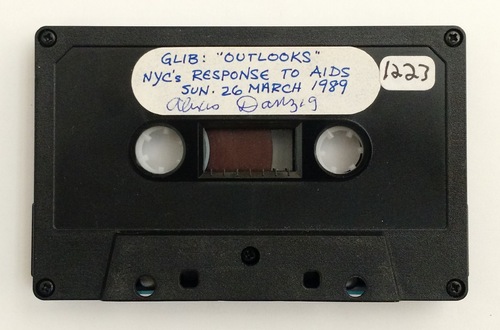
Outlooks, March 26, 1989 [New York City's response to AIDS]
GLIB (Gay and Lesbian Independent Broadcasters): Radio program "Outlooks" hosts a roundtable discussion with ACT UP members to discuss NYC's Response to AIDS, from policies to public opinion. -
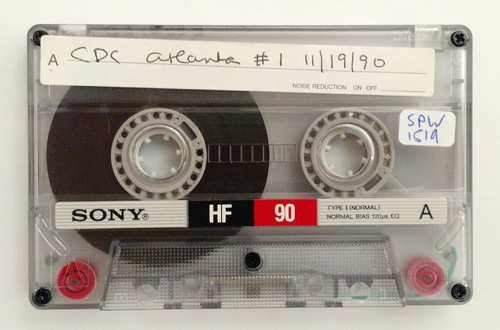
ACT UP and CDC Meeting About Changing the Definition of AIDS (Tape 1)
Meeting at the CDC in Atlanta, Georgia between representatives of ACT UP and CDC Officials about changing the Centers for Disease Control's definition of AIDS to include infections that women and injection drug users were getting. -
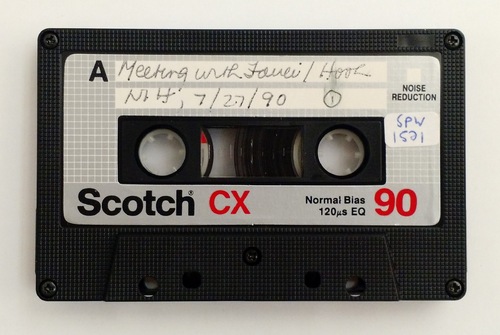
ACT UP and NIAID Meeting on Women and HIV/AIDS
Director of NIAID, Tony Fauci, listens to a presentation by ACT UP activists from New York and Washington, D.C. about the neglect of research for women's health issues in contrast to men's, plus statistics about women with AIDS. -
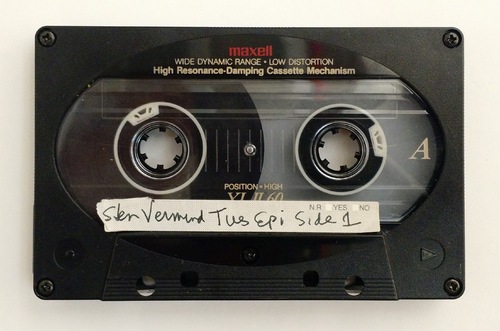
ACTG Meetings with Sten Vermund (Tape 2)
Meeting between ACTG [AIDS Clinical Trials Group] and Sten Vermund discussing Women with HIV/AIDS and the clinical trials and drug testing, as well as treatment options and the future of their work. -
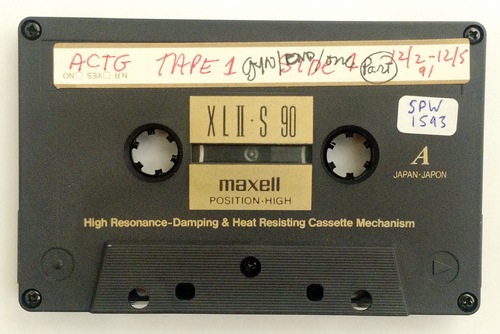
ACT UP Organizing Meeting
Women in an ACT UP organizing meeting strategize how to recruit activists to grow their community and perform inclusive outreach to support different needs, specifically with connecting healthcare professionals with subjects. -
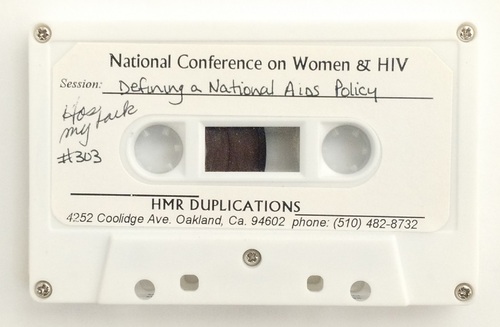
Defining a National AIDS Policy Panel
NIH-moderated panel about defining a national AIDS policy, research health services, and prevention in four talks from Maxine Wolfe (ACT UP), Dr. Wanda Jones (CDC), Corola Marta (Yale physician), and community activist Michelle Lopez. -
CDC Hearing [Linda Meredith address]
Presentation at the final CDC hearing by Linda Meredith, followed by physicians, about the definition of AIDS activists, especially the inclusion of lesbians, difference from advocates, and inaccurate characterizations. -
ACT UP and CDC Meeting About Changing the Definition of AIDS (Tape 2)
Meeting at the CDC in Atlanta, Georgia between representatives of ACT UP and CDC Officials about changing the Centers for Disease Control's definition of AIDS to include infections that women and injection drug users were getting. -
ACT UP and NIAID Meeting About Natural History Study of Women with HIV (Tape 2)
Meeting between NIAID employee Diane Hartnell and ACT UP, Women with HIV/AIDS, and AIDS activists in Bethesda, Maryland regarding research, including the ACTG, women's natural history, sexual health, pregnancy, and questionnaires.Tags AIDS, AIDS Clinical Trials Group (ACTG), Clinical trials, Communities, Consciousness raising, Drugs, Education, Epidemiology, Health care, Illness, Marina Alvarez, Mary Lucy, Maxine Wolfe, Meetings, National Institute of Allergy and Infectious Diseases (NIAID), Seh Welch, Social work, Women's health -
Dorothy, October 2, 1981 (Tape 1)
Side A: Dorothy discusses her personal life and how she came to discover that she was a lesbian. She talks about her marriage and separation. She discusses her relationships with women, all of which were long-term. Dorothy talks about her job in engineering as a tool designer and the fact that she performed a man's work for a man's salary. She discusses lesbian social life during the 1930s, 1940s, and 1950s and names several popular bars including Eddy's Tavern, Ralph Martin. She talks about her developing alcoholism and the prominence of this disease among lesbians in general, perhaps as a result of their uncertainty about life. Dorothy also talks about butch and femme roles in lesbianism, stating that she doesn't identify herself with either role despite the fact that the butches identified her as one of them.
Side B: Dorothy continues the discussion of roles in lesbianism and the division between the two groups in bars. She says that her "crowd" did not distinguish between these two groups and she ultimately stopped going to bars, partly as a result of the need for role division. She discusses in some depth her problem with alcohol and talks about her membership in Alcoholics Anonymous. She talks about how she decided that she was a lesbian and gives further details about her first relationship. She also speculates on whether or not other people knew she was a lesbian, including her mother and acquaintances such as her landlord. She says that she has never had any problems with people discriminating against her. Dorothy also continues to talk about the social dynamics of bars in Buffalo. -
Dyke TV Does 100! Invitation
An invitation for the Dyke TV Does 100! Cocktail Party & 100th Show Screening at Joy Tomchin and Baby Evan's home. -
-
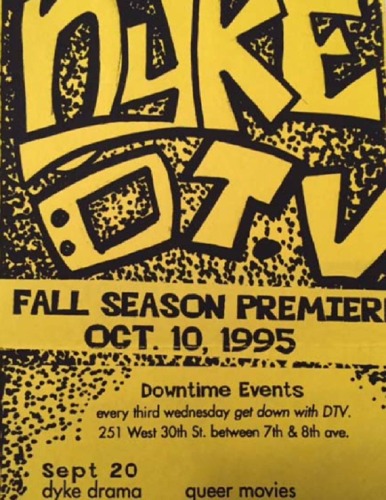
Dyke TV Season Premier Flyer
A flyer advertising the 1995 fall season premier of Dyke TV, as well as related promotional events and requests for "Lesbian Child" segment participants. -
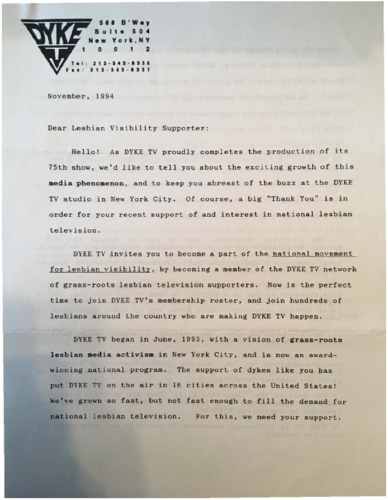
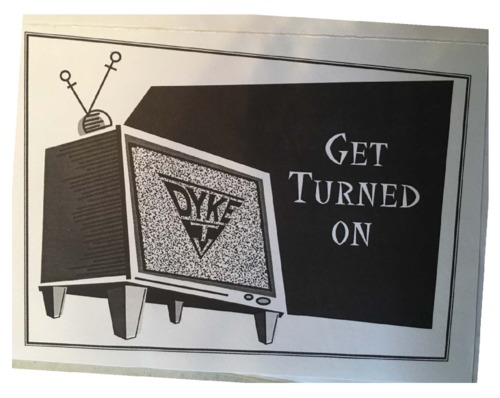
Dyke TV Membership Letter, 1994
A letter requesting support for Dyke TV. The letter asks the recipient to consider becoming a member of the Dyke TV network of grass-roots lesbian television supporters. -
-
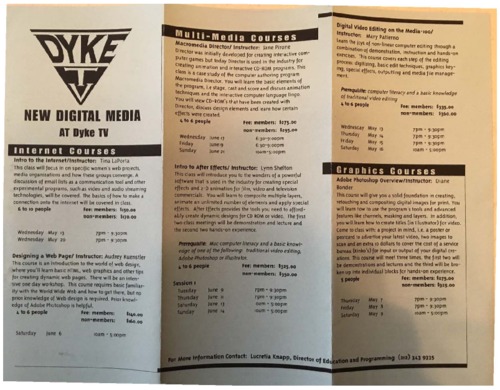
Dyke TV Internet Courses Flyer
A flyer advertising two internet courses. One teaches about the internet being used for lesbian and women's organizations and communication. The second teaches how to design a web page. -
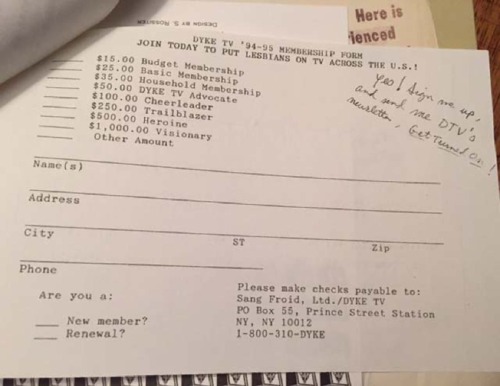
Dyke TV Membership Form
A membership form for Dyke TV detailing donation tiers. Handwritten note in upper right hand corner reads "Yes! Sign me up, and send me DTV's newsletter, Get Turned On!Tags Networks -
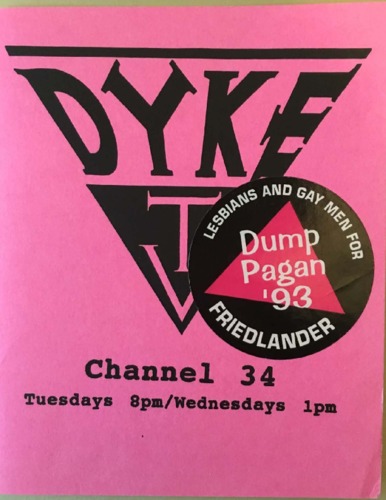
Dyke TV Recruitment Flyer
A flyer advertising jobs at Dyke TV. Positions include camera operator, video editor, news writer/producer, fund-raiser, and public relations. -
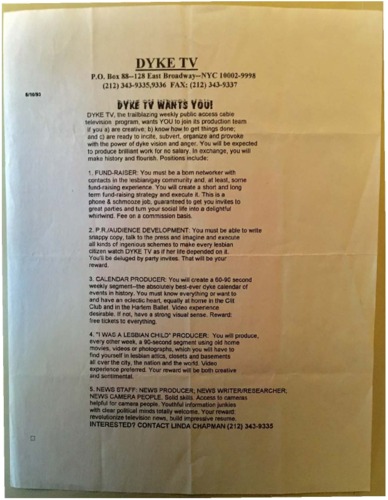
Dyke TV Recruitment Letter
A flyer advertising jobs at Dyke TV. Positions include camera operator, video editor, news writer/producer, fund-raiser, and public relations. Contains casual descriptions of positions and required skills. -
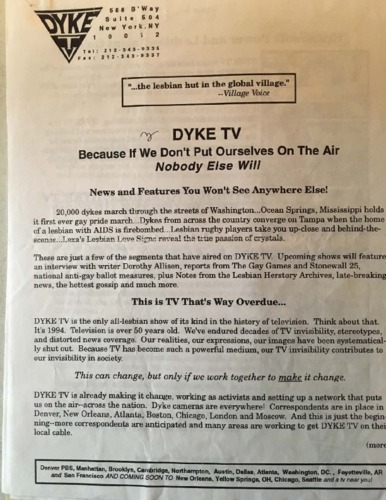
Dyke TV Fundraising Letter
A fundraising letter describing some of the past news and features presented by Dyke TV, and asking for donations to continue creating programming. The letter warns that without help, Dyke TV will soon be off the air. -
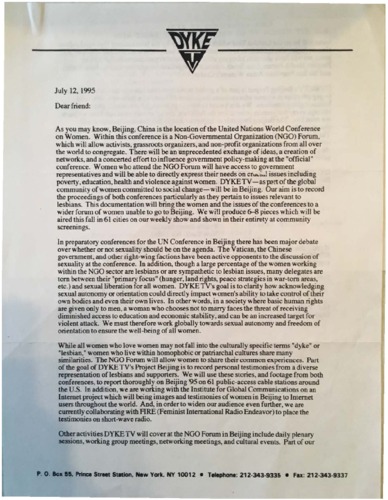
Dyke TV Beijing Project
A fundraising letter asking for support for the Dyke TV Beijing Project to attend the NGO Forum at the United Nations World Conference on Women to record testimonies from women. The letter notes a partnership between Dyke TV and FIRE (Feminist International Radio Endeavor) to also bring recorded testimonies to short wave radio. -
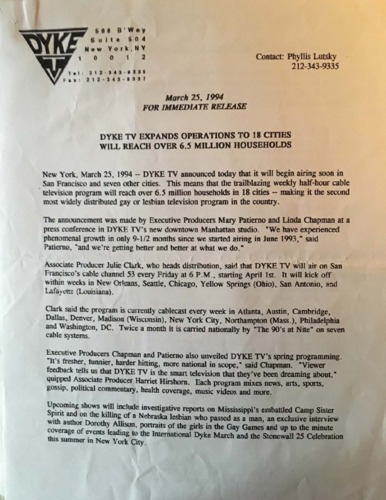
Dyke TV Expansion Press Release
A press release announcing that Dyke TV will begin airing in San Francisco and seven other cities, for a total reach to 18 cities. The announcement notes the current cities of distribution, and describes content that will be included in upcoming programming. -
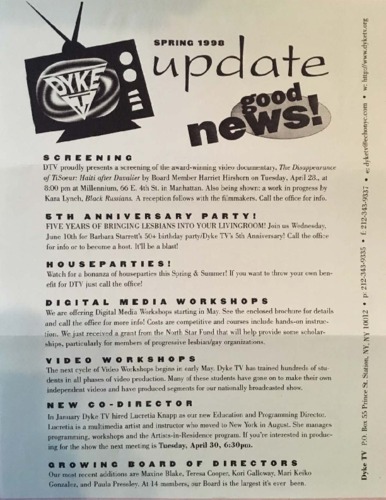
Good News Flyer
A Dyke TV flyer announcing various events including screenings, workshops, and parties, as well as new Board of Directors memebrs. The reverse side of the flyer announces New York Dyke TV airtimes and encourages support -
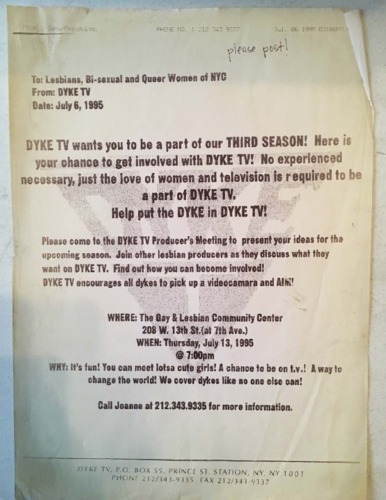
Dyke TV Third Season Recruitment Flyer
A flyer announcing the third season of Dyke TV and encouraging people to come to a producer's meeting to present ideas. -
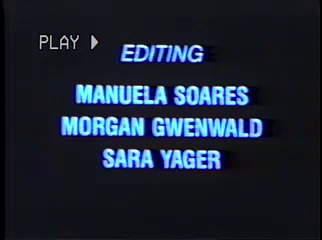
Slide Titles for GWA
This is a collection of video clips, photos, and opening/closing credits for a Daughters of Bilities documentary sponsored by the Lesbian Herstory Archives. -
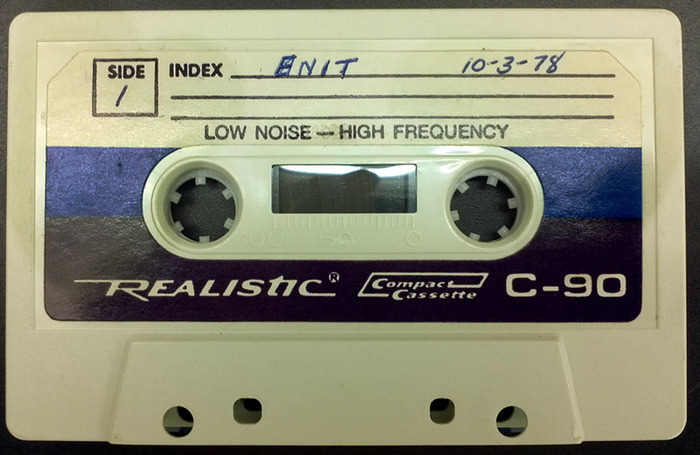
Enit, October 3, 1978 (Tape 1)
Enit discusses facing her sexuality at the age of 12 and coming out to her family despite her frustration at their lack of acceptance. She goes on to discuss her social life and dating in Buffalo, NY, noting how she used to meet women at bars but that her social activities have changed with age. She discusses her participation in the Erie Picnics held for gay men and women in Pennsylvania. She is 47 at the time of the interview. -
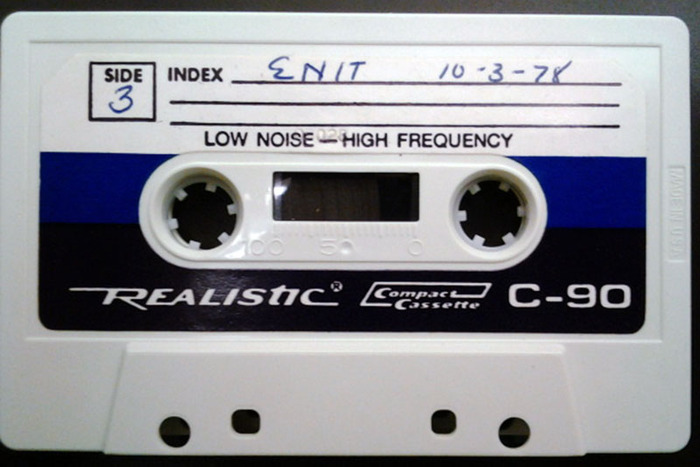
Enit, October 3, 1978 (Tape 2)
Enit discusses how her perception of Lesbian oppression has changed over time. She also talks about acceptance in the work place and how professionals view Lesbians. Enit explains that her personal interests have changed with age and that her hobby is dance. She finishes by discussing her interactions with straight women and the support she gets from her Lesbian friends. -
Women Writers
The radio episode, which is part of the Feminist Radio Network, includes recordings from a conference panel which included the writers Maxine Kumin, Alice Walker, and Grace Paley. They discuss the challenges of being women writers, how their writing processes are affected by societal gender norms, and how important women’s stories are within the individualistic, middle-class American society where female bonding is not encouraged. This episode also includes excerpts from Living, by Grace Paley, and Everyday Use, by Alice Walker. -
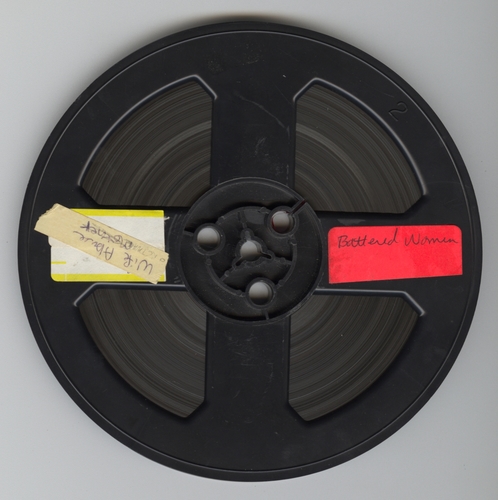
Discussion on Battered Women, Wife Abuse
Interviewee discusses helping a domestic abuse victim retrieve their personal belongings, and shares statistics on reported domestic abuses. -
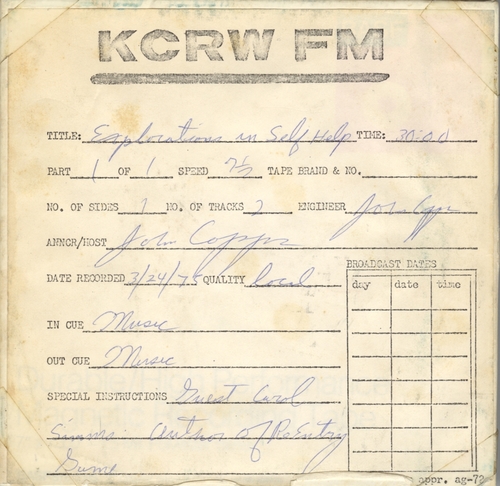
Explorations in Self Help
John Cooper hosts "Explorations in Self Help," with guest Carol Sims. Carol talks about her new book, The Re-entry Game, a book for women dating post-divorce, published by Warner Books. She talks about the rise of the financial and socially independent woman, as influenced by Women’s Liberation, and life post-Women’s liberation. She touches on post-divorce topics like custody battles, and self-love. Recorded by KCRWM Santa Monica. -
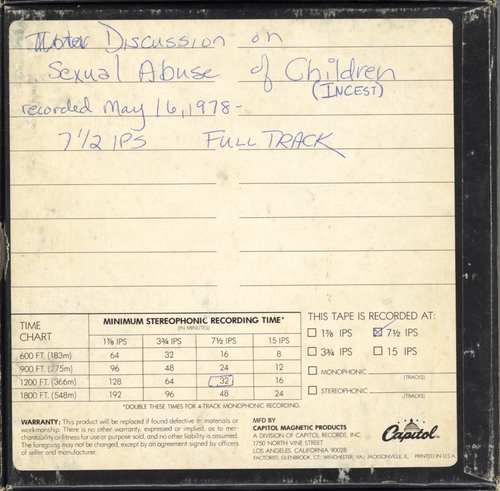
Discussion on Sexual Abuse of Children (Incest)
Interviewee discusses the statistics of child sexual assault, and how they are not reported accurately. They claim that girls face more assault than boys, but much of it goes unreported. Conversation circles around parental assault, parental protection, and social services. The host and interviewer talk about the role of the patriarchy, victim denial, abuse, and the need for child abuse education for children. They advocate for child’s rights, and children’s need for peer relationships. -
I Ain't Gonna Testify
Emily Hixon introduces the topic of grand jury abuse. Through interviews, testimonies, and conversation, they discuss how grand juries can attack political activists and their organizations. They also examine women’s politicized folk music, as well as trial tactics and strategies. They theorize about the intentions of the FBI, lawyers, legal organizing, and the federal government. -
Discussion on Waitressing
Recording starts with an introduction from the Feminist Radio Network, with female vocalizing, singing, and performing. The recording then begins to talk about women in the food service industry, and the statistics of how many women are waitresses. Upon interviewing a waitress, the conversation moves towards the low wages, and need for unionization in waitressing, since there is such a reliance on tips. Segueing through empowering music, the discussion shifts to women’s speeches, performances and testimonies on women’s liberation. The recording then moves on to a panel with Maxine Kumin, Grace Paley, and Alice Walker, discussing their thoughts on women’s writing. -
Power, Oppression and the Politics of Culture: A Lesbian/Feminist Perspective; Fourth Berkshire Conference on the History of Women, August 25, 1978, (Tape 1 of 3)
Audio recording of a panel presentation at the Fourth Berkshire Conference on the History of Women. Includes Audre Lorde. -
-
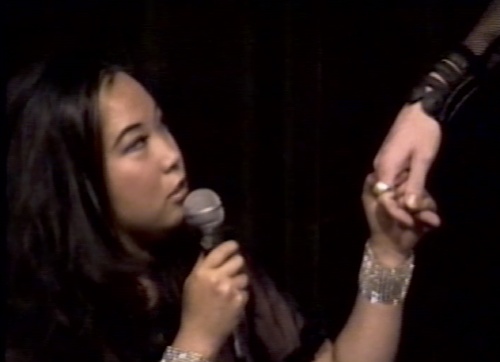
Cathay Che’s Performance at Dixon Place
Video recording of a spoken word performance art piece put on by Cathay Che at Dixon Place for an audience. Date of performance unknown. -
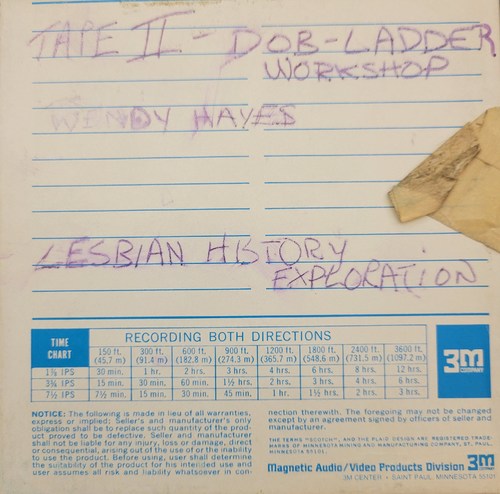
Ladder Workshop/Wendy Hayes, 1970s (Part 2)
About the First Lesbian Convention in San Francisco. A discussion of early scientific studies of sexuality (a couple of attendees and host talk about shock therapy). Trigger Warning: Discussion of shock therapy and suicide. -
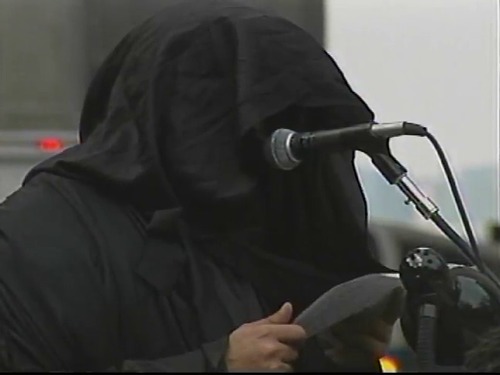
Report from World AIDS Day 1995
A Dyke TV report on World AIDS Day from New York City Hall. The event is a commemoration and demonstration memorializing New Yorkers who have died of AIDS, and a protest against budget cuts that will impact AIDS education, prevention, and services. It includes footage of people reading the names of the deceased, with City Hall chosen as a location to send a message to Mayor Rudolph Giuliani for his lack of response to the AIDS crisis. The report includes footage from a Housing Works Theater Project, "In Limbo", and interviews with participants including health care workers, an AIDS educator, and a harm reduction advocate and recipient of assistance at risk of being cut. Excerpts from the Dyke TV series "Risk, Lesbians, and AIDS" is also shown, including interviews with lesbian women living with AIDS and health care workers, and an excerpt from "Voices From the Front" about the People With AIDS Health Group and Act Up protests against the United States Food and Drug Administration and the National Institutes of Health. -
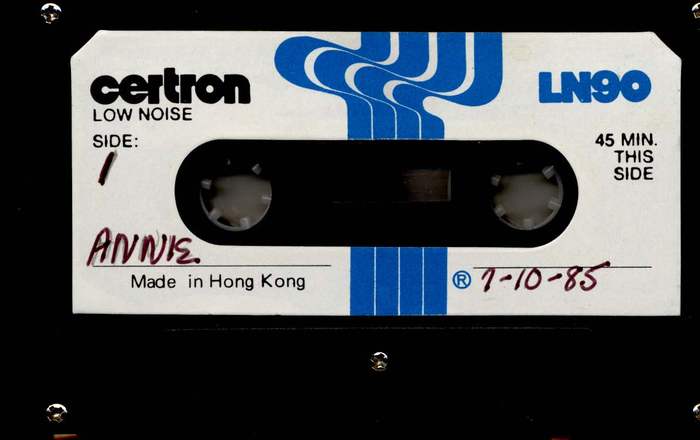
Annie, July 10, 1985 (Tape 1)
A woman talks about her time married to a man as compared to her time in a relationship with a woman, and the pros and cons of both. -
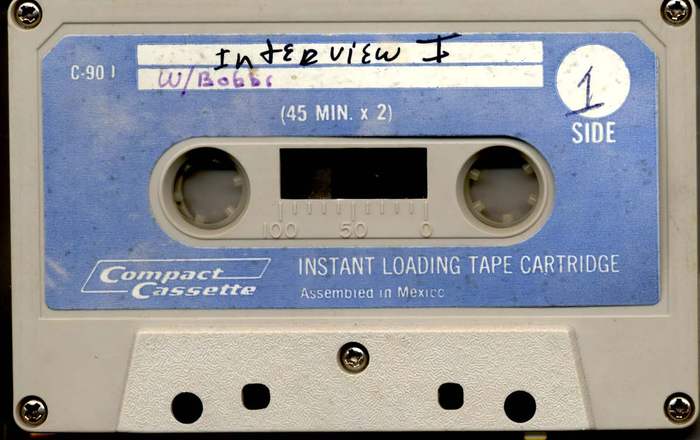
Bobbi (Tape 1)
Side A:
The interview discusses what coming out was like for the interviewee and the reactions of her family members.
Side B:
Interviewee discusses dating and having her first love affair. The interview talks about the differences in reactions of people when she came out during the 1960s and how that affected what she did and who she hung out with. She discusses the change in going from a group of people who accepted her being gay to a group of people who felt guilty of being gay. -
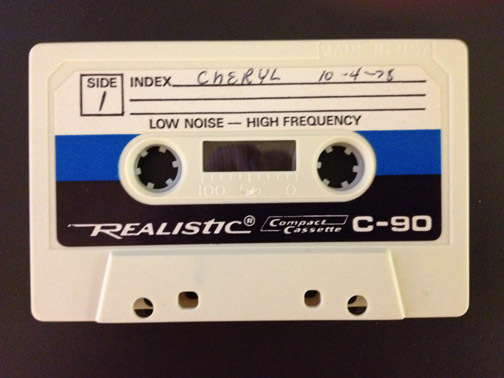
Cheryl, October 4, 1978 (Tape 1)
Side A: Cheryl discusses her experiences and the stereotypes that were associated with lesbians in college when she first first came out.
Side B: Cheryl discusses her relationships, including sexual relationships and partnerships. She shares her experiences and opinions about affairs, and monogamous and non-monogamous relationships. Generational differences within the lesbian community are also discussed.