
Browse Items (771 total)
Sort by:
-

Holly Near Interview
Holly Near is interviewed by Ruth Scovill. Holly talks about her early life, and influences that led her to the women's movement. She talks about anti-imperialism, the role of women’s music, and her criticism within the women’s movement, along with influences in art and politics. -
![[2014SP]re honesty ends helplesness side b.mp3](/omeka/application/views/scripts/images/fallback-audio.png "[2014SP]re honesty ends helplesness side b.mp3")
Honesty Ends Helplesness Side B
This tape was recorded November 14th and is a continuation of a previous recording, although the location of this previous recording is unknown. She discusses an accident and an encounter with her sponsor. -
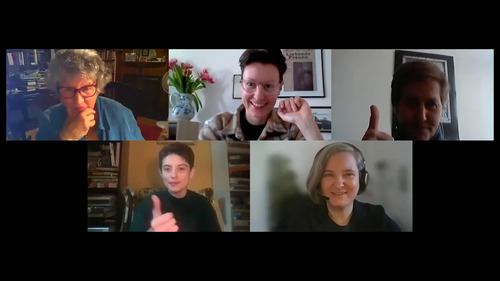
Honoring Lesbian-Queer Archiving: Online-Talk with Joan Nestle
A talk with Joan Nestle, co-founder of the Lesbian Herstory Archive, about the history and importance of lesbian archives and queer archives, along with her personal history. The discussion covers many topics in Joan's life and current activities within lesbian archives. -
I Ain't Gonna Testify
Emily Hixon introduces the topic of grand jury abuse. Through interviews, testimonies, and conversation, they discuss how grand juries can attack political activists and their organizations. They also examine women’s politicized folk music, as well as trial tactics and strategies. They theorize about the intentions of the FBI, lawyers, legal organizing, and the federal government. -
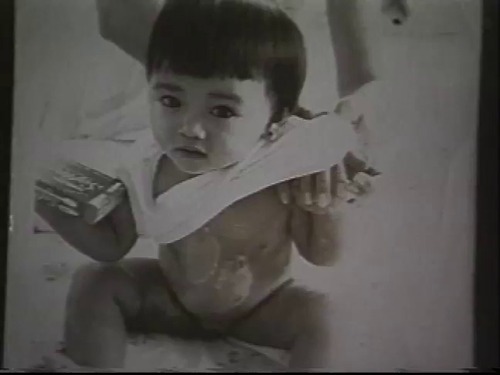
I Was a Lesbian Child [Desireena Almoradie]
In this segment of I Was a Lesbian Child, Desireena Almoradie shares photographs from her childhood in the Philippines and stories of her life while growing up there. -
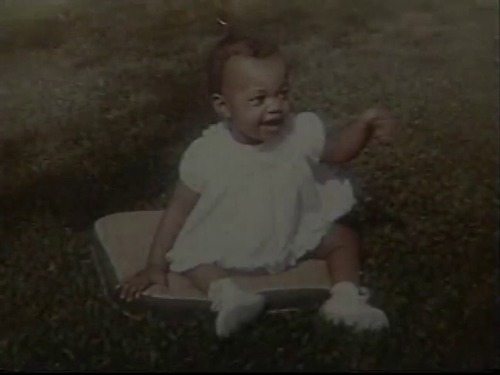
I Was a Lesbian Child [Jocelyn Taylor]
In this segment of I Was a Lesbian Child, Jocelyn Taylor shares photographs from her childhood and stories of her life while growing up. She shares a memory from when she attended Duke Ellington School of the Arts in Washington DC. -
-

Interview with Martha Shelley, November 7, 2020
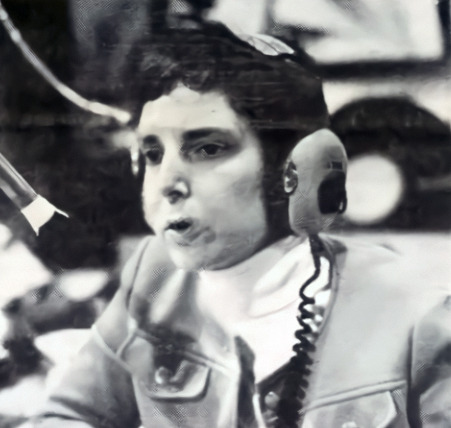
On November 7th 2020, MSLIS students Julia Rosenzweig, Tiffany Chan, and Sadie Hope-Gund conducted an interview with Martha Shelley on behalf of Pratt Institute School of Information and the Lesbian Herstory Archives. Martha was the producer of the 1970’s radio show Lesbian Nation, the tapes of which have been preserved in digital format on this website. The interview was recorded remotely from Brooklyn and Portland, and the covered topics regarded: her personal history, activism, and work on Lesbian Nation.
Tags Martha Shelley -
-
Irene Young Demo Tape
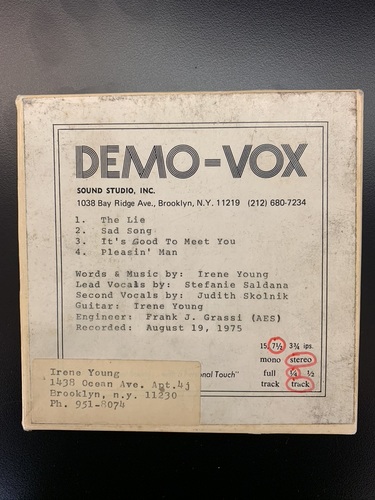
Irene Young music demo tape. Vocals by Stefanie Saldana and Judith Skolnik. Track Listing: 1. The Lie / 2. Sad Song / 3. It's Good to Meet You / 4. Pleasin' ManTags Music -
It Can Be Done: Chicago Women's Graphic Collective
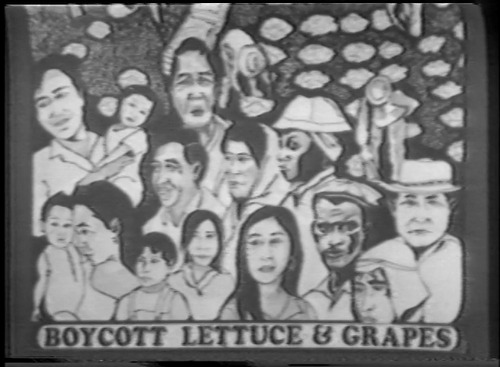
A video about the relationships and bonds among members of the Women's Graphics Collective. The Collective produced posters addressing the struggles of the women's movement and other political movements, including the United Farm Workers organized a boycott on non-union lettuce and grape farmers. -
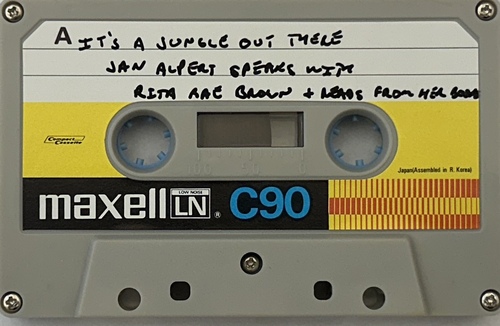
It's a Jungle Out There: Jan Alpert Speaks with Rita Mae Brown + Reads from Her Books
Jan Alpert and Rita Mae Brown discuss Rita Mae's career path and motivations outside of being a writer, as well as her involvement as a street organizer in the women's and gay rights movements. Occasionally throughout the interview, Jan will read excerpts from Rubyfruit Jungle, Rita Mae's first novel, and In Her Day, Rita Mae's second novel. While discussing In Her Day, they cover the lessons Rita Mae learned from writing it. -
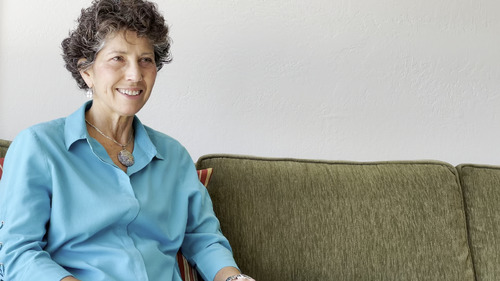
Jade Martner Interview
In this oral history conducted by the Rossmoor Lesbian Social Club, Jade Martner discusses her discusses her coming out process, both to herself at age 15, and to her mom when she was 17 which led to Jade being kicked out of the house. Moving to the Bay Area in 1988 from Arizona and finding a women’s group and community with the Palo Alto Lesbian Rap Group and in Lesbian Bars. Her work in IT management and being a Lesbian in a professional setting and starting an LGBTQ resource group at her company. -
-
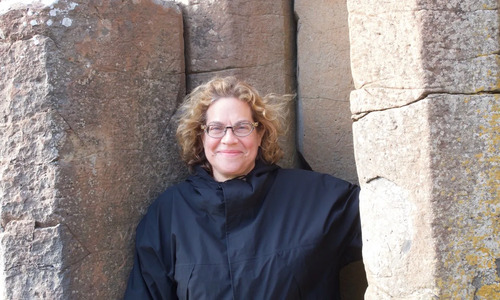
Jan Albert, circa 2022
Jan Albert, circa 2022 -
Janet Seldon Interview
In this oral history conducted by the Rossmoor Lesbian Social Club, Janet Seldon discusses her coming out process, growing up in the Bay Area, her law work, how she came to Rossmoor, the importance of Lesbian Community. -
Jean Ko Stewart Interview, April 11, 1989
Jean Ko Stewart is interviewed in Boston in 1989. She discusses her early relationships with women and coming out. She speaks about her role as the Vice President of the Boston chapter, which involved organizing dances and concerts and a focus on providing a community space for lesbians. She compares the political and social climate of California and Boston, and considers Boston’s racial climate at the time. Jean explains that she moved to California because she heard that women wore slacks to work, which was considered unacceptable in Boston in the 1960s.
Accompanied by an abridged version where Jean Ko Stewart speaks about meeting with the Daughters of Bilitis community. -
Jean Lerner Interview
In this oral history conducted by the Rossmoor Lesbian Social Club, Jean Lerner discusses being raised Jewish by very politically active communist parents, her realization in college she was in love with her girl friend, and her disillusionment with the Communism that she was raised with. She talks about being closeted in her work as a chiropractor even though she loved her job, her decision to get pregnant and raise a daughter on her own after a struggle to find a partner who also wanted to raise a child, and then meeting her partner when she was pregnant and their family growing as they adopting their son. -
Jeanne Cordova Interview, October 27, 1988
Jeanne Cordova discusses how the Daughters of Bilitis inspired her to change her career path and passions in life from aspirations of playing soft ball, to becoming highly involved in activism. -
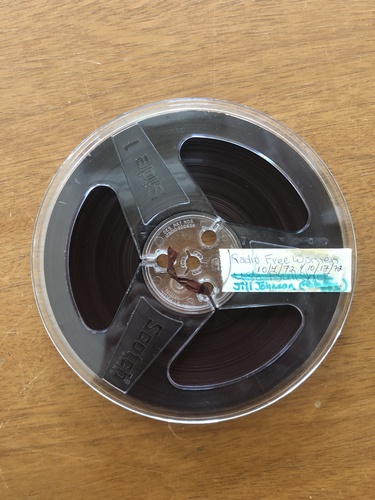
Jill Johnson on Lesbians in the Women's Movement
Columnist for the village voice, feminist, Jill Johnson discusses the role of the feminist lesbian within the larger movement of women’s liberation. Johnson discusses the variations in the NYC lesbian experience, and the relationship they have with straight women, and the overarching culture at large. She discusses the contributions that a lesbian feminist can make to empower other women. -
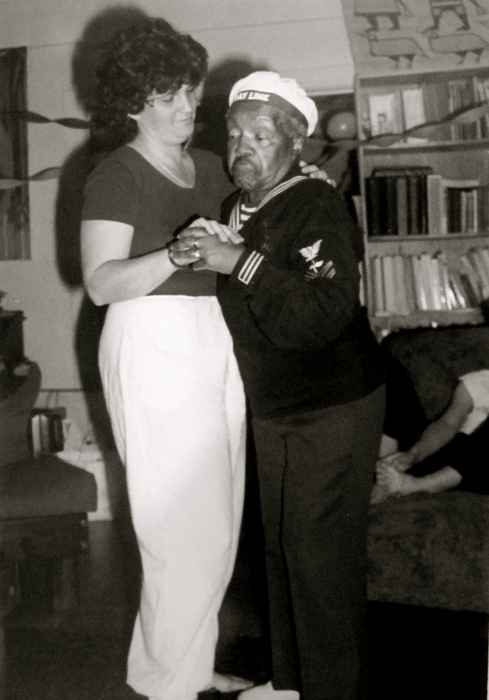
Joan Nestle / Mabel Hampton [undated]
Oral history recording of Joan Nestle. Side A: Joan Nestle speaks about lesbian self-expression and the importance of language to identity. She goes on to talk about her early life and how she was motivated to take a stand against the oppression she saw around her in society, specifically oppression against women and lesbians. Side B: Mabel Hampton takes over as the main speaker and recounts her life story, beginning when she was only one month old. Mabel discusses her early years, including the crucial transition from living with her grandmother to living with her aunt, and how she eventually decided to run away to Jersey City. -

Joan with Donna and Doris, April, 1978
Joan talks about how she went to jail and her experiences while she was held there.Tags Bars, Buffalo Women, History, Lesbian and gay experience, Lesbian bars, Lesbian community--New York (State)--New York, Lesbian Herstory Archives, Lesbianism, Lesbianism--History, Lesbians--United States--History, Lesbians--United States--Identity, Lesbians--United States--Interviews, Madeline Davis, Oral history, Prisons -
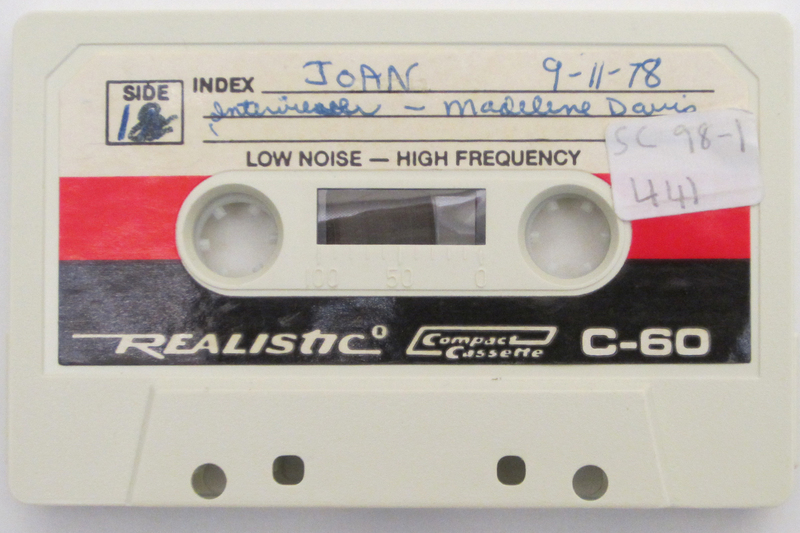
Joan, September 11, 1978 (Tape 1)
Side A: Joan discusses the distinction between butch and femme lesbians, the differences between the white and black gay communities, the Buffalo lesbian bar scene, and coming out in the 1960s.
Side B: Joan discusses the class divisions in the lesbian community, the university gay scene, and her personal, professional, and romantic history.Tags Bars, Buffalo Women, Butch and femme, Colleges and universities, Coming out, Communities, Identity, Lesbian and gay experience, Lesbian bars, Lesbian community--New York (State)--New York, Lesbian Herstory Archives, Lesbianism, Lesbians--United States--History, Lesbians--United States--Identity, Lesbians--United States--Interviews, Madeline Davis, Oral history -
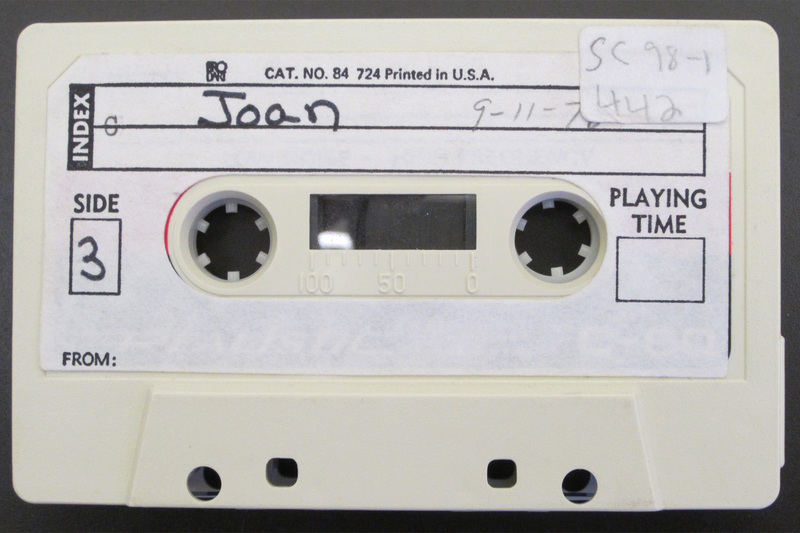
Joan, September 11, 1978 (Tape 2)
Joan discusses permanent relationships and other lesbians' relationships, dating process, how she and others approach lesbians they are interested in, and terminologies in dating (example: when do you start "going" with someone, and is it actually called "going"?). She identifies herself first as a lesbian, second as an African American. She talks about racism in the white lesbian community and the acceptance of black lesbians in black communities, which she says has to do with class. She talks about the black movement and gay/women's liberation in Buffalo. She describes how she's dressed. -
Joe, April 18, 1979 (Tape 1)
Side A: Joe talks about the social atmosphere in the 1920s through the 1940s. He talks about Service Clubs and Music Circles as vehicles for social interaction but claims not to know of any exclusively gay or lesbian social groups. He also talks about the one gay bar in town in the 1930s and '40s and calls it "middle class at best."
Side B: Joe talks about social clubs (all men's clubs) and how gay society functioned within these clubs. He also talked about sports and gay women at the time. -
Joe, April 18, 1979 (Tape 2)
Joe offers suggestions for local history sources, research materials, and other interview subjects. He also shares anecdotes of his travels to San Francisco. -
John and Elizabeth, Side B, November 14, 1988
This sound recording is a continuation of a previous tape, but the location of the previous tape is unknown. The woman on the tape discusses a car accident she was in and various aspects regarding this incident. She goes on to talk about her mother and her upbringing. -
Judith Schwarz and Joan Nestle Interview, November 14, 1992
The interview begins with Judith Schwarz and her recollections of the late 1950s and early 1960s, and how she knew of women who were hesitant to join Daughters of Bilitis, as they simply wanted to meet women at the bar, and feared their names appearing with labels publicly. She also discusses how women were hesitant to receive mail from Daughters of Bilitis for the same reason. She also talks about her first woman lover, and the circumstances that led to that.
Accompanied by an edited version where Judith Schwarz talks about the significance of DOB, the secrecy of membership, new member experience, social events, and harassment. Joan Nestle talks about the perception of the DOB as a threat during the McCarthy Era, the complexity of the organization, and her own perceptions of DOB. -
Judith Schwarz Interview, 1992
Judith Schwarz discusses how grateful she is the DOB exists, the way that societal attitudes towards lesbianism has changed since the founding of DOB, how many women were afraid to have mail mailed to them or used pseudonyms or “bar names” to hide their identity.
She discusses her first lesbian relationship, which happened shortly after she moved to San Franciso, and how this introduced her to lesbian culture, specifically survival literature. She talks about how she was at first intimidated by certain aspects of lesbian culture, like powerful butch lesbians, frequent drinking in the community, and lesbian literature.
She talks about the impact of DOB, and how there was harassment from police as well as other lesbians or women. She also talks about sharing The Ladder around her workplace in secret, and shares the story about how The Ladder was “stolen” from the DOB San Franciso offices. She says that diversity was always lacking in the DOB, and talks about some reasons why.
DOB meetings sometimes consisted of potluck dinners and Gab and Javas, sometimes taking place at Schwarz’s house. She talks about how lesbians dressed at the time.
Finally she discusses the differences between the DOB and the Lesbian Herstory Archives and how they met different needs for lesbians, and finally some of the special collections in the archive. Joan Nestle jumps in at the end to discuss radical politics and the FBI surveillance of the DOB. -
Judy Chicago Speaks with Anaïs Nin
Part 4 of the Women in the Arts series, introduced by the director of Drama and Literature at KPFK, Clare Spark Loeb. Judy Chicago hosts and interviews author Anaïs Nin on the subjects of feminist literature and women's liberation. They discuss a disagreement they previously had about anger and women's liberation. Anaïs also reads from and discusses her book, Fourth Diary. -
-
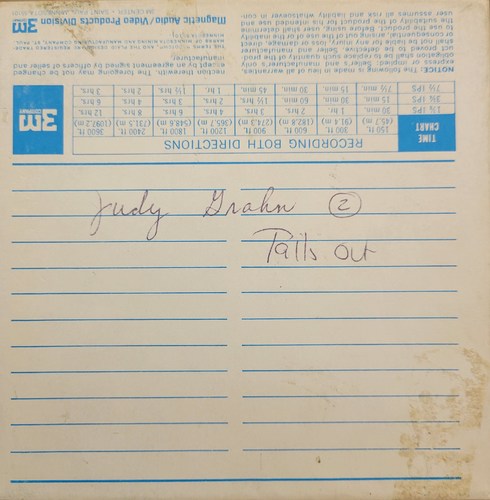
Judy Grahn Poetry Reading [Fair use excerpt]
A poetry reading featuring Judy Grahn. Grahn reads from "She Who" and other works. The uploaded file has been cropped due to Fair Use restrictions. The full recording is available at the Lesbian Herstory Archives. -
Judy Greyboys Interview
In this oral history conducted by the Rossmoor Lesbian Social Club, Judy Greyboys discusses her coming our process, here involvement in the Philly lesbian and political scene, her move to the Bay Area, involvement in activism and non-profit work, her work and travels as a musician, and the importance of community. -
-
-
Judy Regan, Side A, September 5, 1981
This tape is a mixed tape of various songs by the queer country singer Judy Regan. -
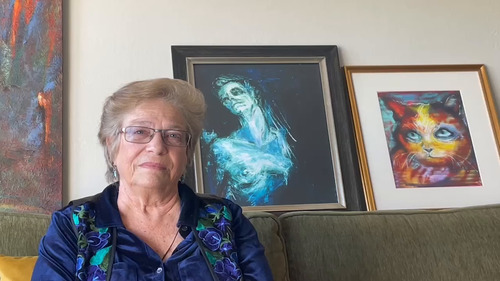
Judy Schavrien Interview
In this oral history conducted by the Rossmoor Lesbian Social Club, Judy Schavrien discusses her involvement in the feminist women’s movement, her relationships, her work as a professor and a psychotherapist, her move to the Bay Area, and her opinions of the lesbian community in Rossmoor. -
Judy T., 1978
Judy discusses butch and femme identities, social interactions, and role-play within relationships. She expresses relief over how these once rigid demarcations of identity have become more flexible within the lesbian community. Later, however, she notes "class" differences that continue to striate lesbians as a social group.
The social conditions, the acceptance of lesbians, and the "openness" of homosexuals are compared between New York, Florida, and Toronto. References are made to anti-gay activist Anita Bryant and others who put social pressure on lesbians to stay closeted.
Additionally, Judy touches upon negotiating workplace discrimination and "nosy" neighbors. She briefly mentions her relationship with her family and what it was like growing up in Buffalo.
-
Judy T., 1979 (Tape 1)
Side A: Judy discusses some of the bars she used to frequent, and her changing views of sex.
Side B: Judy discusses her past relationships and the ways in which she feels the treatment of women at jobs has changed. -
Judy T., 1979 (Tape 2)
Judy discusses her views of gay men, including her belief that all so-called gay men are in fact bisexual. -
Judy, February 5, [year unknown]
Judy describes her experiences over the past thirty years up to the point of the interview. Topics discussed include cheating (“playing around”), polygamous lesbian relationships, fights in bars, holiday celebrations, friendship, same-sex marriage, religion, drinking, drugs, crime, mental health and treatment of lesbian women, the commonality of lesbian women seeking psychiatric treatment, the working environment for lesbian women, living alone, families of lesbian women, and one case of a lesbian woman raising a son. Judy believes that lesbian women should not raise children and has an extensive discussion about her reasoning. She ends the interview by discussing movie stars and entertainers that were popular among the lesbian community in the 1930s and 1940s. -
Judy, January 6, [year unknown]
Judy talks about her relationships with three different women and the role they each played in the relationship. She talks about gender identities and one relationship with a woman who wanted to be a man and had very mixed gender roles. She talks about not being able to talk about her relationships with her mother, yet comparing her relationship to that of her mother and father. She speaks about losing sexual interest in her partner and moving from an intimate relationship to just a friendship. -
Judy, November 25, [year unknown]
Judy shares detailed aspects of her life as a gay woman in the 1940s; she talks about the first time she felt attracted to another girl at age nine, and what it felt like when she came out in 1944. The interview brings to light the array of conflicts and fears she experienced growing up at the heart of a devout Italian family in Buffalo, and the difficulties faced as a young woman living in New York City at the end of World War II. Some of the topics discussed include working conditions, relationships, gay and lesbian bar scenes, popular music, butch and femme, and clothing styles. -
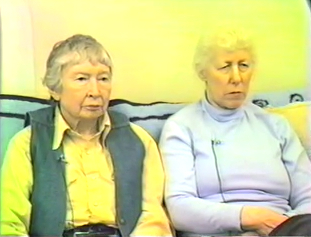
Julie Lee Interview, 1989
Julie Lee and her partner [Ginny] are interviewed in 1989. They discuss relationships, lesbian communities, activism and the civil rights movement. Julie talks about her role as secretary of the New York chapter of DOB and her roles in United Sisters, ACLU, etc. They both talk about police harassment and how 'out' lesbians lost their jobs. Julie also mentions her pseudonym. -
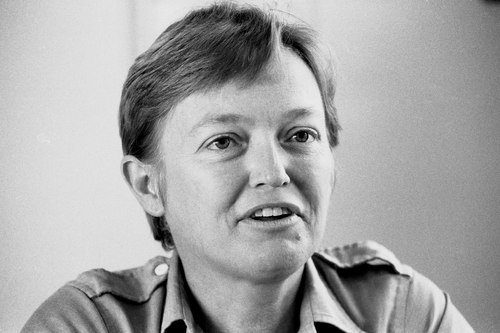
Karen Anderson Ryer Interview, 1987
Karen Anderson Ryer discusses her coming out process, and the acceptance of her parents. She talks about butch vs. fem, and changing generational attitudes. Discusses importance of feminism to lesbianism specifically, and differences from gay men’s movement. She details the split of “The Ladder” from the San Francisco chapter from DOB, and how she left to start a new magazine. Also mentions the integration of different lesbian communities – Oakland vs. San Francisco, and the impact of AIDS on the lesbian community. -
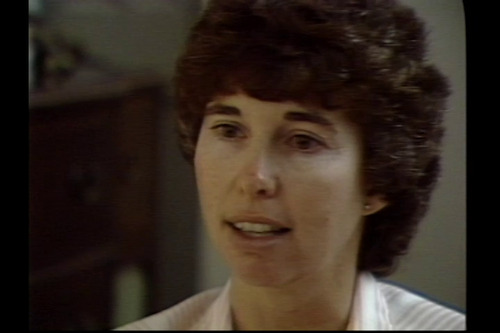
Karen Thompson Interview - Tape 2
This tape is part of a 5-part series interviewing Karen Thompson regarding her legal struggles to secure guardianship of her comatose partner, Sharon Kowalski. (Note: Tape 1 is missing)
In Tape 2, Karen begins to describe her legal dispute with Sharon’s parents over guardianship and the emotions she felt during the process. Karen recounts the difficulties of coming out to her own family and Sharon’s parents, as well as her fear of a legal dispute over Sharon's guardianship outing her to the public. -
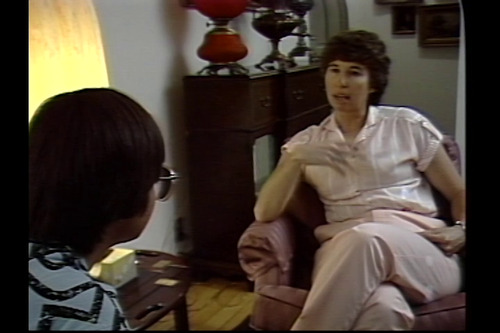
Karen Thompson Interview - Tape 3
This tape is part of a 5-part series interviewing Karen Thompson regarding her legal struggles to secure guardianship of her comatose partner, Sharon Kowalski. (Note: Tape 1 is missing)
Tape 3 primarily consists of Karen recounting her legal struggles with Sharon’s parents regarding Sharon’s guardianship. Karen also discusses how it felt coming out to her parents. -
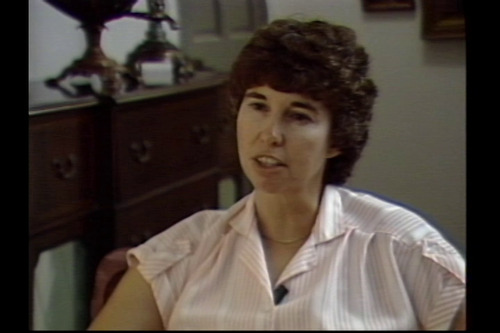
Karen Thompson Interview - Tape 4
This tape is part of a 5-part series interviewing Karen Thompson regarding her legal struggles to secure guardianship of her comatose partner, Sharon Kowalski. (Note: Tape 1 is missing)
In Tape 4, Karen talks about her relationship with religion and her church, her belief that coming out is an important step in normalizing homosexuality, and her struggles against homophobia from medical professionals. -
Karen Thompson Interview - Tape 5
This tape is part of a 5-part series interviewing Karen Thompson regarding her legal struggles to secure guardianship of her comatose partner, Sharon Kowalski. (Note: Tape 1 is missing)
In Tape 5, Karen discusses the physical and mental toll her legal battles have had on her, including the struggles she has experienced with Kowalski's family, particularly the pressure to be "perfect" to prevent the courts from using any mistakes against her.
Karen also talks about her relationship with Sharon before the incident, as well as the distance she felt that she needed to create between herself and her colleagues and students to prevent her outing, which could lead to the loss of her job. -
Kathryn Poethig Interview
In this oral history conducted by the Rossmoor Lesbian Social Club, Kathryn Poethig discusses growing up in the Philippines due to her parents work through the Presbyterian church and her positionality being raised there as a white person in a minority privileged position that affected the rest of her life. She talks about moving back to America and feeling uncomfortable at first with the culture as well as how sexualized things were in the US which lead to her further questioning her sexuality, her first feelings of attraction to women as an adult and her coming out process within a theological community. she talks about her feeling about various lesbian and women's groups she found herself in and moving to Rossmoor with her partner. -
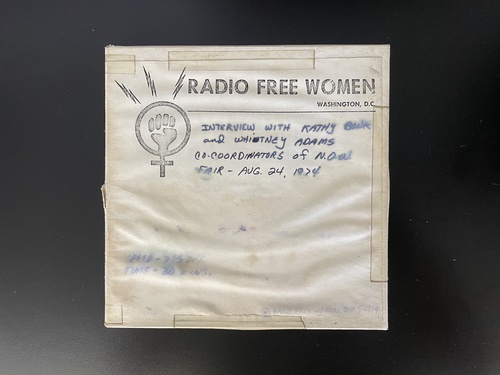
Kathy Bonk and Whitney Adams, Co-Coordinators of N.O.W. Fair (August 24, 1974)
Kathy Bonk and Whitney Adams from the National Organization for Women discuss the upcoming N.O.W. Fair on Radio Free Women. The fair will feature feminist activism, panels, political discussions, and interviews. Bonk and Adams go on to talk about other aspects of feminist political activism such as income inequality and racial discrimination. -
Kay O'Hara and Gerrie Morrison Interview, October 20, 1988
Kay O'Hara and Gerrie Morrison are interviewed in 1988. They both talk about their family lives, when they realized they were lesbians, coming out, their relationship, and previous relationships. Kay mentions her engagement and marriage before she accepted she was a lesbian. They talk about the San Francisco DOB from the 1950s and the meeting's events that were held, as well as butch and femme roles. They talk about literature that was available, including the Ladder and the contributions they made to its design and distribution. On tape 2, they comment on a series of slides and photographs of members of DOB. -
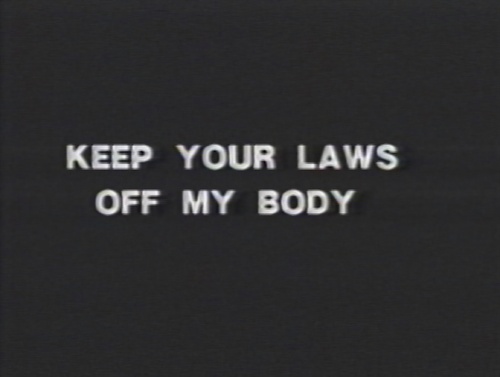
Keep Your Laws Off My Body
Black and white recorded documentary video exploring themes of Lesbian relationships, the AIDS pandemic and the criminalization of LGBTQ+ media. -
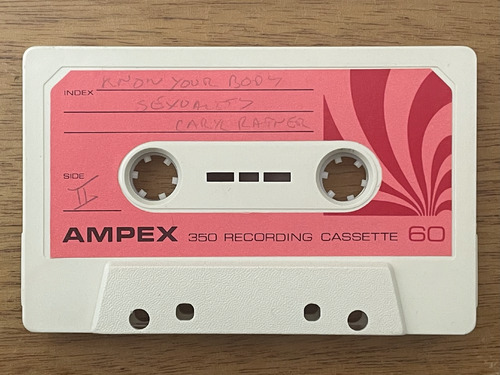
Know Your Body: Sexuality - Caryl Ratner
From a series of 8 lectures which comprised a course by and for women also entitled "Know Your Body." The course was given at the Women's Medical Center in New York City, where this lecture was recorded for WBAI in May and June, 1972, by Caryl Ratner and Bill Monaghan. Produced by Caryl Ratner. Contains frank, explicit discussion. Broadcast on WBAI first in June, 1972 and also in October 1972. -
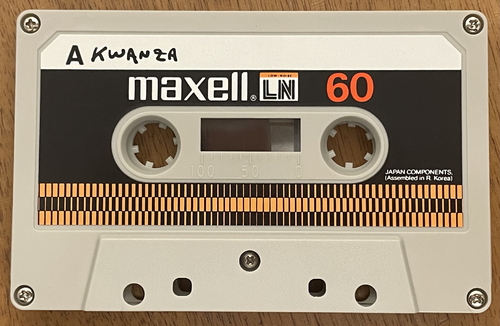
Kwanza
Recordings of a group discussion around the 7 principles of Kwanzaa, particularly in regards to community and faith, interspersed with singing of Kwanzaa songs. -
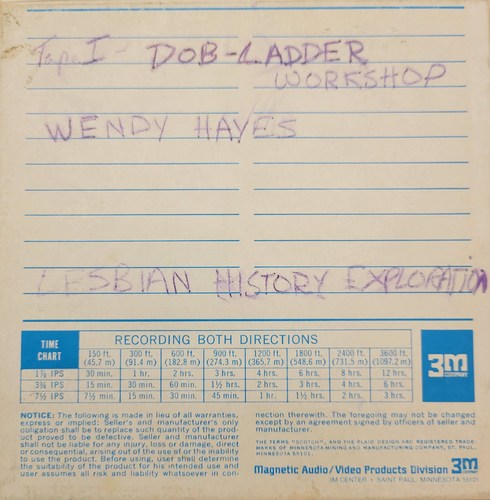
Ladder Workshop/Wendy Hayes, 1970s (Part 1)
Wendy Hayes elaborates her coming out in San Francisco and joining the Daughters of Bilitis (DOB). The Daughters of Bilitis started as a group of women trying to find an alternative to the bar scene in San Francisco. -
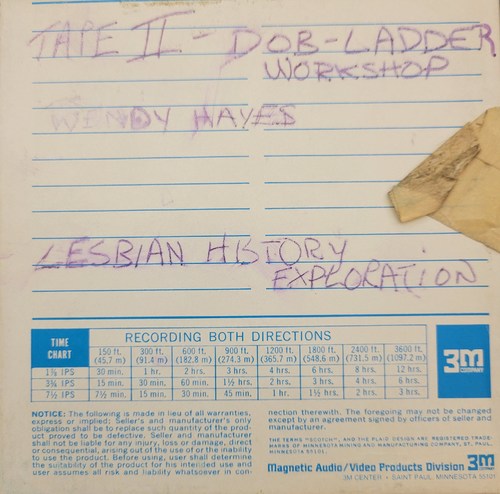
Ladder Workshop/Wendy Hayes, 1970s (Part 2)
About the First Lesbian Convention in San Francisco. A discussion of early scientific studies of sexuality (a couple of attendees and host talk about shock therapy). Trigger Warning: Discussion of shock therapy and suicide. -
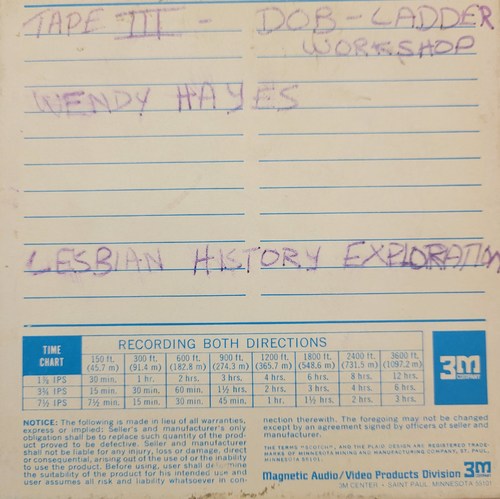
Ladder Workshop/Wendy Hayes, 1970s (Part 3)
Creating local Lesbian chapters and national communication through publications: The Ladder, Focus, Sisters, and Lesbian Tide. -
Lambda Legal Forum, 1982
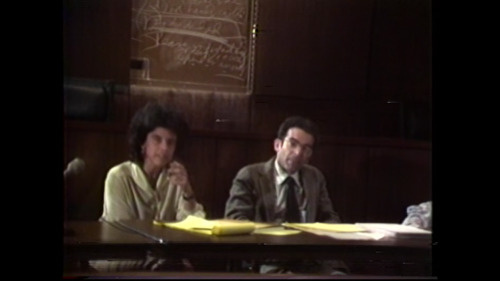
This video depicts a panel discussion between Rosalyn Richter, the then Executive Director and attorney for Lambda Legal, and Rhonda Copelon, the then an attorney at the Center for Constitutional Rights and law professor at CUNY Law School moderated by David A.J. Richards, a teacher of Constitutional Law and Legal Philosophy at NYU School of Law .
The speakers discuss values and gay rights issues through the context of individual choice versus choice that brings harm. Richter and Copelon discuss and answer questions about Roe v. Wade and housing for queer youth. The video then cuts to a document entitled "Anti Gay Legislation: an Attempt to Sanction Inequality." An individual then holds up a Lambda document entitled “Court Approves Gay Adoption.” -
Leadership and Class
A discussion about the differences and challenges of the women's movement by various women. Personality, class tension, diversity, stereotyping, group identity, ideas of leadership are debated. The tension between lower class women and middleclass women is described in terms of leadership styles. Lower class women have a strong female role models to grow up with, this lacks completely for the middle class women. Action is perceived as a negative male trait by the middle class women, who are not used to take action but rather prefer moderation and security. -
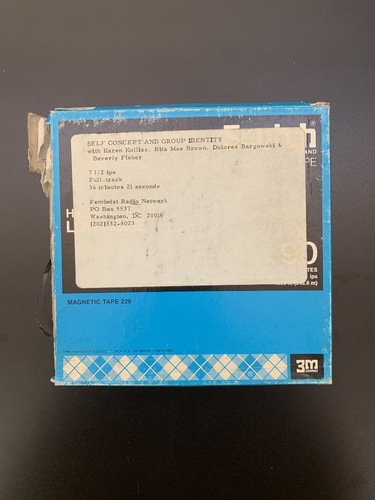
Leadership, Self-concept, & Group Identity
Four women from working-class backgrounds critique leadership and individualism in second-wave feminism. Karen Kollias, Rita Mae Brown, Dolores Bargowski, and Beverly Fisher discuss the exclusion they experience by middle-class feminists who do not hold the same values of strength and leadership, which are viewed as masculine and therefore threatening. Feelings of guilt and the role of the mother in lower-class homes are also discussed. -
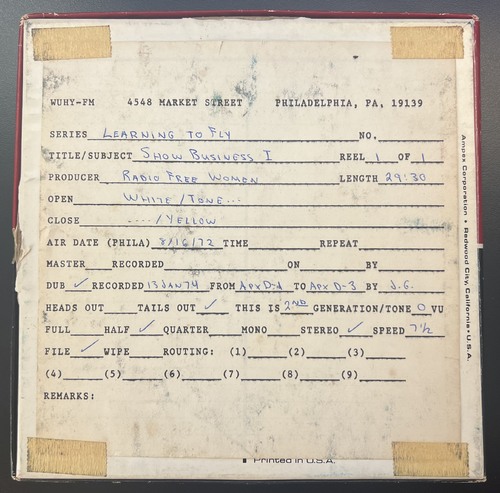
Learning to Fly, Show Business (Tape 1)
This recording is a compilation of quotes, songs, poems, and performances by, about, and for women in show business. Featured in part one are quotes about working in music from Billie Holiday and Aretha Franklin; music by Melanie Safka; a poem to Aretha Franklin by Nikki Giovanni; a letter to Janis Joplin; a performance of Mercedez Benz by Janis Joplin. There are unnamed performances throughout the recording.Tags Theater -
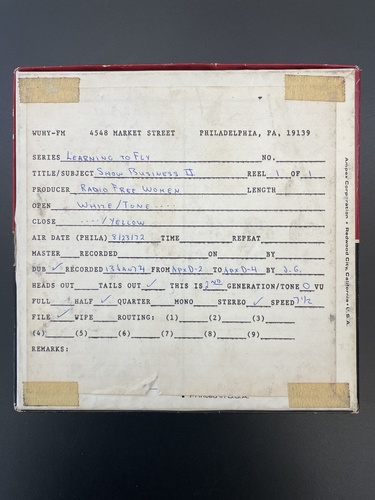
Learning to Fly, Show Business (Tape 2)
This recording is a compilation of songs, music, excerpts, quotes, and recordings by, about, and for women in show business. Featured in part two are songs by Judy Garland; music from various Broadway shows and movie musicals; excerpts from Bette Davis' autobiography;quotes from Dorothy Dandrige; a recording of "Mary C. Brown and the Hollywood Sign" by Dory Previn; a reading of the poem "I Have Come to Claim Marilyn Monroe's Body" by Judy Grahn; and a recording of "There's No Business Like Show Business". -
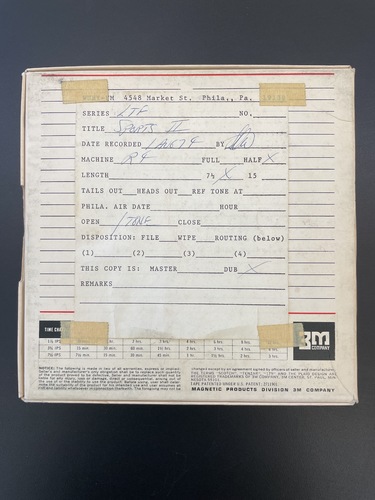
Learning to Fly, Sports
Thoughts on athletics as they exist in America, and the pressure to develop oneself physically. In this radio show there is a reclamation of the “physical you.” There is also a discussion of how sports have become controlled by big business interests, they are now a plaything of the rich. This dehumanizes athletes, causing them to strive for only what can make them rich. Women's sports don't get much spectatorship and consequently don't get promotion or funding. The guests discuss how sports have also become a masculinity rite, and how winning is associated with proving one’s virility. On the other end, women athletes are pressured to prove their femininity in a masculine field. The emphasis on winning destroys athletes' bodies and spirits. Coaching forces athletes to be disciplined and to accept commands unquestioningly. The upward social mobility of sports is an illusion, and can only benefit a small portion of women and POC. The athletic system in this country is elitist, and little encouragement is given to amateurs and women. Black and women athletes have been challenging institutional sports in America. -
Learning to Fly, Women and Alcohol
This is a Radio Free Women episode about women and alcohol, including topics such as the societal pressures that might cause women to drink excessively. The different topics are also combined with the following songs: "Lilac Wine" by Nina Simone, "Red Wine" at Noon by Joy of Cooking, "Broke Down Girl" by Buffy Saint-Maire, "Shake Sugaree" by Elizabeth Cotten, "Leftover Wine" by Melanie, "Sunday Morning Coming Down" by Lynn Anderson, "Sweet Blindness" by Laura Nyro, and "Bye, Bye Baby" by Big Brother & The Holding Company & Janis Joplin. Nikki Giovanni's "All I Gotta Do" is also included. -
Lee Brown: Streetology
Lee Brown is a black woman and an ex-offender, but says “none of the three overlap with each other”. Brown's conversation with Colivia Carter is an discourse touching on themes of intersectionality before the framework had its name. Brown reads poetry she calls “streetology” about her experiences with prostitution, incarceration, and black families. -
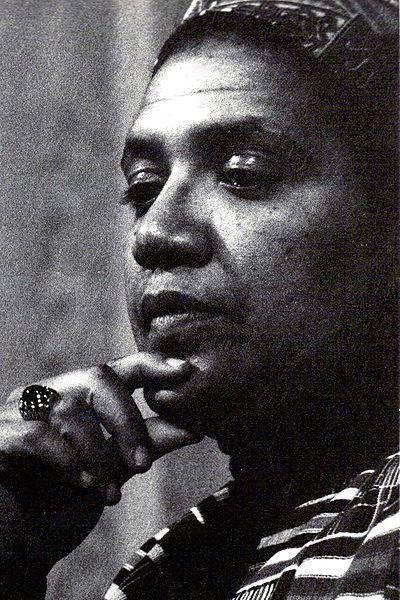
Lesbian & Gay Community Services Center (2nd Tuesday Series), 1986
Audre Lorde reading her poems for the "2nd Tuesday Series" at the Lesbian and Gay Community Services Center, New York City. Side A: Recorded at the Lesbian and Gay Community Services Center, New York City. Sponsored by the Lesbian and Gay Community Services Center, Women's Poetry Center at Hunter College, New York. Poet Audre Lorde reads thirteen poems many from her new book. [Poems: Notes from a Trip to Russia, Sisters in Arms, Holographs, Political Relations, A Question of Climate, There are No Honest Poems about Dead Women, A Question of Essence, For the Record: (In memory of Eleanor Bumpurs), Making Love to Concrete, Women on Trains. Never to Dream of Spiders and Call.] Side B: Question and answer session with a collection for the Sisters in Support of South Africa. -
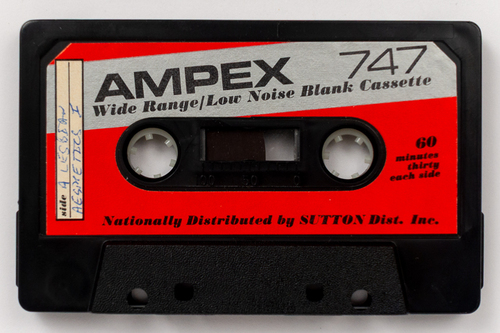
Lesbian Aesthetics I
Broadcast from Gay Academic Union Conference, panel on "Lesbian Aesthetics," held at NYU's Loeb Student Center on November 29th and 30th, 1974. The program hosting the broadcast and host are not known. The panelists featured are Beth Hodges, Bertha Harris, Gayle Rubin, and Rita Mae Brown. -
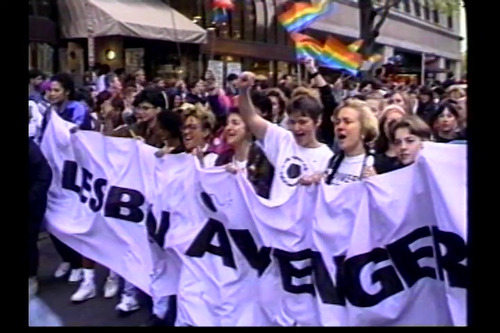
Lesbian Avengers Dyke March Promo / HomoTeens: Portraits of Lesbian and Gay Teenagers
The first 2 minutes are a promotional video for the first annual Dyke Pride March at Bryant Park in June, 1993, featuring footage from the DC Dyke Pride March in April 1993, which includes lesbians marching in the streets, chanting, dancing, and fire-eating.
After, there are several minutes of solid stills featuring text appearing to be the names of individuals featured in the project "HomoTeens: Portraits of Lesbian and Gay Teenagers" by Joan Jubela. The footage features clippings of an article written about Henry, a young gay man, in People magazine that outed him to his mother. From 11:50-13:45, Henry talks about the conversations with his parents after the article was published, wherein his father was accepting but his mother was very upset. -
-
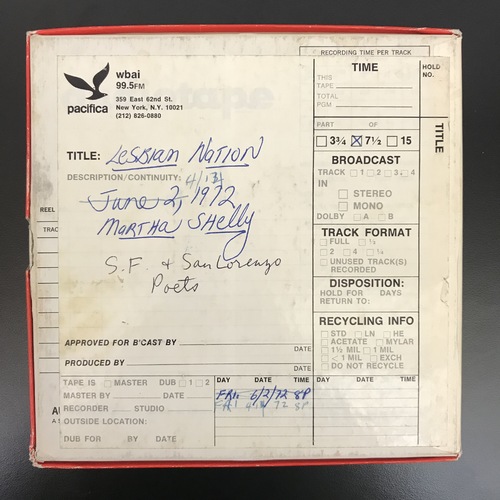
Lesbian Nation, April 14, 1972
Martha Shelley hosts a poetry reading and interview with lesbian poets from the San Lorenzo Bay area. In between reading their poems, the women discuss power and equality dynamics, as well as relationships and trying to get works published in The Ladder. Trigger warning: racial slurs. -
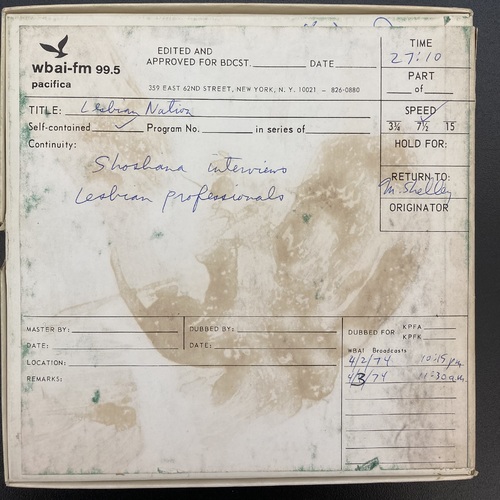
Lesbian Nation, April 2, 1974
This recording begins with announcements for upcoming poetry readings located throughout New York City. The next segment is a pre-recorded interview panel that offers insight into the gay professional led by a woman identified only as Shoshana. She discusses her own background and experiences in the workplace and then asks her panelists questions about their experiences and difficulties they face. The panelists go on to discuss their hesitancy and fears of what the repercussions of being out on the job would mean. Continuing on, the panelists discuss societal pressures and the vagaries of workplace policies and the paranoia it can lead to. As the discussion concludes, the focus and fear society has on the sexual aspect of being gay is explored. This broadcast concludes with Martha Shelley discussing her feelings of nostalgia on turning 30. -
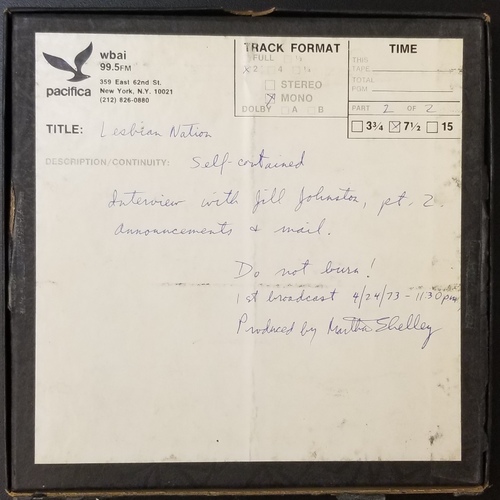
Lesbian Nation, April 23, 1973
Second part of the interview with Jill Johnson, writer of the book, Lesbian Nation. Martha and Jill continue their discussion about personal and political relationships in lesbian culture and the complex issue of men in lesbian and feminist spaces. [Music: Can't Stop the Maddness by Birtha and audio from Everything You Ever Wanted to Know About The Godfather but Never Thought to Ask] -
-
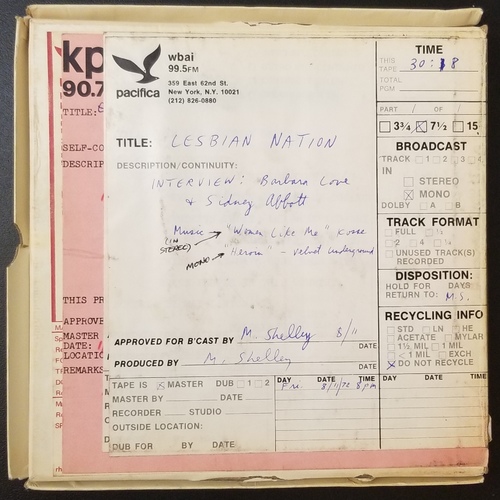
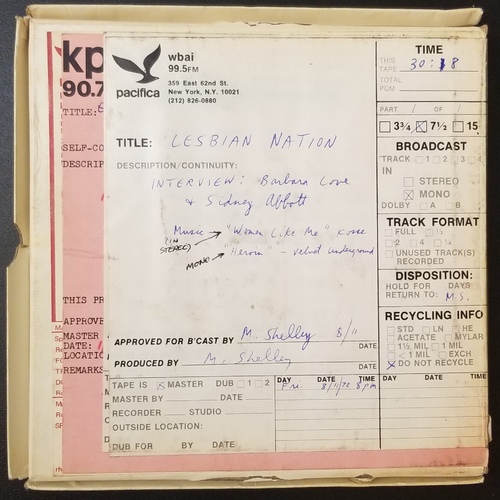
Lesbian Nation, August 11, 1972
Martha Shelley interviews Sydney Abbott and Barbara Love about their newly released book "Sappho Was a Right On Woman," The book and discussion touches on topics of lesbian experience including the "evil" lesbian who attempt to rebel against norms, the external and internal pressure of the lesbian experience and the fragmented nature of the women's movement. [Music: Women Like Me by Roberta Kosse and Heroin by the Velvet Underground plays] -
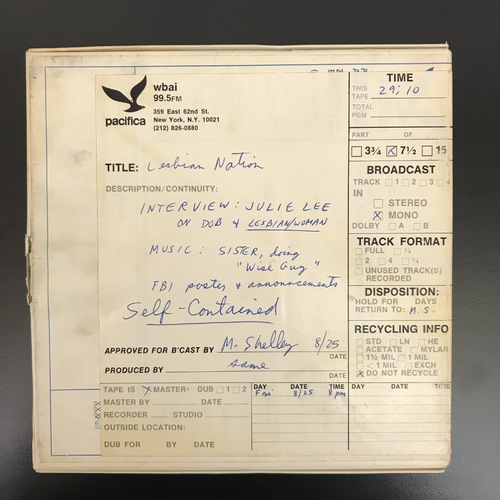
Lesbian Nation, August 25, 1972
An interview with Julie Lee about her background, work and ongoings with New York City & New Jersey branches of Daughters of Bilitis. This recording also includes a discussion of the book “Lesbian Woman” by Del Martin & Phyllis Lyon, the topics it addresses and Julie Lee’s efforts on east coast distribution of the book. -
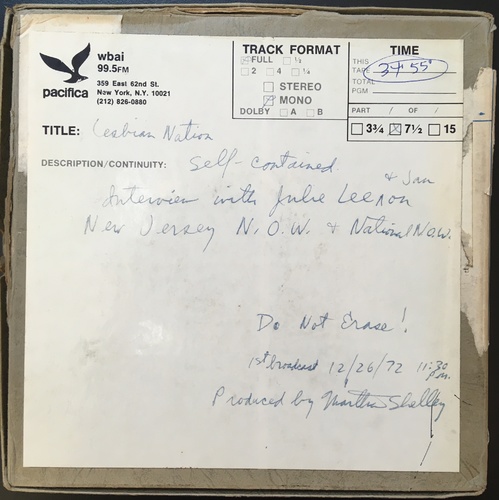
Lesbian Nation, December 26, 1972
Interview with Julie Lee, an important member of the Daughters of Bilitis, about the New Jersey National Organization for Women (N.O.W.) and her struggles to create a chapter of NOW dedicated to "doubly-oppressed" women (which included lesbians, POC women and improvished women in the community). -
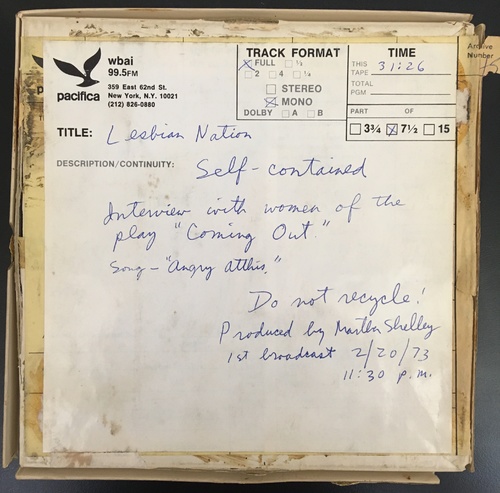
Lesbian Nation, February 20, 1973
Interview about the play "Coming Out: A Documentary Play About Gay Life & Liberation in the U.S.A". by Jonathan Ned Katz with five members of the cast. In the course of the conversation, the cast also discusses issues with relating to other social groups through the play. -
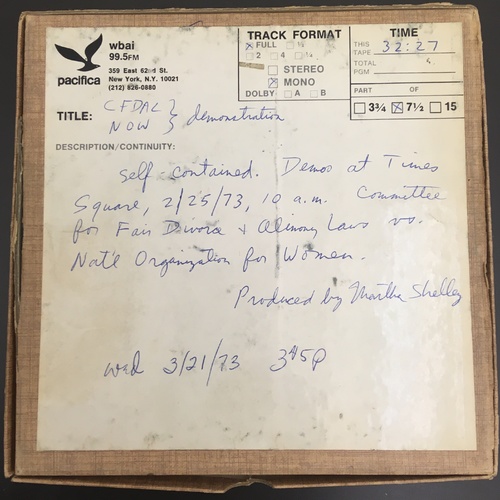
Lesbian Nation, February 26, 1973
On February 21st, a protest was conducted in Times Square by Committee for Fair Divorce and Alimony Laws protesting the paying of alimony by husbands. A counter protest conducted by National Organization for Women (N.O.W.) in favor of alimony and increased regulations and child support. Martha Shelley conducted interviews with both organizations from individuals at the protests. -
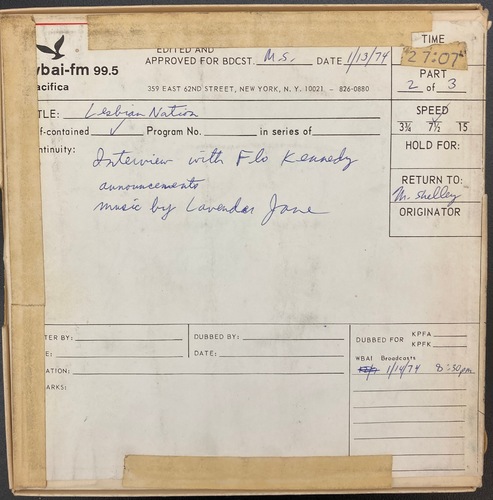
Lesbian Nation, January 14, 1974
Martha Shelley plays a Lavender Jane song to open the episode and reads a series of local announcements. In the second part of a three-episode interview, Shelley speaks with Florynce Kennedy about intersectional feminism and racial conflict in the feminist movement, defining one's lesbian identity, and working to reject the pathology of oppression. Trigger warning: racial slurs. -
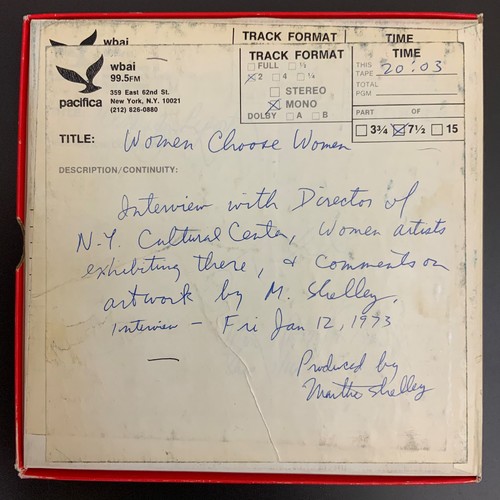
Lesbian Nation, January 1973 [Women Choose Women Exhibition]
This recording consists of informal interviews and a narrated tour conducted by Martha Shelly as she walks through the museum on the opening of the Women Choose Women exhibit at the New York Cultural Center. Martha Shelley interviews important people tied to this exhibit such as Mario Amaya, director of the New York Cultural Center. Anne Kang, an activist who discusses work with her fellow activists to protest discrimination against work created by women at the Museum of Modern Art and the organization of what would become the Women Choose Women exhibition.
Artist Muriel Castanis, a self described “sculpturette” shares her enthusiasm for the exhibition and the New York Cultural Center for hosting it. After the conclusion of this section, Martha Shelley conducts a walking tour of the exhibition and discusses selected works that stood out to her. She bumps into Janet Kogan and asks about her works and how they became part of the show. -
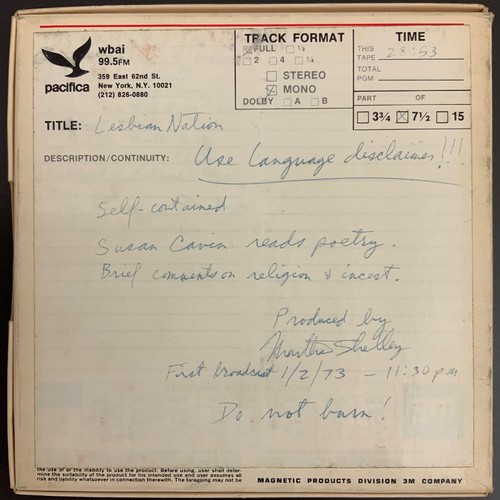
Lesbian Nation, January 2, 1973
In this episode of Lesbian Nation Martha Shelley speaks with poet Susan Caver. In between Caver reading her poetry, Shelley and her discuss the “disturbing” themes in Caver’s poetry which include incest and religion, as well as Carver’s past relationships. -
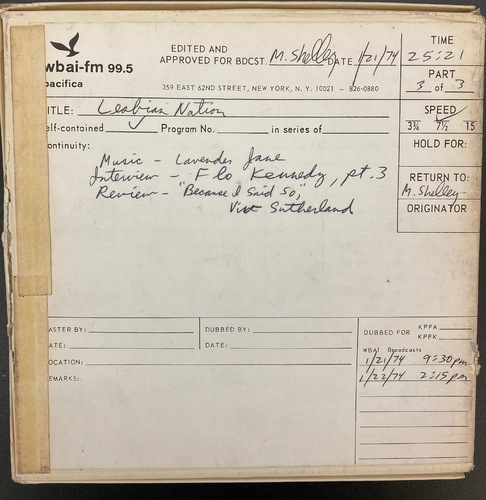
Lesbian Nation, January 21, 1974
The episode opens with a song from Lavender Jane. Then in the final part of a three-episode interview, Martha Shelley brings back Florynce Kennedy to discuss Bobby Seale's trial and mayoral run in Oakland, Kennedy's experience as part of Assata Shakur's legal team, and intersectionality and conflict between the feminist and black power movements. Following their interview, Viv Sutherland reviews Myrna Lamb's play Because I Said So, playing at the Women's Arts Center. Trigger warning: racial slurs. -
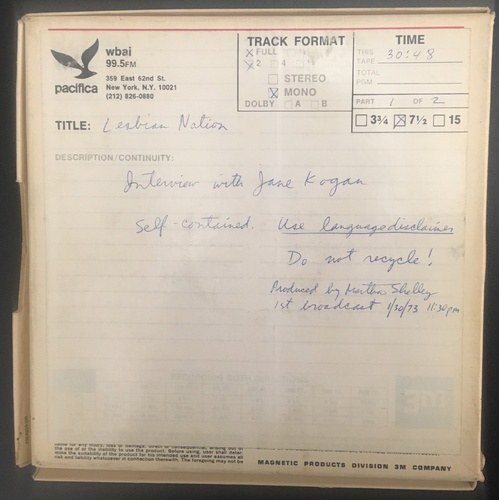
Lesbian Nation, January 30, 1973
Interview with Jane Kogan about Daughters of Bilitis and why she gave up painting and her life as an activist and artist [The Lady’s Not for Sale by Kris Kristofferson plays] . -
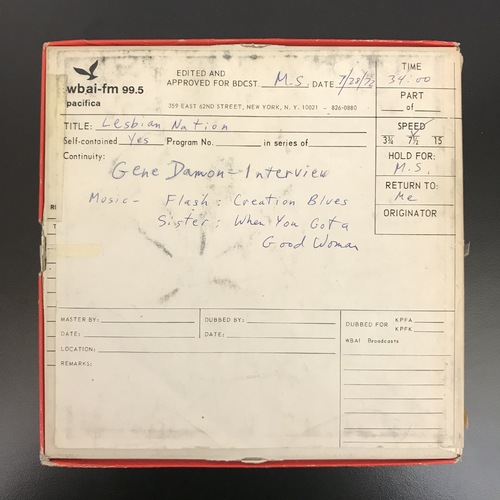
Lesbian Nation, July 28, 1972
Martha Shelley interviews Gene Damon aka Barbara Grier, founder of the lesbian magazine The Ladder (1956-1972). They discuss the beginnings of The Ladder and how it evolved from a smaller publication within the Daughters of Bilitis (DOB) into an independent publication. Grier discusses the shift in content as well once the magazine became independent of the Daughters of Bilitis. Grier felt that under DOB they were focused on presenting a clean public image of lesbians to society at large and that this was reflected in what was published in older versions of The Ladder. Once Grier became the editor, she felt it was important to address topics like sexuality, saying “we began running material that deals with sex honestly and forthrightly.”Tags Barbara Grier, Coming out, Daughters of Bilitis, Gay Activists Alliance (GAA), Interviews, Lesbian musician, Lesbian Nation, Lesbian writers, Literature, Martha Shelley, Music, Publications, Sex, Sexual relationships, Sexuality, The Ladder, Women's Lesbian Liberation Committee, Women's liberation movement, Writing -
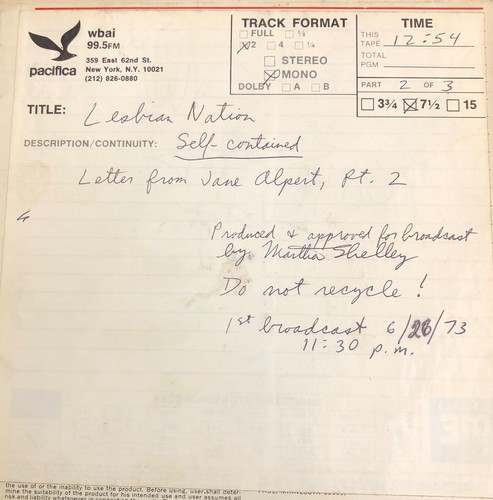
Lesbian Nation, June 12, 1973
Part 1 of a reading of a letter by Jane Alpert titled Mother Right that discusses Jane Alpert's life in the Weather Underground for three years. The letter is split into two parts: an open letter to women activists to leave the left movement to radical feminism and a call to action to build a matriarchy. The episode references rape, emotional manipulation and sexism performed by members of the Weather Underground and the left. -
-
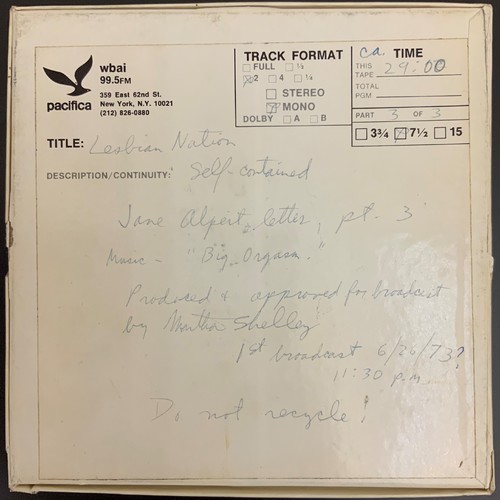
Lesbian Nation, June 26, 1973
In this episode Martha Shelley reads a letter written by Jane Alpert. The letter discusses male vs female biology, motherhood, feminism and the feminist revolution, Gynocracies and patriarchies, as well as gender roles. -
-
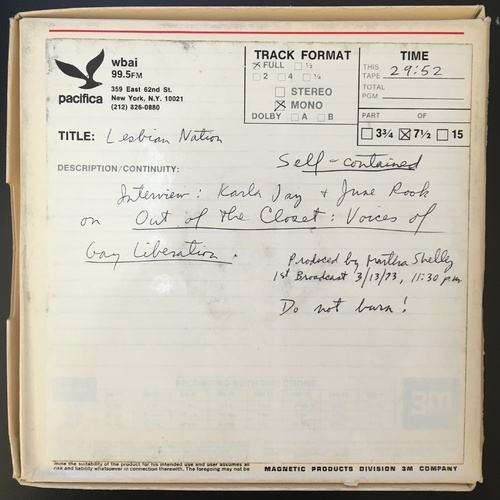
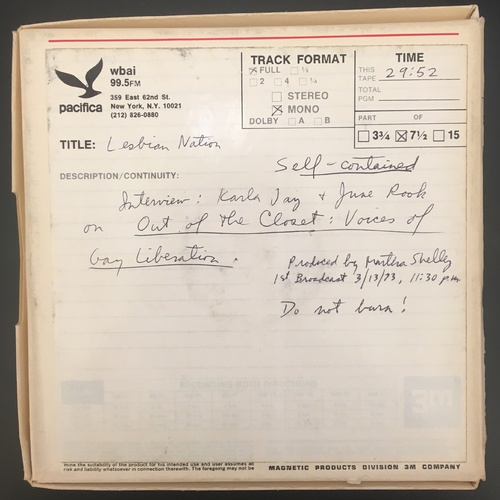
Lesbian Nation, March 13, 1973
Karla Jay and June Rook about the book "Out of the Closet," a gay anthology of views and articles about the gay experience including the gay experience in Cuba and a discussion of the value of the individual perspective. [Bar One by Maxine Adele Feldman] -
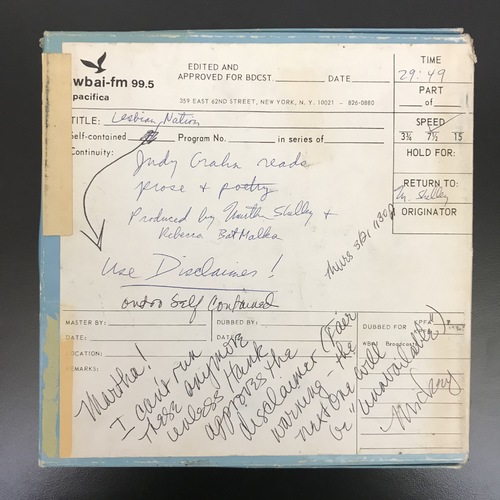
Lesbian Nation, March 21, 197[?]
A recording of Judy Grahn who briefly discusses publishing and two independent presses run by women, the Women’s Press Collective & Mama’s Press in the California bay area. The majority of airtime is dedicated to Grahn’s reading of works from the aforementioned presses. She reads chapter 17 from Sharon Isabel’s autobiographical novel “Yesterday’s Lessons” as well as poetry from “Lesbians Speak Out” & poems of Susan Griffin. -
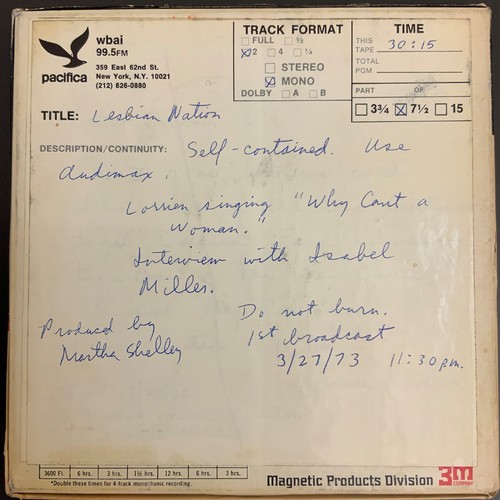
Lesbian Nation, March 27, 1973
In this episode of Lesbian Nation Martha Shelley speaks with Isabel Miller, author of “Patience and Sarah”. They discuss Miller’s writing career, her use of a pseudonym for writing lesbian novels, and the process of getting “Patience and Sarah” published. -
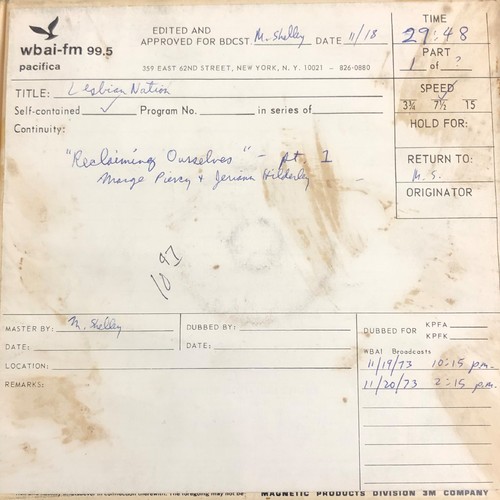
-
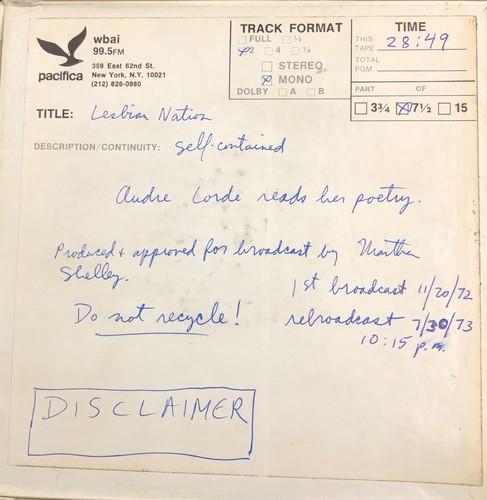
-
Lesbian Nation, November 20, 1972
A re-broadcast of a poetry reading with Audre Lorde on Staten Island. The poem read include "Times Change and We Change with Them or We Seem to have Lost Touch with Each Other," "Martha," and "The Maiden, and Song." -
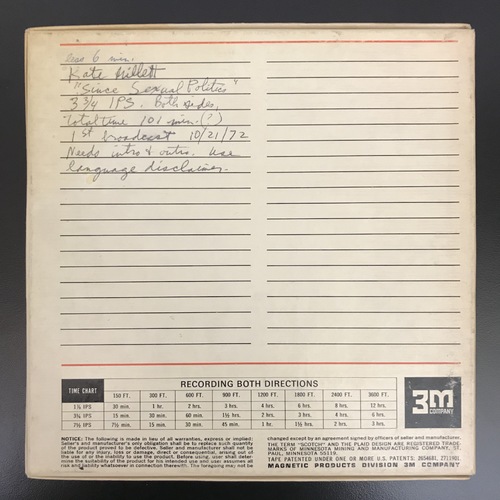
Lesbian Nation, October 12, 1972 [Kate Millett, "Since Sexual Politics"]
Martha Shelley speaks with Kate Millett, author of Sexual Politics, about a wide range of subjects that includes the Angela Davis trial of 1971, bisexual identity, radical counterculture in American universities, sadomasochism, and the Vietnam War. -
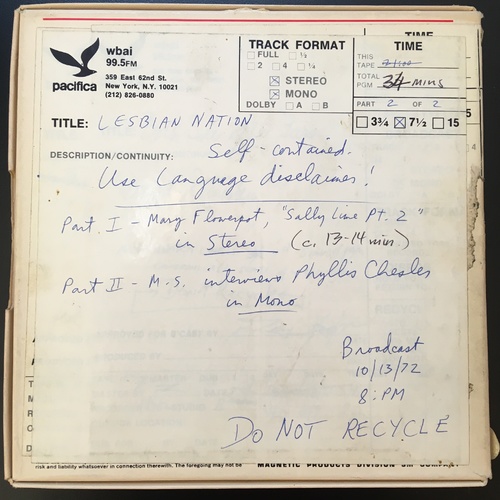
Lesbian Nation, October 13, 1972
Mary Flowerpot plays a recording of Joyce Grenfell's audio drama and a continuation of the story of "Sally Lime, the Third Woman." Later, Martha Shelley interviews Karla Jay and June Rook about the book "Out of the Closet," a gay anthology of views and articles about topics including the gay experience in Cuba and a discussion of the value of the individual perspective. [Music: Bar One by Maxine Adele Feldman] -
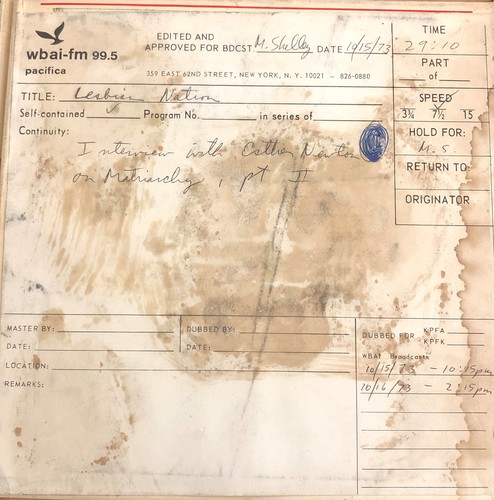
-
Lesbian Nation, October 20, 1972
Bertha Harris from Richmond College on writing and her life as a lesbian author. -
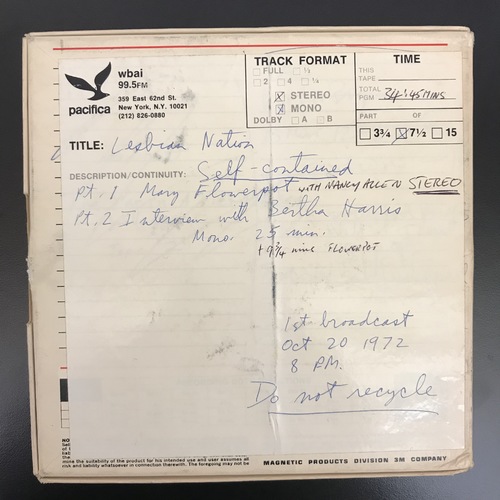
Lesbian Nation, October 20, 1972
This episode of Lesbian Nation opens with Mary Flowerpot’s comedy segement followed by Martha Shelly interviewing Bertha Harris. Harris is the author of “Catching Saradove” (1969), “Confessions of Cherubino.” (1972), and “Lover” (1976). Shelley and Harris have a conversation about the writing process and intellectualism.